Review – Beauty by Frederick Dillen

beauty

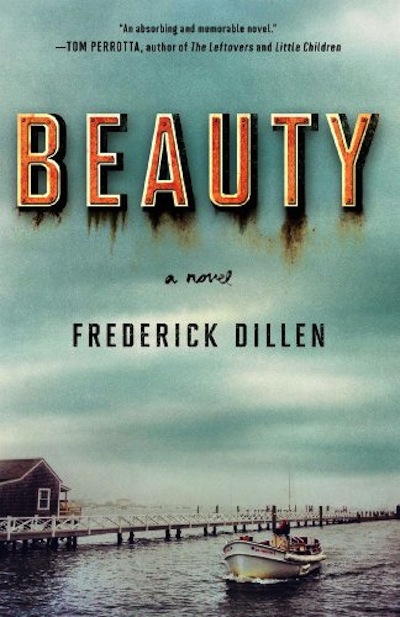
Beauty by Frederick Dillen is a hopeful little book, drenched in all the optimism its title suggests. This is the story of capitalism falling in love with community, the tale of a fisherman totally unversed in corporate sexual harassment policies falling in love, and deep down at its heart a book about claiming that little bit of space you always knew you needed but never realized was right there, waiting for you, to call it home. It is an odd combination of corporate-love-fishing story, but short and sweet enough to make it all palatable.

A tall, no-frills firing machine, corporate undertaker Carol McLean looks factory workers in the eye as she tells them their jobs are lost. The sneering men who run her firm call her “the Beast,” an unwanted nickname none too affectionately parroted by those she leaves jobless and disassembled in her wake. Despite the humanity she struggles to bring to her job of seeing companies through their last days, it is brutal and wearing. When Carol gets the ironic call that she too is being let go, her final undertaking flips from a mission in disassembly to a project in keeping the small fish processing plant going as her own company. With dreamy fisherman Easy by her side, Carol steps out of her role as the Beast and tries to use her business-savvy for good.

If Joshua Ferris’s Then We Came to the End was the modern corporate worker’s swan song, a final cry of agony from the suffering cubicle-everyman before he came back to the office with a gun or a stress-related illness, then Beauty is the corporate worker’s battle cry, of taking the power back and making googly eyes at your love interest, all at the same time.

Beauty by Frederick Dillen on Amazon.com/Indiebound.org

Review – Girl with Glasses: My Optic History by Marissa Walsh

girl with glasses

Girl with Glasses: My Optic History by Marissa Walsh is the cheeky, charming, light-hearted type of read that only a certain type of young woman can appreciate. Having serious visual impairment myself, with ever-thickening frames and glasses from a young age, I can totally relate to the rites and rituals recounted here. Walsh tells her coming-of-age story through the lenses of each pair of glasses she wore, from her first, to her dalliance with those maddening contact lenses, into the pair she now wears with pride.

When I talk with the non-glasses-wearing crowd, I’m constantly baffled at how the other half lives. Some of my friends have never (!) visited an eye doctor, and are confused by my yearly appointments for vision checks and blurriness-inducing dilation. I still remember, even though I’m not sure how young I was, how much my view of the world changed after I got my first pair of glasses. My mom says I was in kindergarten, but I think surely it has to be more around 3rd grade. Wearing those glasses for the first time on the way home, I gained access to a world far outside what I thought was meant to be viewed by one little person. It seemed like I had these crisp new laser-like eyes, beaming directly to store signs bordering the street as I peered out the car window, causing me to exclaim about every sign I could see. All these new layers of the world I had previously dismissed as a blur of haze and fuzz, now transformed into something speaking just to me.

This is the fun of Girl with Glasses, the ridiculous memories of being coached by an ophthalmologist’s assistant to put in contacts, the frustration of glasses in the rain, the impossibility of trying on a new pair of glasses when you can’t see what they look like on your face because you need your real glasses to see, and other common commiserations only GWG’s can really understand. I could see this being especially appreciated by middle school and teenage girls who are waffling between glasses and contacts, trying to pick between the two.

Those looking for a deep, contemplative memoir should look elsewhere. This isn’t that kind of book. Girl with Glasses is a fast and silly read, full of witty one-liners that aren’t afraid to border on cheesy. A few reviewers complain about the generalizations–as GWG’s, they don’t fit the stereotypes here. I don’t think the author fits all the stereotypes of a GWG either, and I don’t think she’s making a case here for stereotypes being accurate. I think she’s trying to have fun with the stereotypes, and use them to describe herself when she’s able. I see this as a statement about the stereotypes around glasses, rather than a statement about the accuracy of those stereotypes. That being said, I don’t think there’s too much deep stuff here. This is meant to be fun and funny. I suspect Walsh just wanted to talk about this unique aspect of her childhood, which she knew many others out there must be going through as well. And what better way to discuss all the absurdities of life with glasses, then through humor.

If you pick up Girl with Glasses, make sure you grab a printed version. The audiobook narrator is alarmingly overemphatic to the point she sounds like she’s trying to amp up a kindergarten class up for playtime. Great for a quick commercial selling something, but horrible for hours of narration where the cheese becomes tiring.

Girl with Glasses by Marissa Walsh on Amazon.com/Powells.com

Further Reading:

Review – Speaks the Nightbird by Robert McCammon

Photo by Paola Ramirez. Postcards from nowhere in particular (I). via.

Photo by Paola Ramirez. Postcards from nowhere in particular (I). via.

     “My voice is near its end, but this I have to tell you,” he whispered. “There was once a merchant. An eager, industrious young man. His business… required him to rise early and thus to bed early. But one evening… he stayed awake past his usual hour… and in so doing he heard the wondrous singing of something he’d never heard before: a nightbird. The next night, he managed to stay awake later… to hear more of the bird’s song. And, the following night. He became so… so intoxicated with the nightbird’s voice that he thought only of it during the day. Came the time when he spent all the night listening to that song. Could not carry out his business during the sunlit hours. Soon he turned his back altogether on the day, and gave himself over to the nightbird’s beautiful voice… much to the sad end of his career, his health… eventually his life.”

     “A fine parable,” Matthew said curtly. “Is there a point to it?”

     “You know its point. A parable, yes, but there’s great truth and warning in it.” He gave Matthew a piercing stare. “It is not enough to love the nightbird’s song. One must also love the nightbird. And… one must eventually fall in love with the night itself.”

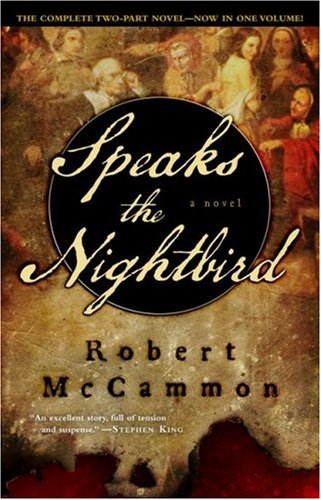
speaks the nightbirdI’m surprised Robert McCammon isn’t talked about more in same breath as Stephen King, that he isn’t a more treasured part of our horror fiction landscape. After being simultaneously entranced and repelled by his apocalyptic fiction novel Swan Song, I wanted more. McCammon’s Speaks the Nightbird isn’t my normal pick of thriller, as it takes place in the harsh and wild landscape of Carolina in 1699, an as yet unsettled America looming in from all sides. Sometimes historical fiction bogs me down with its language, but the plot here held promise. An enterprising businessman has settled the town of Fount Royal further down the coast than the already established Charles Town. Into this struggling settlement, magistrate Isaac Woodward and his clerk Matthew Corbett arrive, summoned to put on trial a supposed witch. While the townspeople eagerly blame all their woes on the woman they call a witch, the young clerk Matthew Corbett, protagonist, refuses to believe such a simple but fantastical explanation, and investigates the various eccentricities of Fount Royal’s small citizenry.

The beauty of McCammon’s work, both here and in Swan Song, is his refusal to neglect any aspect of the story. Speaks the Nightbird begins with the magistrate and clerk’s journey into Fount Royal, and their disastrous attempt to stay overnight at an inn on the way. Many novels wouldn’t open with such bold, unpleasant scenes, but McCammon isn’t one to shy away from the grittier aspects of human nature. The reader’s discomfort grows right along with that of the clerk, Corbett: “He could feel the raw tension in the air between them, as nasty as the pinewood smoke.”

McCammon’s love of detail and willingness to walk the reader through each frightful scene step by step, ensuring that we stay with these characters every agonizing moment of their struggles is what makes his work great, but for me, some of the gore bordered on unreadable. Speaks the Nightbird contains some gut-wrenching descriptions of 17th century medicine, and one incredibly repelling barn scene between a man and his horse. Swan Song wades even further into the darkest depths of human nature, with unflinching descriptions of humanity trying to survive after nuclear attack. Is this pleasant reading? No. Is it powerful, and scary in a slow, smart way? Absolutely.

Speaks the Nightbird by Robert McCammon on Amazon.com/Indiebound.org

Swan Song by Robert McCammon on Amazon.com/Indiebound.org

Further reading:

(Oh)dysseus!

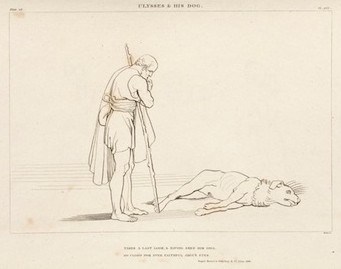
Homer’s Odyssey translated by Alexander Pope, with engravings by Thomas Piroli from the compositions of John Flaxman, sculptor. Rome, 1793.

Homer’s Odyssey translated by Alexander Pope, with engravings by Thomas Piroli from the compositions of John Flaxman, sculptor. Rome, 1793. via

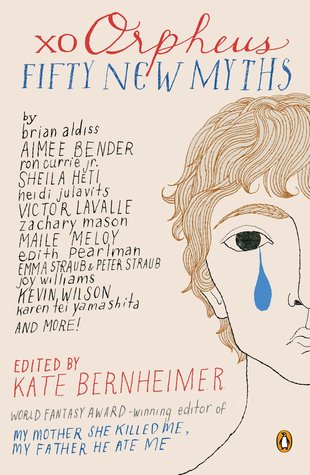
xo Orpheus, edited by Kate Bernheimer

xo Orpheus, edited by Kate Bernheimer

At an old, slow, snail’s pace, I am reading xo Orpheus: Fifty New Myths, edited by Kate Bernheimer. Although I am tempted to say Bernheimer is a leader of the modern fairy tale and myth renaissance, I think this would be misleading, as fairy tales and myths resonate throughout our lives like wallpaper lining the rooms of all the stories we create and live through today. No renaissance is needed for something that never left us in the first place. Reading xo Orpheus is like reading myths with 3D glasses on, taking a fresh look at something already intimate and close. Like the best books, it gives me cultural pause and reminds me how often I forget the limits assumed within traditional storytelling.

No book of myths retold would be complete without maybe the most timeless and revisited of all myths, that of The Odyssey. Not only do several stories take on Odysseus, but one also gives voice to his dog, the faithful Argos. xo Orpheus‘s exploration of The Odyssey made me think of the other stellar reinterpretations of that myth:

    • The Penelopiad, by Margaret Atwood. It may be a requirement, if you are a young woman alive today, to be in love with everything Margaret Atwood. One more reason for my devout membership to the church of Atwood is her beautiful parallel novel to The Odyssey, which gives Penelope her own voice. Penelope tells us of Odysseus’s drinking problem, his tendency to tell tall tales about his adventures, and her own limited opportunities in life (“And so I was handed over to Odysseus, like a package of meat. A package of meat in a wrapping of gold.”)  Atwood’s version of the story reminds us how much of Penelope is left out of Homer’s tale.
The Penelopiad, by Margaret Atwood

The Penelopiad,
by Margaret Atwood

    • The Suitors, by Ben Ehrenreich. My expectations for The Suitors weren’t very high, but I fell in love with it right away. It reminded me of both Chris Adrian’s The Great Night and, oddly enough, Francesca Lia Block’s Weetzie Bat books. Ehrenreich doesn’t spend time explaining logistics, instead he draws up ruthless and modern images of Odysseus (aptly renamed Payne) and Penelope (Penny) which make the story all the more relatable, stark, and scary. Ehrenreich is an uninhibited writer, and the book blasts passed its deeply meditative bits (“The wisdom of the streets holds here too: everybody’s got a hustle, even fog. And love’s a hustle like any other grift.”) not pausing for contemplation before Penny throws a tantrum or Payne wants to fight something. The power lies in the story’s inability to pause and question the insanity of the world Ehrenreich writes it into, part timeless utopia and part hipster wasteland.
The Suitors, by Ben Ehrenreich

The Suitors,
by Ben Ehrenreich

Finally, The Boston Review posted a beautiful poem by Dan Chelotti on their website yesterday, “Odysseus Amongst the Swine Glances Towards Ithaca”, in celebration of April as National Poetry Month. Happy Reading!

Review – HHhH by Laurent Binet

Hhhh2

“When I watch the news, when I read the paper, when I meet people, when I hang out with friends and acquaintances, when I see how each of us struggles, as best we can, through life’s absurd meanderings, I think that the world is ridiculous, moving, and cruel. The same is true for this book: the story is cruel, the protagonists are moving, and I am ridiculous.” -Laurent Binet, HHhH

HHhH by Laurent Binet is oddly named but rightly so, as the Nazi tendency towards alliteration is just as uncanny as the rest of this historical metafiction novel. Sounding insane but purposeful, Laurent Binet struggles to tell the story of World War II’s Operation Anthropoid while also writing of his own shortcomings in research, distaste for other works of the time, and ultimately heartbreaking obsession with the exact details of a history lost to time.

Heydrich, aka "The Butcher"

Heydrich, aka “The Butcher”

The title stands for the Nazi phrase “Himmlers Hirn heiBt Heydrich,” translated to “Himmler’s brain is called Heydrich.” HHhH‘s villain, and the focus of an assassination attempt in Operation Anthropoid, is Reinhard Heydreich. A mastermind looming over Nazi history, Heydrich founded the Nazi intelligence organization, supposedly acted as the brains behind Heinrich Himmler, leading member of the Nazi party, and put in motion events which led to the Holocaust.

Operation Anthropoid itself, with Heydrich at its center, seems epic and book-worthy. Two parachutists planned to tumble from the sky and land in occupied Prague, where Heydrich worked out of a castle. These two parachutists, they’ll hide out. They’ll plot, they’ll assassinate Heydrich. They’ll die themselves. They are prepared for this. When the plan is executed, of course, things go wrong, as life often does.

Where HHhH seems to lose me is in its argument: Binet complains about the inaccuracies of other historical fiction in his novel, but by doing this he distances himself further from the truth of the story he wants to tell. Binet comes across as arrogant and pompous, and perhaps arrogance is necessary to write yourself into your own story like this, but for the first part of the novel I’m not sure it works. Binet often breaks out of the story to tell the reader he doesn’t know how something happened–rather than putting the reader into the story further, this seems to detract attention from the historical event and put attention directly back to the writer himself. It seems if he truly loved the story of Operation Anthropoid, as he professes in the book, he may have told the story itself in his eloquent and powerful prose, with the extensive research he completed, to the best of his ability. Giving the story he so appreciated to his readers, without his constant commentary, seems to me a better way to honor the actual historical event.

I think the most powerful books are written by authors humble enough to lose their own voice entirely in their work, sacrificing themselves totally for the sake of the story. I understand that Binet tries to pave the way for something new here, but I’m just not sure this new form is true to his stated intentions.

The power of HHhH is its second, unfortunately brief, part, where Binet finally recounts the assassination attempt and its aftermath with a powerful, dream-like precision. Like watching the entire scene in slow motion, Binet recounts the story he has been waiting a whole book to tell, and the details are haunting, the sentences crafted in perfect time with the action as it unfolds. Binet shows his ability to write well here, and he tells the story in such a crisp gasp of breath that I consumed this part quickly, wanting more. Ironically, this more traditional historical fiction, with its speculation and imprecision, is where Binet shines and the history itself seems to leap off the page.

HHhH on Amazon.com/Indiebound.org

Further reading:

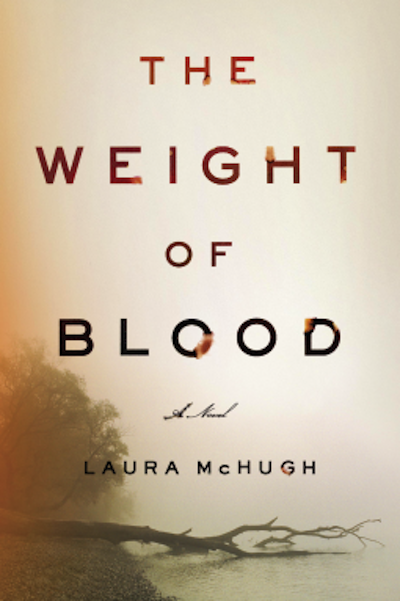
Review – The Weight of Blood by Laura McHugh

cover38288-medium

Mr. Girardi spent an entire class period comparing Henbane to paintings of hell. The land was rocky and gummed with red clay, the thorny underbrush populated by all manner of biting, stinging beasts. –Laura McHugh, The Weight of Blood

If we learned one thing from Winter’s Bone, it was that the often overlooked Ozarks have powerful stories to tell. Laura McHugh understands the forested, mountainous region covering the lower half of Missouri and drifting down into Kansas, Oklahoma, and Arkansas; she knows the allure of, and the distrust present in, those small towns nestled deep within the Ozark Mountains, as she lived in Ozark County (pop. 9,723) as a child. The Weight of Blood, McHugh’s first novel, allows its rustic setting to combine with a familial mystery so dark and paranoid it borders on surreal.

The Weight of Blood introduces the indomitable Lucy Dane, a model of teenage self-sufficiency. The mystery Lucy encounters (foremost, her friend Cheri dismembered and stuffed into a tree) unravels itself along with the mystery of Lucy’s mother, who went missing shortly after Lucy’s birth. The narrative perspective alternates between that of Lucy and her mother, between now and then. As the story progresses, the perspective changes to that of other characters surrounding the two women.

This alternating narration makes the story unpredictable and addictive. The Weight of Blood isn’t a whodunnit as much as a family drama where the reader must anxiously await to find out who exactly knew what was going on, and when they knew it. As with many deep dark family secrets, there are layers of willful ignorance surrounding the actual crimes. The Weight of Blood peels back layers of involvement like an onion, as everyone surrounding Lucy recounts their own experience.

I made the mistake of starting The Weight of Blood during finals, and it called out to me as I tried to study. I read many books of this type (I love mysteries of varying quality), and I rarely come across something with enough intrigue to keep me reading even when I’m tired. The Weight of Blood kept me reading way past bedtime, trying to get through just one more chapter…

None of the individual characters stood out for me here (Lucy herself, as with most teenage protagonists, borders dangerously close to a static Young Adult heroine) as much as the complicated motives and social dynamics between the characters enmeshed in each others’ lives. The Weight of Blood reminds us that other people, their intentions and their ties, are the truly unsolvable mystery.

The Weight of Blood on Amazon.com/Indiebound.org

Related Links:

Review – Orange Is the New Black by Piper Kerman

orange is the new black book cover

Yes, Orange Is the New Black was a memoir before it was a hit series on Netflix. For those of you resisting the future of television: What happens when a nice girl gets locked-up? Orange Is the New Black: My Year In a Women’s Prison by Piper Kerman tells us, as she recounts her journey through the American prison system.

The Smith-educated, upper-middle class, white, blonde Kerman had a happy life in New York, working as a freelance producer and living with her magazine editor boyfriend, when two Federal Customs Agents showed up at her door and changed her life forever.

Her past, long-forgotten, caught up with her in the form of a federal indictment. As she explains in the memoir, the mild-mannered Kerman sought adventure post-college, eventually falling in with a heroin-smuggling, bulldog-faced, world-traveling lesbian from the Midwest (this is why memoir works–you seriously can’t make this stuff up). Although Kerman and her smuggling girlfriend traveled to exotic locales and had some really good times, they also casually laundered cash like no big deal and eventually, Kerman smuggled cash herself. Thus, customs agents at the door, and federal prison time. And then, a memoir and streaming television series.

FCI Danbury, where Kerman does her time.

FCI Danbury, where Kerman does her time.

Despite its flippant title, Kerman tells us in her memoir that orange is decisively not the new black, for herself or anyone else who gets stuck in the American justice system. The book comments as much on the prison system as it does on Kerman’s struggles within that system. Kerman seems aware, as a writer, of the risks she takes as a wealthy white women writing about jail time: too much complaining about the facilities could come off as a woman spoiled and not willing to do the time for her crime; too much exposé on her bunkmates could read as exploitative of women not wanting or able, for their own reasons, to tell their stories at a public level. Kerman seems to walk a fine line both in prison and in her writing, acknowledging her place of privilege without discounting her own experience.

Orange Is the New Black is carried by Kerman’s charm, and the memoir owes much of its fun vibe to her easy banter with fellow inmates, combined with self-deprecating stories revealing both humor, insecurities, and a hugely inept prison system. In prison, she seems to get along with most and form touching bonds with many, and she identifies with the other prisoners despite prison guard’s efforts to separate her from her fellows.

Taylor Schilling as Piper Chapman on Netflix's "Orange Is the New Black"

Taylor Schilling as Piper Chapman
on Netflix’s “Orange Is the New Black”

“So, is it like the show?” This is what people ask when I tell them I’m reading Orange Is the New Black, if they aren’t surprised to learn the hit Netflix series is based on an actual memoir.  The series stars the saucy and endlessly watchable Taylor Schilling, star of cancelled NBC medical drama Mercy, as Piper Chapman, whose character is based on the real Piper Kerman.

The memoir and the TV show have similarities, but they aren’t so similar that reading the memoir after watching the show will create a sort of discordant echo that creates confusion. Remember, though, that the memoir is exclusively Kerman’s story. It contains not only humorous snippets from her time inside, but also facts and experiences about our prison system any reader can easily get upset about. After reading Orange Is the New Black, I understand how Kerman is now active in organizations for reform in the prison system. I see how she must fight against what she experienced and saw others experience.

The Netflix series, while staying true to Kerman’s basic storyline, belongs to the women in prison other than the Kerman/Chapman character. The show’s creator, Jenji Kohan, called Kerman’s character her “trojan horse” in an NPR interview:

You’re not going to go into a network and sell a show on really fascinating tales of black women, and Latina women, and old women and criminals. But if you take this white girl, this sort of fish out of water, and you follow her in, you can then expand your world and tell all of those other stories. But it’s a hard sell to just go in and try to sell those stories initially. The girl next door, the cool blonde, is a very easy access point, and it’s relatable for a lot of audiences and a lot of networks looking for a certain demographic. It’s useful.

So read the book understanding Kerman isn’t able to give background or history on her fellow inmates, as that isn’t her story to tell and that was the choice of the Netflix show’s creator, Kohan.

Some surprising elements of the show, which actually happened (spoiler alerts!): Kerman does end up in the same federal prison as her ex-girlfriend, the heroin-smuggling lady who partially was responsible for Kerman getting into the whole mess. They do work things out, but they don’t sleep together. Kerman does offend Pop, the actual strong-willed woman who runs the kitchen by insulting her cooking.  Kerman does end up working in electrical where she trains herself by reading a huge manual, and yes, there is a pacifist nun in federal prison along with Kerman.

Orange Is the New Black on Amazon.com – Kindle edition is $5.99 right now!/Indiebound.org

Piper Kerman’s website

Related links:

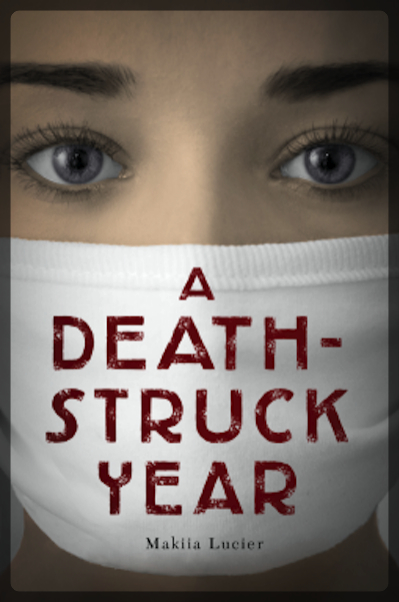
Review – A Death-Struck Year by Makiia Lucier

death struck year 400 border

In a sea of uninspired Young Adult books, each struggling to be the next Hunger Games mega-hit in a battle so fierce it might as well be taking place in Panem, reading A Death-Struck Year by Makiia Lucier was, counterintuitively, like an honest and gripping breath of fresh air.

A Death-Struck Year shouldn’t feel so fresh because it takes place in Portland, Oregon, in 1918. For those of you who aren’t familiar with recent history, the Spanish flu (now known to be a variant of the H1N1 virus–ready to get your flu shot yet?) spread like crazy between 1918 and 1920, and killed 3-5% of the world’s population, ultimately killing more people than World War I.

A Death-Struck Year’s unsuspecting heroine Cleo, 17 years old and pensive about her future, watches in alarm as the pandemic closes in around her. First, the reports of sickness are distant, only in papers and heard as vague rumors; then Cleo notices restrictions on travel in town, and masks on faces of travelers; finally, she finds herself in a terrifying situation, as the city shuts down completely and people die in the streets or unnoticed in their homes.

The virus creeps into the community quick, and it is easy to feel Cleo’s confusion. Early on, Cleo’s school keeps a watchful eye on its students’ sneezes, but then it makes the decision to shut its doors completely. With family out of town, Cleo finds herself home alone in the middle of the flu pandemic. When the Red Cross calls for able women to assist the sick, Cleo shyly responds to the request, finding a bedraggled and understaffed Red Cross staff desperate for help. Before she fully comprehends it, a testament to how quickly pandemics seemingly spread, Cleo is driving her brother’s car around town, knocking on doors, educating her neighbors on the virus, calling help for the ill, and, sadly, discovering the dead.

Cleo finds comfort and friendship among the overworked staff at the Red Cross emergency triage center set up in Portland’s auditorium, where nurses, army doctors, and community volunteers group to battle the illness. Together they struggle through the pandemic, relishing small triumphs and mourning the much greater losses they suffer. A wounded army doctor catches Cleo’s eye, and a romance develops.

It seems like young readers are hungry for smarter material, and I think A Death-Struck Year is on the right track. Teens know there is more to a crush than a fast heart beat; there is more to suspense than a fight scene. Lucier has managed to create a gripping story that resonates as honest. Cleo must find in herself unimaginable bravery, and she is a strong heroine–but rather than drop Cleo’s character development as the action develops, Lucier is able to build her into a real young woman that could be any reader of the book growing up in a different time, rather than a caricature of what a girl should be like or think like. Lucier has studied up and written with a painstaking attention to historical accuracy, and the attention to detail certainly shows in the book.

Although at a higher reading level (age range is 12 and up), A Death-Struck Year reminded me of the American Girl books I used to read when I was a younger child. They would recount the struggle of a young girl in a pivotal time in history. I don’t read a ton of historical fiction (although I am currently reading The Invention of Wings by Sue Monk Kidd) but I understand how following a young woman through a more turbulent time in history could appeal to a Young Adult reader in the same way a dystopian novel would, but with a more grounded twist. Lucier reminds us of tragedy which took place in years not too far past, and the ability of history to tell us its thrills and heartbreaks.

A Death-Struck Year will be released on March 4th, 2014.  Author Makiia Lucier will be doing an Ask Me Anything in /r/books on Reddit at 12 pm ET on March 4th. Essentially, people ask Lucier anything and she answers.

For those who don’t know about Ask Me Anything (AMA) on Reddit, there is a great Atlantic article which explains the phenomena and speculates on why it works, and I think its title sums up AMA’s evolution: “AMA: How a Weird Internet Thing Became a Mainstream Delight.”

A Death-Struck Year on Amazon.com/Indiebound.org

Related Links:

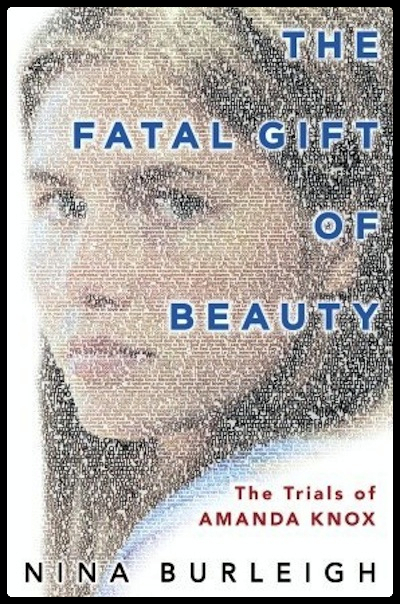
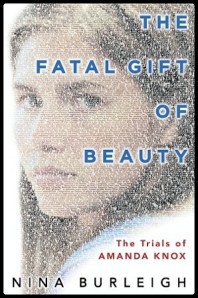
On Knox – The Fatal Gift of Beauty: The Trials of Amanda Knox by Nina Burleigh

knox cover 2_Fotor

Falling into the rabbit hole of media spectacle swirled with true crime drama that creates the Amanda Knox story is easy. Like Dorothy being swept up from Kansas and crashing down into Oz, Knox seems caught in a perfect storm of good looks and incomprehensible behavior that, when thrown to overzealous and conspiracy-seeking police and press, can be just as inescapable as any fairy tale.

I read Knox’s own memoir, Waiting to Be Heard, shortly after it was released in April of last year. Like so many others fascinated by the case, I was eager to hear Knox’s own recounting of events. When Knox and her former boyfriend Raffaele Sollecito were found guilty of Meredith Kercher’s murder for the second time at the end of January, I researched other books on the whole debacle and decided on Nina Burleigh’s The Fatal Gift of Beauty: The Trials of Amanda Knox.

Burleigh’s book interested me, amongst all the others, as it addressed the petri dish which grew the police and media attention on Knox. I knew there was a man convicted of Kercher’s murder that no one seemed interested in. I knew Knox’s sexuality brought up as a piece of evidence used to indicate her guilt. I saw the list of sexist, appearance-based names Knox was called by the press.

Burleigh spends much time exploring the circumstances in which this perfect storm was created. She explains Perugia in detail: as an ancient city, “creative people who find themselves there today complain that the city retains a feudal mind-set that resists creativity and change.” In recent years Perugia has become a pit stop on organized crime trading routes, where prostitutes are trained before being moved along to larger cities. The headlines scream of crimes contradicting the laid-back and party-fueled college town atmosphere. The city’s beauty, Burleigh says, can be deceiving.

The Fatal Gift of Beauty also introduces another concept I wasn’t aware of, the idea of “cronaca nera” or a black chronicle. Burleigh explains that while murder is common in Italy, “a cronaca nera possesses an element of the macabre, diabolical, or obscene that journalists instantly recognize.” Of course it isn’t just Italians that are intrigued by this type of crime. Media in America pander to the white, beautiful girl.

Our first lesson should be to acknowledge and try to understand why we are so much more interested— obsessed even— with the occasional allegedly evil female and so bored with the much more common, and therefore more lethal, sexually aggressive, domestically violent male. When was the last time we saw a garden-variety wife- or girlfriend-beater or violent rapist perp-walked through one news cycle, let alone hundreds? -Nina Burleigh, The Fatal Gift of Beauty: The Trials of Amanda Knox

Rudy Guede's mugshot via

Rudy Guede’s mugshot (via)

One of the most frustrating aspects of the Kercher murder media coverage, the buzz and chatter surrounding the beautiful white Amanda Knox, is the lack of equal coverage of Rudy Guede. Whenever the case comes up in discussion with those around me, I find myself explaining the basic facts to someone who is unaware a man is in prison for the murder of Meredith Kercher. I think (hope) this has changed now as more articles are released, and more people read Knox’s own memoir. Rudy Guede, for those who don’t know, was without a doubt involved in the crime. Physical evidence concludes that. His handprint was on a pillow under Kercher’s body, his DNA was on Kercher’s purse and in her body, and his bloody footprints (police originally claimed these were Sollecito’s) stepped through the crime scene.

Katie Crouch, who is writing a novel based on the events of Kercher’s murder, said in a Salon article, “It is strange, actually, that Knox has the starring role in this drama, as Rudy Guede had the most interesting life of them all.” I certainly agree. Why does the media insist on discussing the fairly unremarkable Knox, when a fascinating (black, male) character much more deserving of attention is kept at the sidelines.

Guede was born on the Ivory Coast, in Africa, to a polygamous, Christian father. Roger Guede was a bright guy with hopes of attaining a degree in mathematics, forced to give up his dream and work as a mason once he and his son immigrated to Italy. Rudy Guede was neglected from a young age, and his teacher, in The Fatal Gift of Beauty, remembers Rudy wandering the streets as a child. Teachers and neighbors would come together to feed Guede dinner. As a teenager, Guede was brought into a wealthy family, only to be kicked out of the family as his behavior became more erratic. He continued his wandering into adulthood, begging to sleep at friends’ homes or sleepwalking into stranger’s homes or businesses, eating their food and using their bathrooms. Despite all the evidence linking him to the scene and the somewhat bizarre aspect of his sleepwalking (what if this was a sleep-murder?), it is Knox the press wants.

Amanda Knox (via)

Amanda Knox (via)

People built myths around feminine beauty before they learned the written word. Helen and her beauty are at the center of the fall of Troy in The Iliad. Making appearance the focal point of any story, however, is like trying to summarize what is written in a book by glancing at its cover. We know very little of Helen’s actual character, other than the uproar raised by the men surrounding her. Helen of Troy is a contradictory figure in many ancient accounts, maybe sad and lonely, maybe nefarious and mocking men in the Trojan horse. All we know for sure is that she had a pretty face.

Knox, like Helen, was little in the press (definitely at first, now she is able to speak for herself) but her appearance, her supposed sexual activities, her inappropriate kisses and yoga poses. Knox behaved inappropriately, failing to properly emote over the death of her roommate and causing some serious cultural misunderstanding. Burleigh explains:

Americans traveling abroad must learn and respect other national norms and points of view. . . . Neither Knox’s parents nor she had the foggiest idea that her athleticism, sexuality, extroversion, naiveté, stoicism in the face of tragedy, and lack of gravitas would doom her in the eyes of Italians, whose young women are not athletic, who grieve openly, and who comport themselves with great formality— who dress and speak and act within a code of conduct that is far different from what passes for the same in Seattle or, for that matter, most American cities.-Nina Burleigh, The Fatal Gift of Beauty: The Trials of Amanda Knox

Italian police and press vilified Knox for her odd behaviors and lack of proper emotional display after the death of Kercher, her roommate. I sympathize with this, as I know so many young women who smile when they are nervous or fear they might cry. In uncomfortable situations, I tend to laugh.

In The Fatal Gift of Beauty, Knox describes herself as someone who loves to smile at strangers on the bus, trying to make them smile back at her. This can seem charming, but it also possibly could be some sort of nervous affectation. So much of the trouble Knox got in with the police stemmed from trying to anticipate the needs of those around her, with a dangerously naive lack of understanding of what was truly at risk. While her Italian roommate’s lawyer was at their home almost immediately after the murder, Knox didn’t think to imitate this behavior. Certainly, a girl who wants nothing more than to see those around her smile is at the most risk for giving a false confession when placed in a room with police officers who want nothing more than an admittance of some sort.

The most important lesson to take away from the case is that all authorities in any country where the rule of law is paramount, all police and prosecutors, should remember that it is far, far better to admit error and pursue due diligence in investigations than to force facts to fit theories that defy logic and, ultimately, derail justice.-Nina Burleigh, The Fatal Gift of Beauty: The Trials of Amanda Knox

Burleigh, most alarmingly, spent time detailing the history of Giuliano Mignini, Perugia’s town magistrate. A man admittedly obsessed with conspiracy theories, he told Burleigh, ““Why do they call it a conspiracy theory?” he asked. “What does ‘conspiracy theory’ mean? How can you call a conspiracy theory the fact that more than one person did a crime together? Why are they called conspiracy theories? Caesar was killed by twenty senators, is that a conspiracy theory? It’s normal that people work together.” A man who cites the epic conspiracy of Caesar’s men to assassinate him as an example of normal human behavior should be cause for concern right away. At one time working closely with a psychic, Mignini developed a theory for a string of unsolved murders involving masons and satanic rites. Investigating this theory eventually led him to an abuse of office charge in 2010. This was the man investigating Kercher’s murder–a man not interested in looking at facts, but seeking to connect dots. He was interested in Knox’s behavior of hitting her head when trying to think during interrogation, because masons hit their foreheads in their rites.

The spectacle surrounding Knox has caused the police to lose sight of justice and, in their struggle to capture Knox, let the real killer practically go free. Guede is now able to leave prison to study. Guede, who has changed his story regarding the whereabouts of Knox and Sollecito during the crime multiple times, seems to be benefitting most from the police interest in Knox and Sollecito. Originally sentenced to thirty years, his sentence has now been reduced to sixteen years; this sentence is less than both Knox and Sollecito received at their most recent retrial. This is despite the fact that Guede is the only one involved with physical evidence linking him to the scene.

The Fatal Gift of Beauty: The Trials of Amanda Knox by Nina Burleigh on Amazon.com/Indiebound.org

Related Links:

  • Amanda Knox and Italy’s ‘Carnivalesque’ Justice System
  • Amanda Knox, what really happened: Writing toward the actual story
  • Injustice in Perugia site
  • valentines

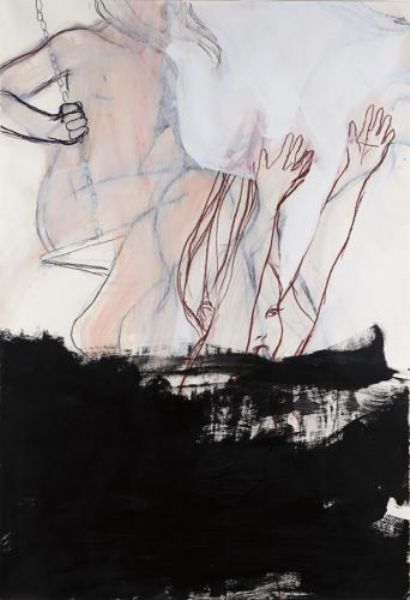
    untitled by rita ackermann

    Untitled by Rita Ackermann, via

    face to face,
    inspired by ted hughes’ lovesong

    your glances were land mines,
    tripped in my amygdala.
    my eyes were tousled songbirds,
    flitting about the room.
    your heart a sprinter,
    i held the stopwatch.
    my smile a sinking ship,
    you gulped it whole.
    your voice the edge of a steak knife,
    with my lips the steak,
    my palms were magnets for your palms
    cold and heavy and drawing us closer.

    your laugh a bomb bursting in air,
    too loud and standing for something.
    my cheeks the rockets’ red glare,
    rosy and burning into a headache.
    each breath a roller coasting
    off its tracks, and us along for the ride.