Peter Lovesey’s mystery novel The Tooth Tattoo opens in London, 2005. Violist Mel Farran, “sweaty in his suit” and tired after “a heavy night playing Rachmaninov” heads towards the London Underground station, ready for bed. He looks up, startled, to find a young woman blocking his way. She asks for his autograph, and Mel feels flattered, a bit bashful even, as violists don’t tend to be recognized as stars of the show.
All those positive feelings fade as a cyclist whooshes past Mel and whisks his most prized possession, his viola, off his shoulder; the woman sprints off, laughing, into the dark. Mel immediately panics at the loss of his instrument, as it is so crucial to his work.
The caper which opens The Tooth Tattoo, a novel published last year, was echoed at the end of January when Frank Almond, the concertmaster (top first violinist, aka seriously good violin player) of the Milwaukee Symphony Orchestra, played a beautiful concert, then left the concert hall with his precious 1715 Stradivarius violin bundled against his chest, protecting it against the brutal Milwaukee cold.
Like something out of a movie (or a book), a nefarious form stepped out of the shadows and tazed Almond, causing him to drop his cherished violin, allowing the tazer-wielding thief to scoop it up and hop into a minivan (really? a minivan?), where an accomplice laid in wait. The two Strad thieves made a quick getaway, speeding out of the parking lot and into the night.
The theft of priceless antique instruments, Stadivarius considered the best among them, raises interesting questions about the thieves and their intentions. The Tooth Tattoo, unfortunately, doesn’t delve into the theft of instruments much further, but rather the suspicious behaviors of an eccentric string quartet. The intentions of the Milwaukee thieves aren’t known, although the police caught those involved and discovered the violin in an attic.
The symphony, with its classical music and buttoned up style, isn’t the place one would expect to turn for a great mystery (in a book or the real world). Apparently mysteries can be found everywhere, and more things than one would first imagine have a dark underworld to match their bright side.
Next, we had to yell at square glass ashtrays at the top of our lungs. The idea was to train ourselves to express absolutely clear intentions, and by mastering this we’d be able to guide our future preclears to successfully confront things. And it didn’t end there. Directing our intentions into particular parts of the ashtray, we’d ask our ashtray very specific questions. The belief was, that whenever you asked a question, you had the intention of getting that question answered, as you should when you had a preclear in session. The ashtray was required to be square. We were to direct questions into each of its four corners.
“Are you an ashtray?”
“Are you a corner?”
“Are you made of glass?”
The same principles that we were trying to learn and understand as auditors were the principles that prevented us from questioning these ridiculous tasks. We’d been trained to follow instructions, just as we were now learning how to make others follow ours. Outlandish as all these tasks were, none of them ever struck me as odd, but remembering the scene now, they were. . . . All these courses were supposed to be about training auditors to be smooth with their communication, and less distracting to preclears in session. But the result is that it made all of us more robotic. It automated our responses, turning everything we said into a script. -Beyond Belief, Jenna Miscavige Hill
Jenna Miscavige Hill was raised in an alternate reality, with its own hyper-abbreviated lingo, strict work ethic, and complicated belief system. She was raised as a Scientologist, and amazingly survived her bizarre upbringing of manual labor and indoctrination to leave the church and write a memoir, Beyond Belief. As Scientology is a relatively new development (started in 1952), it seems safe to assume these stories (and memoirs) may become more common as more children are raised in these situations, flee, then report back to the outside world what exactly they experienced inside the secretive church.
Beyond Belief is simply written, as Hill doesn’t spend much time waxing poetic. She documents her experience, and allows the reader to infer from her life what they choose. She repeated L. Ron Hubbard mantras over and over in what was called “Chinese School”; she and other kids did manual labor at the ranch they lived on, after class and on weekends; she saw her parents once or twice a year at times; and when she and others encountered the usual trials and tribulations of adolescence they were interrogated or banished. What seemed like fun and games to Hill as a young child began to cause pain and heartbreak as she aged and thought more independently.
Some of the situations recounted in Beyond Belief seem so ridiculous they are almost comical (Hill is asked to sign a one-billion year contract when she is seven years old), others are painful to read about. Much of Scientology’s power over its members seems to be derived from separating family members, and Hill struggles to communicate with family and loved ones throughout the book.
Certainly one of Hill’s intrigues is her last name. While both her parents held prominent positions in the church, her uncle, David Miscavige, ultimately took over the church and is still its leader today. Those seeking insider information regarding David Miscavige or an overview of the church’s intense and nefarious business dealings may want to look elsewhere before reading Beyond Belief. This is ultimately Jenna’s personal story, as it should be. For a thorough overview of the church, I suggest Inside Scientology: The Story of America’s Most Secretive Religion by Janet Reitman (although I realize there is high praise for Going Clear: Scientology, Hollywood and the Prison of Belief by Lawrence Wright I haven’t had a chance to read it yet). Without some background on the Church of Scientology, you may find yourself lost amidst all the practices unique to the church in Hill’s story: abbreviations and talks of preclears and auditing, which are explained briefly in Beyond Belief but examined in more detail elsewhere.
Even after reading other books about Scientology, I was surprised by how extreme Hill’s childhood experience was. She now works with the website Ex-Scientology Kids to provide support to others leaving the church. In this type of situation, where Scientology values its image so much and markets itself as a church, it does seem like one of the most powerful things to do is to make these voices heard.
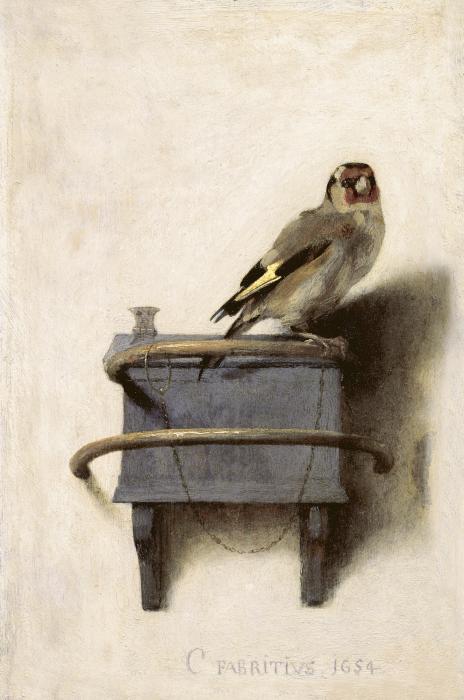
“I started off loving the bird, the way you’d love a pet or something, and ended up loving the way he was painted.”
Donna Tartt, The Goldfinch (p. 26)
Right now I’m reading The Goldfinch, and I’m so in love with Donna Tartt’s writing. Her dialogue, especially, just gets right down into me as something very true or very idealistically true of what people could say if they were bright and fascinating or ignorant and horrifying. I’m not sure why I didn’t really get into Donna Tartt’s work sooner. The name was always around, but there are so many good books out there and my to-read list is 300+ books long.
I actually readThe Little Friend a few years ago, and it baffled me. I understood it was great writing, but I went into it thinking there would be something more there, from the hype surrounding Tartt as an author. I had been so excited to settle in with what I thought would be an engrossing, intense, heavy, good book that the experience left me somewhat turned off to reading more of her stuff.
Recently, I had one of those amazing experiences where you are out to coffee with friends, someone new is there, and you realize they are an avid reader like yourself. When I confessed my love for mysteries, this fellow book lover suggested Tartt’s The Secret History as an excellent mystery-type book to check out.
And that suggestion got me to where I am, totally into Tartt. I listened to The Secret History on audiobook, what seemed to me to be a masterpiece narrated by the author. If you haven’t read The Secret History, now is the time. Small private college ideals of intellectualism go horribly awry, and the unfolding narrative account of what exactly went wrong amidst a studious group of Greek students manages to be enchanting and horrifying like only the best books can be.
The Americans with Russian girlfriends–“pillow dictionaries,” they called them, aware that these lanky, mysterious women were far better-looking than anyone they’d touched back home–began to sound like natives. They were peacocks, preening with slang…A little bravado goes a long way toward hiding the loneliness. You can reinvent yourself with a different alphabet.
― Elliott Holt, You Are One of Them
You Are One of Them by Elliott Holt is a love song of a book: a love song to foreign lands that always seem impossibly perfect until you get there; a love song to a different time when we were younger and everything around us looked so much bigger; a love song to the beliefs we have when we are children, and the hope that we can grasp tightly onto even as adults.
Narrator Sarah had a best friend growing up, a perfect best friend, named Jennifer Jones. They grew up in Washington, D.C. together during the paranoid madness of the Cold War. Sarah’s mom is neurotic, charting nuclear fallout on huge maps spread along the dining table, while Jennifer’s parents are so idyllic they seem quaint.
The girls write letters to the Soviet Union asking for peace, and suddenly Jennifer Jones (just Jennifer Jones, not Sarah) is famous. Her letter has been published in the Soviet papers and answered by their president. They’ve asked her to come to the USSR as an ambassador of sorts. As Sarah watches from home, Jennifer is made America’s darling. And, as Sarah watches from home, Jennifer and her parents crash into the ocean on a small plane, never to be seen again.
Then, years later, Sarah receives a mysterious e-mail from Russia. A woman who knew Jennifer as a child, who hosted her when she visited, asks, “Would Sarah come? Doesn’t she have questions?” She will, and she does. Sarah packs up, and is off to Russia, searching for a truth she isn’t sure exists regarding her long lost friend Jennifer.
If there is a single strong point in Holt’s writing, it is paralleling the disorienting experience of childhood with the disorienting experience of wandering a new country alone. In both situations Sarah seems totally lost and at the mercy of those around her, almost adrift in a sea of people she needs to lean on but may not be able to trust.
In the best way possible, You Are One of Them reminded me of The Gardens of Kyoto by Kate Walbert, one of my favorite books when I was younger. Both books very much have this “Let me sit you down and tell you what I do and what I do not know about my past” feel to the narration, which creates a feel of unraveling a web of dark secrets and drama with the narrator as they explore their own memories.
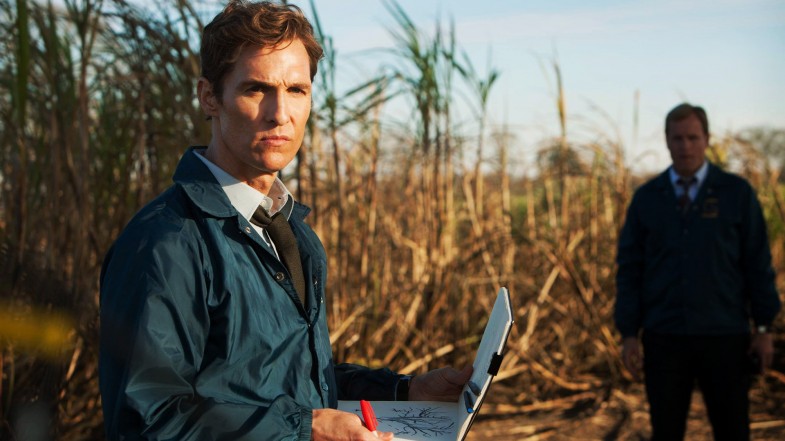
For the true mystery lover, there is only one thing that comes close to snuggling in with a well-written, carefully-plotted, page-turner of a mystery novel: the announcement of a well-written, carefully-crafted new mystery TV series on premium television. HBO’s “True Detective“, which premiered Sunday Jan. 12th to 2.3 million viewers, HBO’s largest audience for a premiere drama series in years, appears to be just that TV series.
The show stars Matthew McConaughey and Woody Harrelson as Louisiana State Police, chasing both a serial killer and their own demons across a staggered time frame. McConaughey’s character is odd enough to do a loop around the stereotypically troubled cop in TV shows as of late, and circle back around again to intriguing.
There are a few things that make “True Detective” unique to most hit TV shows. First, the entire first season, every script, was written by one man. Nic Pizzolatto created, wrote and executive produced every episode. Pizzolatto learned the ropes writing on (the American version of) “The Killing,” and now it is time for him to show the world what he can do on his own. Rather than have a team of writers with a single showrunner to steer them (as the traditional open-ended drama series process is usually written, according to the wonderful book Difficult Men), he wrote each script himself. I think this will be interesting to watch, as it may be an evolution of sorts in a way we think that medium must work. I imagine some people might work better solo, and maybe developing a television series with a single writer will create for a more specific vision than developing it with a team. Pizzolatto wrote one mystery novel, Galveston, published in 2011. Hopefully the popularity of the TV show will help create some more interest in the book, as it has good reviews (the Kindle edition is only $2.99 right now). I added it to my endless list of things to read next.
The second unique aspect of “True Detective” is that it is an anthology. I wasn’t even sure what this meant for a TV series specifically. I looked it up: each season the cast and storyline will be totally different. The message here is to not get too attached: McConaughey and Harrelson will be gone next season, and Pizzolatto told the New York Times the show might next set its scene in Los Angeles, acknowledging the rich noir history of that city.
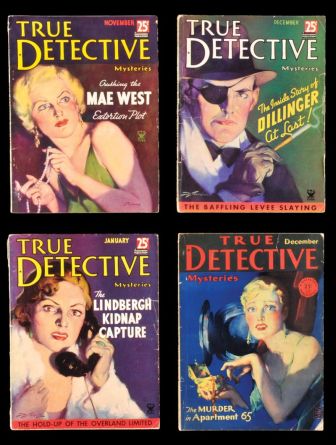
True Detective magazine, via
With a name like “True Detective”, an anthology series and homage to noir would make sense. True Detective was also a true crime (some would say pulp) magazine launched by bodybuilding and health enthusiast Bernarr McFadden in 1924. McFadden originally wanted to share his passion about health with the world, and he created Physical Culture magazine in 1899. Physical Culture received letters, and McFadden, like every successful businessman, capitalized on these personal tales. He created the magazine True Story: Truth is Stranger than Fiction in 1923, and a trend was created. From the wildly popular True Story, a confessional magazine, countless others were developed, including True Detective.
While True Detective was originally a true crime magazine, targeted towards those interested in investigating and attempting to solve murder mysteries at home, fiction also worked its way into the magazine: Dashiell Hammett, author of hard-boiled classic The Maltese Falcon, and Jim Thompson, considered a classic pulp author, both wrote for True Detective.
As much as we’ve fallen in love with the open-ended story arc, an anthology program certainly has its appeal as well. As with the original True Detective magazine, I wonder if the story surrounding one crime will become less important than the process of investigation surrounding all crimes–there is a sort of process here, and there are those who put that process into action all over the country, continuously. Examining an investigation for a season-long snapshot seems like it may be just as intriguing as examining a single case over several years, which never seems to be as satisfying as we all long for it to be.
Of course the best mystery shows tend to be character studies, investigating not only criminals but the struggles of those who spend their time chasing bad guys. If there is one thing that is most promising about “True Detective,” it is that Pizzolatto seems to fully realize and embrace this aspect of the crime drama. The show’s promo carries the tagline “Man is the cruelest animal,” and after watching the first few episodes it is unclear who the message is meant to refer to: the killer the police are chasing, or the police themselves.
A story of faith and doubt, a study of two young men’s struggle to navigate a forced, brief, intensely personal relationship, and ultimately a look at what we think makes us good and what really shows us to be good; Elders by Ryan McIlvain is a character study, so close-up it hurts, of the dance we do as we try to navigate those around us even as they echo our own weaknesses.
Elders takes place on the dusty and seemingly silent streets of Brazil, where Mormon missionaries do the thankless work of knocking on unanswered doors day-to-day. Elder McLeod is anything but a model Mormon: he’s had questions about the faith and its beliefs in the past, and he’s happily nearing the end of his time in Brazil. As if by a test from God himself, Elder McLeod’s new companion (Mormon missionaries work in intense twosomes, they are forbidden to ever leave their companion’s side) seems to be his foil: Elder Passos, a converted Brazilian who is fired up about the church, is immediately enforcing regulations, preaching enthusiastically, and getting under Elder McLeod’s skin.
Having heard of the book from a friend, the summary of the plot didn’t sound that intriguing. Such a character-driven rather than plot-driven book, especially as a first novel, sounded possibly dull or bogged down with each character’s introspection. Once I gave the book a chance, I found this wasn’t the case at all. McIlvain chronicles the emotional struggle of each character with such intensity that this was a hard book to put down, more so than any plot-based thriller. Rather than over-writing and letting the words get in the way of the story, McIlvain seems to have written just enough to make his characters become fully realized and no more.
This book has been dropping onto and off of my radar since its release in the Spring of 2013. I grew up in Utah, in a suburb outside of Salt Lake City, but I didn’t belong to the dominant LDS religion. One of my elementary school teachers brought in pictures of her mission to share with us her experience, and the question “What ward are you in?” became a normal one for me to hear and answer. To furrowed brows and pursed lips, I would explain that my family wasn’t any religion. At a sleepover in my pre-teens, several of my best friends tried to give me a Book of Mormon. They didn’t even need me to read it, they explained earnestly, with their big, concerned eyes gazing into mine. Cornered against the side of a pink and blue quilted bed while we all lay akimbo on swishy sleeping bags, I pushed the book under the bed once the subject was changed, where its fate remains unknown to me.
My parents certainly didn’t realize the extremism of the Mormon religion in Utah before we moved there, and I think I can safely speak for them in saying had they known we wouldn’t have made the move in the first place. Once I left Utah, wide-eyed at California’s huge freeways and city streets, I began to realize what a bizarre experience living in Utah as a non-LDS kid had been. When people ask where I’m from, I immediately follow my “I’m from Utah” with a “But I’m not Mormon,” as the expected follow-up question. I laugh at recognizing restaurants, slang, and culture from the TLC show Sister Wives, and tend to check out books pertaining to the religion as I feel I have an intimate, if outsider, knowledge of its pervasiveness in some areas of our country. By no choice of my own, my own story became enmeshed with the story of this religion.
After reading only a few pages of the Elders, my question was, is this author Mormon? The answer is on the book jacket’s back flap, on McIlvain’s author bio: “Ryan McIlvain grew up in the Mormon church and resigned his membership in his midtwenties.” Elders must have been an intensely personal book for the author to write, and it manages to resonate as such. I can’t wait to see what comes from McIlvain in the future.
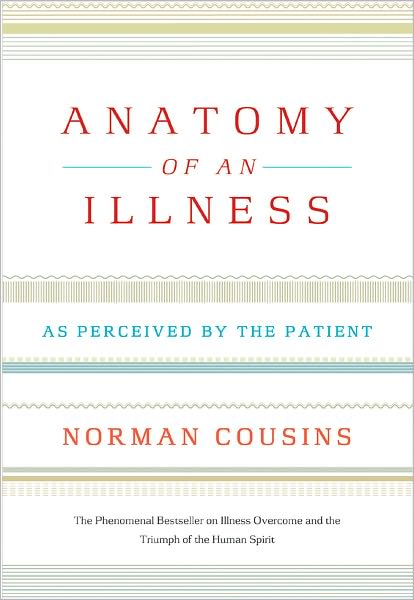
Norman Cousins, a journalist and professor, believed in taking massive doses of Vitamin C and laughing to cure illness. Perhaps more important than either one of those specific treatments, he believed in the power of placebo and each person’s ability to heal their own illnesses. I just finished Cousins’ Anatomy of an Illness as Perceived by the Patient: Reflections on Healing and Regeneration, originally published in 1979 and now considered an important classic of patient involvement in medical care. Cousins documents his own path to healing from his diagnosis of a serious form of arthritis called ankylosing spondylitis (doctors give him a chance of recovery of 1 in 500): he stops taking his prescribed medications, and he leaves the hospital, which he views as not conducive to his healing. He checks into a hotel, and watches funny movies, laughing bunches. After he laughs, he sleeps. He gets an IV of Vitamin C, a slow drip so his body can absorb the Vitamin C better than if he consumed it all at once. And then he gets better.
Norman Cousins, smiling.
Obviously, there is much debate about Cousins healing himself this way. Many doctors speculate that he has experienced a placebo effect, or perhaps (it is now speculated) a misdiagnosis. Rather than protest the placebo idea, Cousins embraced it. “Many medical scholars believed that the history of medicine is actually the history of the placebo effect,” he said. The history of medicine is full of toxic remedies, and we survived these things and even felt better once we took them as cures, perhaps because of placebo. “The placebo is the doctor who resides within,” Cousins said, claiming placebo as an amazing part of our own capacity to heal.
While some of the book is outdated, some of it comes across as an almost prescient warning of what will be lacking in medical care in the future. I have been reading Ben Goldacre‘s Bad Pharma as well. If Cousins’ book, written 30 years ago, was a warning shot fired into the air that something was wrong with the way we demand and receive medical care, then Goldacre’s book is the summation of that dysfunctional medical train rolling forwards at full speed.
Anatomy of An Illness as Perceived by the Patient, 20th Anniversary Edition
In the chapter called “Pain Is Not the Ultimate Enemy,” Cousins speaks to one of the main themes of his book, the overprescription of unneeded drugs. We are overeducated on pills we can take, while being undereducated on usual causes of pain (like stress) and how to solve those problems ourselves. He says, “We know very little about pain and what we don’t know makes it hurt all the more. Indeed, no form of illiteracy in the United States is so widespread or costly as ignorance about pain–what it is, what causes it, how to deal with it without panic. Almost everyone can rattle off the names of at least a dozen drugs that can deaden pain from every conceivable cause–all the way from headaches to hemorrhoids.” Cousins suggests we could combat this lack of knowledge with education about pain in schools, and “If our broadcasting stations cannot provide equal time for responses to the pain-killing advertisements, they might at least set aside a few minutes each day for common sense remarks on the subject of pain.” I do wonder how Cousins would react if he saw the advertisements on television now, not only for over-the-counter pain medication but for prescription drugs tailored towards every ailment you can imagine, side effects crammed into a voice-over while people dance through a field on screen for the last ten seconds of the commercial, like some bizarre bad joke. This Celebrex ad, in which a woman calmly talks about bleeding and death while a man and his dog calmly bike through a blue screen, is something out of a science fiction novel.
In the last chapter, “Three Thousand Doctors,” Cousins talks of the importance of touch in the doctor/patient relationship. I have talked about this with so many people, how doctors seem to just read charts and then prescribe medicines without doing much of a physical exam anymore, and how odd that is. A pain doctor recommended facet injections for lower back pain without feeling the area of my lower back that was in pain. Did the doctor know what he was doing? Probably. Am I confident in my doctor, knowing he will shoot a needle in my spine without taking the time to feel what is going on in my lower back? Certainly not. In this chapter Cousins also brings up what seems like a quaint idea to me, that in order to have trust with your physician, they need to be the one to meet you at the Emergency Room during a heart attack. Who has that sort of relationship with a doctor now?
And finally, Cousins encourages laughter. He encourages it for everyone, especially those with serious diseases, morose and in bed. At one point he explains the purpose of laughter to a depressed young woman with a progressive illness:
What was significant about the laughter, I said, was not just the fact that it provides internal exercise for a person flat on his or her back — a form of jogging for the innards–but that it creates a mood in which the other positive emotions can be put to work, too. In short, it helps make it possible for good things to happen.
Carole wanted to know how she could find things worth laughing about. I said she would have to work at it, just as she would have to work at anything else worthwhile.
There is some debate about Cousins’ actual diagnosis. Thirty years later, it seems that Cousins may have been saving himself from bad medical advice and incorrect diagnoses for much of his life. He was misdiagnosed with tuberculosis when he was young. While in the sanitarium, he stuck with the kids who believed they were healthy until he was released; he was diagnosed with a heart problem and told to stay in bed, he refused (and later he was told that vigorous exercise probably kept him alive), and there are a lot of suggestions on the web that Cousins was suffering from reactive arthritis (from some sort of infection) rather than his more serious diagnosis of ankylosing spondylitis.
Here is Cousins discussing his health (for the first few minutes he is rambling about baseball, ha! Hang in there.); the Hans Selye book he mentions, I assume is The Stress of Life:
.
There was also a movie made based on Anatomy of an Illness, by the same name. Cousins was reportedly unhappy that Edward Asner was chosen to play him. Here are the first four minutes of the film:
The Stress of Life by Hans Selye (this one seems like pretty technical reading to me, I own it but haven’t gotten through much of the first part, but Cousins refers to it several times in The Anatomy of the Illness as Perceived by the Patient)
The demand for commercial sex will never go away. Neither will the internet; they’re stuck with each other. It may no longer even matter anymore whether the sale of sex among consenting adults is wrong or right, immoral or empowering. What’s clear is that no good can come from pretending that the people who participate in prostitution don’t exist. That, after all, is what the killer was counting on.
–Robert Kolker, Lost Girls
Lost Girls starts with a story straight out of a mystery novel, a trendy Scandinavian crime thriller: a panicked prostitute disrupts a sleepy and isolated beach community, usually peaceful behind its private gate, when she sprints from door to door, asking for help, hiding behind bushes and parked boats. A man in a black SUV chases the woman down as she sprints away from his headlights. The stunned community calls the police. Cops show up too late–forty-five minutes later, they arrive to no trace of the girl or the black SUV. In their search for the young woman months later, police start to discover bodies. Four of them, clustered together, at first.
This mysterious sequence of events, seemingly created in the dark mind of a mystery novelist, is pulled from recent history. Robert Kolker‘s Lost Girls documents the unsolved murders of four women (possibly more) on Oak Beach, a barrier island of Long Island. All four women were prostitutes; all four were using Craigslist to solicit johns. It seems the killer in this case realized what apparently many killers do: prostitutes are often not reported as missing, and their deaths are often dismissed as the price of their chosen vocation. Kolker eloquently describes this after one especially frustrating police ruling: “the police seemed to be saying that [the missing woman] had died because her soul had been rent asunder by a life in the streets.”
Lost Girls asks the traditional true crime questions–who is the murderer? Why haven’t they been caught? Why weren’t the bodies noticed? And what about the pathologically lying, limping doctor who lives on Oak Island? But there is an even greater mystery at hand which Lost Girls chooses to explore–how does someone end up on Craigslist, offering their body to strangers for cash? Kolker, in a fascinating, touching, and intimate way, tracks the story of each woman back by finding those who knew her best, from childhood forward. Illustrated by maps charting each woman’s ominous progression towards her final destination point of Oak Beach, NY, Lost Girls documents the four women’s lives. They all encounter hiccups, struggles, and tragedies along the way that lead them to prostitution and Craigslist; their stories all halt mid-frame as each young woman goes missing in the midst of a life they were planning to earn just a bit more from and then get the hell out of.
By making Lost Girls the story of the murdered women, much more than the investigation or the killer-at-large, Kolker manages to shine light on a glaring and uncomfortable point of the sex trade: police seem to dismiss reports of missing prostitutes. Or their friends, working girls themselves, are too fearful to report them missing. When the women are found murdered, and the police are forced to show more interest, they still seem to chalk murder up to a direct result of prostitution, placing the blame with the women and the women’s families. Kolker documents some unbearable victim-blaming by the police, and near the end of the book, it gets to be difficult to read: police describing the women as “greedy”, suggesting they can’t resist going with a serial killer john who offers them a lot of money to hop into a shady situation.
The only thing I did feel was missing, and it seemed to be achingly absent from the second half of the book, was documentation of some of the police work done on the case. I’m not sure if this is because the killer is still out there and the police didn’t want to reveal too much of their investigation, or if there was another reason for this, but Kolker doesn’t document the police investigation itself. It seems that Kolker has one brief interview with the Suffolk County police commissioner and his chief of detectives, both desperately needing a lesson in PR. I kept waiting for more detailed information on the police investigation that never came.
Mysteries without a clear solution are captivating, exhausting, frustrating. As noted in my review of The Hanging Judge a few weeks ago, there can often seem to be a moment when looking over all the evidence, in puzzles both real and created, where it is clear no single explanation can possibly explain past events. Kolker has managed to write clearly about a puzzling mess of facts, rumors, and biases which have built this unsolved case into something daunting and nonsensical. He writes about what happened in the only way we can understand, for now: by telling the stories of the victims, overlooked for so long, unable to speak for themselves. These women were, truly, lost girls. Kolker dared to try to find them. Sadly, he was too late.
Although I don’t read a bunch of poetry these days, sometimes I stumble upon something that stops me in my tracks and speaks to me as the truth for our times in a way only a poem could. This happened to me with a poem from Victoria Chang, “The Boss Tells Me,” featured in The Believer‘s June 2013 issue, quoted here as I couldn’t get the spacing right to copy the whole thing: “I can align/myself with the bystanders who have different/standards for another year I can mortgage my heart/in monthly installments for another year I can fill/my garage with scooters and things/with motors like Mona at the end of the hall with/her loan and home and college bills who never/sees anything in the office never seems to hear/anything in the office but her own/heartbeat her own term sheet for another year”
Like this poem, all the rest included in The Boss are so relevant to today’s struggles and so jarring in the most beautiful and breathtaking of ways. Like much of the best poetry out there, Chang isn’t afraid to go to the dark side–she writes of the ennui and injustice (like the chicken and the egg) of American corporate culture (“no keyboard competes with the tap-tap/of his heart”), the struggle in explaining the lost American dream to her children (“we plug away despite plagues in other countries/we are still in awe of the boss and/the law and all the dollars the doll I once had is now my/daughter’s doll she will dream of balls and/gowns and sparkly towns when should I tell her all the/towns are falling down”), and watching her father forget the American and its politics entirely as he ages (“he can’t/remember his passwords can’t get past/his words can’t figure out what the pass is for can’t/access his accounts can’t remember/ass-kissing for his large accounts can’t account/for himself can no longer count”). The words, stanzas, and themes in The Boss all fall apart into a sort of stuttering and skipping word-play of delirium that reaches a powerful crescendo by the end of the book.
The Boss was published by McSweeney’s Poetry Series. McSweeney’s never ceases to amaze me with the quality of work they publish, since publishing my favorite book of all time The Children’s Hospital by Chris Adrian. In order to get a copy of The Boss, I signed up for a subscription to the McSweeney’s Poetry Series and got a better deal than I would have even on Amazon–when does that happen? Subscribe for 4 issues of the poetry series, starting with The Boss or the next book, for $40. Chang was recently reading at Moe’s Books in Berkeley and I regrettably missed it, as I wasn’t feeling well. Such is life.
Reading poetry always feels more meditative to me than reading a novel, as I’m not seeking a conclusion or larger plot twist yet to come. I wonder if this is why not many people read poetry, or why I tend to not seek it out as much myself. While reading a book can feel, in a way, like almost accomplishing something, poems ask that I try to not accomplish anything while reading them–they offer nothing, and ask that I simply be open to absorbing their words. This seems rather counterintuitive in American society today, where the demands are always to do more, better, faster. I think this is why poetry was also the perfect medium for Chang to express her points–our time spent getting stuff done in office jobs and our many struggles to get ahead may make this book of poems all the more difficult to get through, but all the more meaningful if we manage to pick it up and appreciate it.
Also, can anyone who knows how to cut and paste something into a blockquote and keep its original spacing feel free to post a comment and let me know how that works? Thanks!
Considering its grim subject matter, Coming Clean is a surprisingly upbeat memoir. Kimberly Rae Miller takes us back, as much as she may be able, to a home raised by hoarding parents. Growing up, the kitchen was often too messy to eat in, and the family (Miller, her mom, and her dad) would gather on the parents’ bed, the only clear space in the house, to eat a family dinner. At times the water and plumbing would break down and fights with neighbors were constant. As a girl Kimberly picked another house near her own, and had her friends’ parents drop her off their after playdates so no one saw the disrepair of her yard. As an adult, she has dreams where she is back in the squalor of her childhood home, where “wet mashed newspapers, between [her] toes, not so different from the way sand feels as you inch closer to the ocean.” When the living conditions became too much for the family, abandoning homes entirely seemed an easier choice than cleaning the mess they’d created.
Despite the neglect Miller suffered as a child, and the responsibility she takes on for her parents’ hoarding issues as an adult (repeatedly attempting to help them clear out stuff so they don’t literally die in their own filth), her parents are both portrayed as sympathetic, loving, and likable people. I think this is part of the memoir’s charm–above all, this is a story of a family’s struggle with mental illness. As Miller grows into a more self-aware adult, her role within her family is able to change. She broaches the subject of hoarding with her seemingly oblivious parents (her father continually implies that she is just very clean, rather than him having any sort of issue), passes along a book on hoarding, and eventually takes it upon herself to write this book. These choices make ripples, and these ripples can make waves: near the end of the book, another young woman sneaks up to Miller at a party, and asks if she is writing about hoarding. Miller is sort of panicked, still not sure if she is “the kind of person who regularly told people that my father is a hoarder.” The young woman quickly says that her mother is a hoarder too, and the two women compare stories “like grizzled war veterans.”
There are always bunches of memoirs of notable or unremarkable life experience, and one thing I appreciated about Coming Clean was Miller’s restraint when it came to self-analysis. Right at the start, she admits she may not be fully over her traumatic childhood, and I don’t think this book was written as an attempt to find herself or better herself. I’ve had to stop a few memoirs because I felt so bogged down by the author’s moody, indulgent pontification on their upbringing.
I also liked that Miller acknowledged, at the end of the book, that this was (to a great extent) her parents’ story. Many memoirs cover the area of childhood and upbringing, and many do it well, but these stories can skip dangerously close to biography–who are these mothers and fathers that children have assumed to know so well? Do mom and dad wish to chime in? Maybe Miller was able to acknowledge and have the support of her parents in writing Coming Clean because of their still strong relationship, despite all the stuff accumulated between them. Miller notes that upon finishing Coming Clean, her father said: “Wow, that’s quite a story. I’m sorry that it was yours.”
A quick note here: Coming Clean is available to borrow from the Kindle Owners’ Lending Library, if you have a Kindle and are an Amazon Prime member. One of the perks of Prime/Kindle I often forget about, but there are some gems available to borrow amidst all the rest!

 All those positive feelings fade as a cyclist whooshes past Mel and whisks his most prized possession, his viola, off his shoulder; the woman sprints off, laughing, into the dark. Mel immediately panics at the loss of his instrument, as it is so crucial to his work.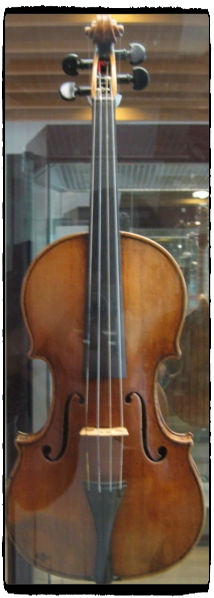







 kalireads.com