Review – The Circle by Dave Eggers

Image Image

Josiah rolled his eyes. ”No, I mean, I know this is a tangent, but my problem with paper is that all communication dies with it. It holds no possibility of continuity. You look at your paper guide, and that’s where it ends. It ends with you. Like you’re the only one who matters. But think if you’d been documenting. If you’d been using a tool that would help confirm the identity of whatever birds you saw, then anyone can benefit — naturalists, students, historians, the Coast Guard. Everyone can know, then, what birds were on the bay on that day. It’s just maddening, thinking of how much knowledge is lost every day through this kind of shortsightedness. And I don’t want to call it selfish but — ” –The Circle, Dave Eggers

Dare I say this beautiful work of publishing, The Circle by Dave Eggers, is the most debated book of the year?  Certainly it is the most debated since Reza Aslan’s Zealot.

First, there was the excerpt published as the New York Time Magazine‘s first ever fiction cover story.  Then, there was the plagiarism claim.  The claim was part humorous (Kate Losse, author of The Boy Kings, hadn’t actually read The Circle but just the excerpt from the NYTmag), and part ominous (both stories, one fiction and one memoir, feature a young woman exploited publicly by a menacing tech company).  After that, there was Eggers’ somewhat flippant and confusing reply to the plagiarism claim.  He said that he “didn’t want The Circle to seem to be based on any extant companies or upon the experiences of any employees of any extant companies.”  In a book that had a ripped-from-the-headlines feel, with aspects clearly grabbed from Facebook and Google, this seemed to be an odd statement to make.  After Eggers’ proclamation of obliviousness, there was the backlash from the technocrats, who claimed Eggers knew nothing about computers.  Oh, the madness surrounding The Circle!

I was so excited to get The Circle I purchased it for its $27.95 cover price at an indie bookstore rather than getting it through Amazon at a $10 discount.  Yay me, saving small bookstores one irresistible and pricey hardcover at a time!  I had listened to the excerpt from the book (“We Like You So Much and Want To Get To Know You Better”) for free on Audible.com, and I was blown away.  Those who enjoyed the excerpt and choose to check out the book should prepare themselves.  Where “We Like You So Much..” was concise and edited, The Circle itself is a sprawling tome spelling out its message again and again.

The Circle follows malcontent but kindhearted Mae, excited to leave her mundane job at the local electric company for a customer service position at The Circle, a sort of Google-Facebook-Apple-and-then-some tech giant.  Mae, who feels so honored to get this supercool job, becomes exhausted as she struggles to keep up with the increasing demands of the perfection-seeking corporation.  Mae is encouraged by her superiors to use the company’s social media heavily, and she becomes depressed and disconnected from real life.  The Circle is making a lot of statements surrounding technology, privacy, and the companies who control these two aspects of our lives;  Eggers seems focused on just getting the message across, loudly and clearly, instead of in a way that might make the book more believable.

There was a lot I liked here.  The manipulating use of positive language rang especially true to me, as I worked at a .com company where we had a list of positive words we could say on the phone and to each other.  The almost constant addition of screens to Mae’s workstation is comical; she is excited about having two monitors, then she gets a third, then a fourth… And most importantly, as Mae finds more affection online, in her rankings and likes and shares, she feels lonelier in the real world.  There is a great moment in The Circle when Mae has left her phone at her desk while running an errand on the company’s gigantic campus.  When she comes back to her desk, her phone is overloaded with texts from her friend Annie:

She read the first:  Hey Mae, realizing I shouldn’t have gone off on Dan and Alistair that way.  Wasn’t very nice.  Not Circly at all.  Pretend like I didn’t say it.

The second:  You get my last msg?

The Third:  Starting to freak out a little.  Why aren’t you answering me?

Fourth:  Just texted you, called you.  Are you dead?  Shit.  Forgot your phone.  You suck.

Fifth:  If you were offended by what I said about Dan don’t go all silent-treatment.  I said sorry.  Write back.

Sixth:  Are you getting these messages?  It’s v. important.  Call me!

Seventh:  If you’re telling Dan what I said you’re a bitch.  Since when do we tattle on each other?

Eighth:  Realizing you might just be in a meeting.  True?

Ninth:  It’s been 25 mins.  What is UP?”

I think we all rely on this instant gratification style of comfort from text messages and social media. The compulsive way immediate communication has affected us all is illustrated well here.  There are always those times I have to tell a girl friend, “Dude just stop texting that guy!  Put down the phone!”  But we all now have this need to reach out for reassurance of our self worth, and fall into a panic if a reply doesn’t appear on our time table.

That being said, there was a lot about The Circle that was hard to take.  I wasn’t sure if Eggers was purposefully making Mae incredibly naive, or if he is maybe just not able to create a believable female character.  Mae’s obliviousness throughout the novel is completely unbelievable, and almost laughable by the end.  I’m not sure how to explain this without giving it away, but one of the main plot points relies on Mae not noticing something simply impossible not to notice; this makes the entire book a frustrating read.  I’m not sure if Eggers believes people capable of missing obvious connections or if Mae’s character is supposed to be some sort of caricature of idiocy.  What feels like clever speculation in the beginning (The Circle introducing affordable small cameras, so you can observe your social networks activities) becomes more dramatic and extreme, until actions towards the end of the book are totally unbelievable.  Even if the technology Eggers presents is plausible, Mae’s reaction to it is so distracting that any message is completely lost.  She is like the buxom blonde in the horror movie, oblivious to the monsters we can all so clearly see creeping up on her.  The warning of a society without privacy owned by a Google-like company has no bearing on the real world, because people simply don’t act like Mae acted.  As commenters on Goodreads noted, Mae acts with the flighty lack of self-knowledge or awareness equal to a character in a YA Romance novel.  And that makes The Circle hard to take seriously.

I’m a huge Eggers fan.  I thought A Hologram for the King was the best book of 2012, and How We Are Hungry showed early on that he has some seriously amazing ability to write great fiction.  I love McSweeney’s and I’ve heard Eggers speak on the good works he does tutoring kids in San Francisco and building the Voice of Witness series, so I have no doubt this guy is a saint.  Eggers still has my heart, but The Circle was a spectacular crash and burn for me.

The Circle on Amazon
The Circle on Indiebound

Review – Difficult Men by Brett Martin

difficultmen

Who knew the land of quality television could be so intriguing?  I’ve dabbled with books discussing the evolution of TV into a medium capable of showcasing intelligent and quality work.  Everything Bad Is Good For You by Steven Johnson discussed the development of the multi-story arc, describing the complicated story lines once reserved for soap operas which began to drift into primetime dramas with Hill Street Blues.

Difficult Men: Behind the Scenes of a Creative Revolution: From The Sopranos and The Wire to Mad Men and Breaking Bad by Brett Martin (I’m not kidding, there are really two subtitles there) takes this concept further, covering what he calls TV’s “third golden age”:  the era that began with The Sopranos, continued with The Wire and Mad Men, and finally crescendoed with Breaking Bad.  The title stems from not only protagonists of the third golden age, like Tony Soprano and Walter White;  but also from the intense and exacting personalities behind these characters, like David Chase, David Simon, and David Milch (yes, the number of Davids discussed gets confusing).

I love stories of the persistence required to reach success, as it reminds me that great things don’t just seem great to everyone and blossom easily, and a lot of the tales behind the most popular TV shows today are full of rejection and stumbling blocks.  Breaking Bad was passed over by several networks and almost didn’t get aired after the pilot was filmed, but AMC gave the show a chance after everyone else said no.  Matthew Weiner stewed over the pilot of Mad Men for eight years, at times literally carrying it around with him wherever he went.

I was mainly drawn to this book because of The Wire.  I thought it was so audacious and smart, and it illustrated how systems can just not work in a way only illustrated by books and movies in the past.  The poignance of the one-liners, and the level to which the writers let things play out (legalizing drugs?) seemed more akin to the complicated plot development of novel than the forgettable actions taken on traditional TV shows.  The Wire’s creator David Simon has had an incredible life: he seemingly forced his way into journalism first in college and then at the Baltimore Sun, and then embedded with Baltimore police for a year and wrote books about his experience in the city.  The first book, Homicide: A Year on the Killing Streets inspired the boundary-pushing TV show Homicide: Life on the Street; the second book, The Corner: A Year in the Life of an Inner-City Neighborhood inspired The Wire.  I hadn’t realized the level of research Simon had done before creating The Wire, and now I realize it shows in the work.

Difficult Men manages to examine the success of these shows from many levels.  Martin discusses the history of the cable business with the same ease as he analyzes our fascination with Tony Soprano.  This book shows that at the core of most TV, there are writers yearning to create stories of a certain quality.  These guys are studying Chekhov and hoping to create art in the truest sense of the word.  As movies keep devolving into blockbuster action flicks and series based on teen novels, it is easy to see why TV has been forced to step up to the plate as an outlet for intelligent and complicated work.  This was a timely read for me, as Breaking Bad was ending shortly before I read this and it seemed like everyone was talking about the show everywhere I went, to a level I’d never experienced before.  TV seems to be the most evolving genre of our time, with companies like Netflix and Amazon now financing their own shows.  It will be interesting to see what sort of masterpiece the brilliant and difficult writers of the TV world come up with next.

Difficult Men: Behind the Scenes of a Creative Revolution: From The Sopranos and The Wire to Mad Men and Breaking Bad by Bret Martin on Amazon.com

Difficult Men on IndieBound

BrettMartin.org

Related articles

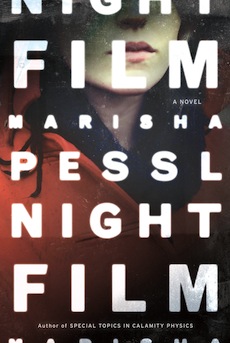
Review – Night Film by Marisha Pessl

Image

“‘Anyway,’ he added softly, ‘a man’s ghoulish shadow is not the man.'”  –Night Film, Marisha Pessl

Night Film by Marisha Pessl is a big, bold statement of a book; released at the perfect time, right before Halloween when everyone is craving a scary story told in the dark.  Pessl brings us “a myth, a monster, a mortal man” in Stanislas Cordova, the film producer at the core of the novel.  He’s described as “a crevice, a black hole, an unspecified danger, a relentless outbreak of the unknown in our overexposed world.”  Cordova’s films are outlawed (an inspired copycat killed a girl in imitation of one film), and bootlegged “black tapes” are passed among obsessive Cordovites.  Renegade underground screenings of Cordova’s films take place, and fans flock to a secret website where they post their darkest secrets as well as the most mundane bits Cordova trivia.  The film producer’s beautiful but haunted daughter Ashley commits suicide, and a ragged journalist past his prime, Scott McGrath, decides to look into the death.  McGrath reluctantly picks up a few delightful sidekicks, and they begin to unravel the mystery surrounding Cordova, his family, and his films.

I was originally listening to Night Film as an audiobook, and I realized I must be missing something as at times the narrator seemed to be reading captions from photos and newspaper articles.  I discovered a used copy of Night Film at Diesel Books for $8 (score!) and was glad I did.  The book features photos of Ashley before her death, articles and pictures from the New York Times on Cordova and his films, and other pieces of evidence displayed as they are discovered.  Until they add a .pdf to the audiobook, I’d recommend grabbing an actual copy of the book to avoid missing out on the full story.  There is additional media built around the book, including an app called the Night Film Decoder and Night Film found footage on the web.  I’m sure cynics will see this as too much hype, but I saw it all as a great addition to the story.

Night Film is reminiscent of the post-modern masterpiece House of Leaves by Mark Z. Danielewski and the terrifying European hit Syndrome E by Frack Thilliez. All of these books are built around creepy (and nonexistent) films; in House of Leaves, a documentary about a house with shifting boundaries is studied, and in Syndrome E, a terrifying old film is found and blinds a man who watches it.  I’m not sure why reading imagined documentation is so irresistable and terrifying.  In Night Film, Pessl takes care to blend Cordova and his horrors into our current culture, pointing out details of the films in which fans have found meaning.  This careful interweaving of fiction and reality heightens fear by making stories feel real.  All these imagined dark films are made all the more terrifying by people’s reactions to watching them, which in the real world we just don’t see or experience.  A man begins to lose his mind when reading about the documentary in House of Leaves;  Cordova’s films are “so horrifying, audience members are known to pass out in terror.”

I haven’t read Pessl’s first book, Special Topics in Calamity Physics, even though it was highly praised. It is now at the top of my list of books to get next.  The plot of Night Film is fantastic, but being able to place the looming figure of Cordova believably at the center of our world took some serious writing talent.  Pessl has wit, and displays it Night Film‘s moments of much-needed comic relief.  The Night Film Quotes page on Goodreads is full of memorable gems.  Night Film is the best kind of horror novel, with just the right amount of brains and brawn on board.

Related articles

Review – Me Before You by Jojo Moyes

Image

I didn’t know too much about Me Before You before I picked it up and started reading.  I thought the cover was fun and funky, and had a vague recollection of a positive blurb in a magazine.  I’m glad I stumbled into this book without knowing too much about the plot–I’m not too much of a romance buff, but I was pleasantly surprised by this story.  Instead of the usual boy-meets-girl, the concept here is that girl (Lou) is hired to look after quadriplegic man (Will), paralyzed when a motorcycle struck him as he crossed the street.  Lou and Will must interact for 8 hours each day as it is her job to keep him company and assist him with daily activities.  Emotions ensue.

Glance through the .gifs featured on Goodreads reviews of Me Before You, and it appears to be the most devastating novel ever written. Although I didn’t find it that heartbreaking, there were some times I chose to put the book down and take a break; it is some seriously heavy reading material, confronting moral issues and human emotions with the same brutal honesty of a Jodi Picoult story.

All the love aside, what I really appreciated about this book was its broach of a topic I haven’t often encountered in popular fiction, the day-to-day experience of a quadriplegic man in our world.  As Lou began to see the world from Will’s perspective, I did too.  Lou points out: “There are things you don’t notice until you accompany someone with a wheelchair.  One is how rubbish most pavements are, pockmarked with badly patched holes, or just plain uneven.  Walking slowly next to Will as he wheeled himself along, I saw how every uneven slab caused him to jolt painfully, or how often he had to steer carefully around some potential obstacle.”  Moyes does a great job of describing the discomfort people have when interacting with someone who is paralyzed or immobile.  There are failed handshake attempts, people obviously attempting to avert their eyes, and others noticeably staring.

Me Before You was similar, in some ways, to The Dive From Clausen’s Pier by Ann Packer.  In that book, a young man is paralyzed after a dive into a shallow lake, and his fiancé chooses to flee the situation.  The Dive from Clausen’s Pier shows us the significant other’s perspective.  In Me Before You, Will’s girlfriend has already tried to make it work and left him; we see the aftermath of this from his perspective rather than hers.  Both books are worth checking out.

This was the first book by Jojo Moyes I had read.  Her latest novel is called The Girl You Left Behind and sounds to be in the same love-through-history vein as Beautiful Ruins by Jess Walter, which was a hit.

Me Before You on Amazon

Me Before You on Indiebound

Jojo Moyes webpage

Related articles

Review – Five Days at Memorial by Sheri Fink

Image

Five Days at Memorial:  Life and Death in a Storm Ravaged Hospital was everything that makes nonfiction great to read:  a subject worth uncovering, documented by a voice with a clear penchant for obsessive detail.  Sherri Fink recounts the struggle for survival at New Orleans’ Memorial Hospital, which acted as a port in previous storms, in the days following Hurricane Katrina; she discusses at length the choices made by hospital staff (several doctors and nurses made the choice to euthanize patients they felt couldn’t be evacuated) and the investigation that followed.

I listened to this as an audiobook, and I could not stop telling people about it. First off, I had no idea things got this bad at Memorial Hospital during Hurricane Katrina.  The scenes described were more harrowing than any fiction could be: hospital staff stuffing preemie babies in their shirts to evacuate as there was no space for incubators, nurses ventilating patients by hand due to power outage, stifling heat with smashed windows acting as the only ventilation, while gunshots were heard outside, and rumors of martial law were spreading.  Hurricane Katrina was a testament to our government’s inability to organize a response to disaster, and Five Days at Memorial illustrates the high human costs of that inability.  This was at points a difficult book to get through; the descriptions are so clear I felt sick even imagining such an experience, let alone living through it.  I kept asking myself, “Why doesn’t the army come to relieve these exhausted hospital staff members, and help them evacuate these dying patients?”  It was so frustrating to know this happened in America and there was nothing I could do about it now.

The questions of justice presented here are some of the most difficult questions that exist about human life, and at points reminded me of the perplexing moral issues presented in Michael Sandel’s epic Justice class at Harvard, free on iTunes U.  Is it right to evacuate the most able-bodied people, who need the least help and will be the quickest to get into helicopters? Or is the more moral choice to evacuate the most sickly to safety first, as they are the most in pain and most in need of help? The questions presented at Memorial Hospital in that hellish time after the storm speak to historical ethical dilemmas, and Fink does a great job of explaining the dangers with and benefits of each choice.

Kirsten Potter narrated the audio version of the book, and did an incredible job. This story could have easily been overdone by a different narrator.  Potter managed to stay neutral but interested, the voice of a reporter bearing witness to history rather than a character actor.

Although the second part of the book (covering the aftermath of choices made at the hospital) may not be as gripping as the harrowing account of survival in the storm, I think this is the portion that makes this book so important.  We can all guffaw at the tragedy, but examining it with a critical eye is the only thing that will keep it from happening again.  Perhaps the most terrifying part of Five Days at Memorial is its end, when Fink embeds with American medical disaster teams after the earthquake in Haiti.  Seemingly logical decisions to preserve oxygen for those who need it most almost cost a young woman her life.  It seems like in a disaster, the luck lies with those who have the most innovative, creative doctors who are able to see beyond the complicated machines of modern medicine.

Five Days at Memorial on Amazon.com

Five Day at Memorial on Audible.com

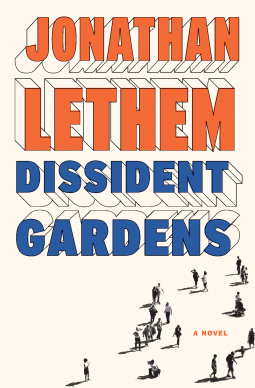
Review – Dissident Gardens by Jonathan Lethem

dissidentgardens

I’m a huge fan of Jonathan Lethem.  His books are always oddness worded authentically, and I think he is able to capture a lot of the bizarre struggle of life we go through in a way only the greatest authors can.  My favorite of his books are the ones considered the more genre-fied odd ducklings of the bunch, such as This Shape We’re In, Gun, With Occasional Music, and As She Climbed Across the Table.  I think the fact that he can dabble in different genres (like Margaret Atwood is so easily able to) is a testament to his ability to write great stories, regardless of their setting.

Lethem’s newest novel Dissident Gardens, released last month, is not a genre novel.  The story documents the struggles of three generations of a radical Leftist family.  Rose is the almost-Jewish Communist matriarch, “a dark tower, a ziggurat.” Struggling to escape mom’s shadow, “like crawling out of a bomb crater,” is daughter Miriam; a cool, confident hippie chick in the way only the daughter of a rebel can be.  Miriam’s Quaker-raised son Sergius struggles to find his own identity amidst the mayhem of his history.  Stealing the show is Cicero, a sort of step-son to Rose, a frustrated gay black professor who prides himself on making the simpletons surrounding him uncomfortable:  “Cicero, like Rose in the end, preferred his listeners stunned and bleeding, all masks on the floor, or on fire.”  There has been much talk of what this more realist book means for Lethem – is he growing up, is he demanding respect as a legitimate author, is he giving in to reviewers’ requests that he give up comic books already?  Lethem has a great interview on Slate answering many questions about the book. The summary: the metaphysical here is the concept of ideology, of that intangible better way of living each character is searching for.  And I can certainly dig it.

I was hesitant when reading the summary of Dissident Gardens, because I love a story with bells and whistles (a mystery, an apocalypse, a drug-laced seedy background).  Once I began reading, however, I was reminded immediately that Lethem could rewrite the phone book into something meaningful said in a way I never would have imagined.   His unique but effortless wording had me doing double takes.  Even the first scene, of Communists gathering in Rose’s kitchen, has sentences so well crafted it is hard not to pause and mull over them for a while:  “They’d overdressed, overcompensated with vests and jackets, now arraying themselves on her chairs like some Soviet oil painting, postured as if on some intellectual assignment.  In pursuit of that chimera, the Dialectical Whosis, when really there was to be no dialectic here. Only dictatorship.  And the taking of dictation.”  An ocean atmosphere is “noon-luminous”, Cicero allows his class to sit in silence and “plummet into that abyss of the inexpressible where the truth lies.”

The intensity and accuracy with which Lethem allows his characters to document their emotional landscapes, and the room with which he gives them to grow large in his words, remind me here of that other Jonathan who has created epic American family dramas, Jonathan Franzen.  And like that other Jonathan, Lethem shows us everything it is to be part of a family, everything there that isn’t as simple as love.

The surreal feeling of past books is there, when Miriam competes in a TV quiz show and begins to have almost hysterical fantasies under the blinding studio lights.  It is there as Rose falls for, and meets, Archie Bunker.  The surrealism is there as these characters reach out for a sense of certainty in their beliefs, struggling to reconcile an imagined idealism with the harsh realities laid out before them.  Lethem shows us that struggling through true life, with bizarre self-talk and strings of random experience molded into belief, can be just as disorienting as any supernatural tale.

Dissident Gardens on Amazon.com

Dissident Gardens on Powell’s Books

Being Human 2013 post-conference thoughts

As I noted in my last post, I attended the Being Human 2013 conference yesterday in San Francisco.  The conference is described as “the science and mystery of human experience” and featured great thinkers of our time (neuroscientists, anthropologists, etc.) discussing what it means to be human and attempting to explain or improve upon the human experience.

It was absolutely an enlightening experience and despite my painful wooden balcony seat, I’m very glad I went.  You can watch the entire conference online at FORA.tv.

For me, the best part of the day (even in light of all the brilliant talks) was watching Marquese Scott‘s live performance. Marquese Scott is an epic dancer, in the vein of the innovative and illusionary David Elsewhere.  The first time I saw Marquese Scott’s dance videos, I immediately dismissed them as edited or photoshopped.  I think a part of me was still skeptical of what I’d see online going into his performance, and it totally blew my mind!

Other than some incredible dance moves, the conference had a lot of great talks.  The unexpected standout for me was the physician Esther Sternberg.  She moved the crowd to applause several times in her talk on how to cultivate our own well-being in our environments.  One of the most memorable quotes from her talk was, “We need to work towards creating a landscape, literally and figuratively, that helps promote wellbeing.”  She has written two books, Healing Spaces: The Science and Place of Well-Being and The Balance Within: The Science Connecting Health and Emotions, and I have added both to my to-read list.  This was not some healing crystals type stuff (no offense to healing crystals), but solid research showing that your environment affects your health.

The underwhelming talk of the day (there had to be one, right?) was given by Paul Ekman.  Paul Ekman, the psychologist who pioneered the science of micro-expressions, chose to talk about his current project of global compassion.   He is publishing an e-book on the subject which hasn’t yet been released (when I searched for the title on Amazon, Moving Towards Global Compassion, they didn’t even have it available for pre-release).  He mentioned many times that he has spent many hours talking one-on-one with the Dalai Lama, which is certainly awesome.  However, the talk seemed fairly vague since there were some Buddhist concepts in his work he chose not to get into (I understand he only had a brief time to convey his points).  The most interesting part of his talk was his speculation on why we may lose compassion as we age or lack a culture which cultivates compassion.  He attributed this to media and entertainment (like video games) that encourage competition rather than collaboration.  I would have loved to hear more about this, but he didn’t go into it.  Certainly if competition is the opposite of compassion, that is a problem I would like to hear him talk about.  I saw several people with copies of his book Telling Lies in the audience and I couldn’t help feeling disappointed I didn’t get to hear about micro-expressions from their master.

The most techno-promising talk of the day was David Eaglemen’s talk on “plug and play” sensory experience.  He wore a vibrating vest, which he hopes will give deaf folks who choose to wear it a sensory experience of sound.  He talked of all the sensory experience we aren’t having as humans–there are magnetic fields and ultraviolet waves around us that we aren’t seeing.  He explained how people have expanded the human experience through various devices, like magnets placed in finger tips which allow people to feel magnetic forces.  The only downer in this talk was when Eaglemen called Twitter “the conscience of the world.”  Does he really think that?  Certainly a bunch of people use Twitter each day (Twitter has 190 million unique visitors per month) but there are over billion people in the world.  Twitter may indeed be the conscience of certain limited social groups, but certainly not the planet.

To ensure we didn’t freak out while absorbing all this information, there were lengthy breaks between each segment so we could get up and mingle in a nice outdoor area with coffee and other refreshments.  It was classy:

5fc4b60c287a11e3949722000a1f90e1_8

The day ended with a moving and (like everything else from the conference) mind-twisting performance by ELEW.  He did a crazy-cool cover of The Knife’s “Heartbeats”, and played the piano not only from its keys but through its internal strings.

That’s the wrap up, folks!  Until next year…

BeingHuman.org

Being Human 2013

being-human-2013-26

I’m excited to say I will be attending the Being Human 2013 conference in San Francisco this Saturday!  The all day event is focuses on “the science and mystery of human experience”, with talks by anthropologists, neuroscientists, and other great thinkers of our time.

A lot of smart people are speaking this year, and I hope I don’t wig out from sitting for a long time trying to listen to them all. I was first drawn to the event because of my love of Robert Sapolksy‘s random talks and YouTube videos drifting around the internet.  Sapolksy is a professor at Stanford University teaching in several departments, has received a MacArthur Genius grant, and has an epic beard.  He wrote the fairly-readable tome Why Zebras Don’t Get Ulcers, which discusses the effects of chronic stress on the human body, among many other books.

Robert Sapolksy discussing dopamine:

He also has a ton of lectures and talks available free for download at iTunes U.  I can definitely get lost in his stuff for hours!

Another epic guest is Paul Ekman, the facial expression guru who was the inspiration for the popular (but cancelled) drama TV series Lie To Me.

And how random is this?  Marquese Scott, the epic dancer from that viral dubstep video floating around the internet, is going to perform.  I love that in the midst of all these intellectuals discussing human nature, this guy is going to bust out some moves.

Marquese Scott doing his thing:

Scott seems to be the greatest thing since the beloved David Elsewhere (remember this classic vid?):

Anyways, back to being human.  Other great thinkers will be there, including psychology professor/author Joshua Greene, neuroscientist/author David Eagleman, physician/author Esther Sternberg, some transhumanist lady who sounds INTENSE when talking about prolonging human life, and neuroscientist Richard Davidson.

Here are the mad thinkers I’d love to see included in Being Human in the future:

  • Martine Rothblatt – She has had such an interesting life.  I’m not sure if it is accurate to say she invented satellite radio, but she worked with NASA on satellites and then founded several satellite communication networks, including the first satellite radio networks in 1990.  When her daughter got sick with pulmonary arterial hypertension (a rare disease with no good drugs on the market to treat it), Martine founded a biotech company, got a PhD in bioethics, and helped prolong her daughter’s life by bringing a new drug to market.  20 years later, her daughter is doing well.  Now Martine is into transhumanism and while I don’t know about all of that, reading Jon Ronson’s encounter with Martine’s intelligent robot was quite entertaining
  • William Gibson – Yes, I went there!  Gibson may not be a neuroscientist, but I think he is one of the great thinkers of our time.  He is imagining this stuff far before anyone begins to research, develop, or prove it.  His interview in The Paris Review kept me up all night thinking about the present state of things, and the future.
  • Marlene Zuk – I recently read Zuk’s Paleofantasy, and I’d love to see her debate or discuss her ideas futher, with others in her field.  As I noted in my review of her book, I felt she really lacked the discussion of why our society is turned towards a longing for a more caveman-like lifestyle right now.

I’ll have an update after the festival about what incredible insights I learn, and what new authors and books I discover. Hopefully I can get my Why Zebras Don’t Get Ulcers signed by Robert Sapolsky!  And then in a week or so, I’m going to see Michael Chabon in discussion at a Park Day School benefit.

Being Human Festival 2013

The Bone Season by Samantha Shannon – What went wrong?

BoneSeasonSamShannon

I recently read the “highly anticipated” novel The Bone Season, by Samantha Shannon.  Reading this book just confirmed two of my beliefs:

1)  Marketing campaigns can easily hurt the books they are promoting.

2)  The best non-fiction authors do an amazing job of incorporating facts seamlessly into their stories.

First, point one.  Marketing campaigns can hurt books and disappoint their readers.

All the readers who reviewed The Bone Season on Goodreads seemed to feel the same way about it I did.  Way too much information being thrown out, with a beginning that is almost comical thanks to its info-dumping.  I wanted to love this book so much (as did every other reviewer on Goodreads, it seemed).  A cool young woman publishing a hit?  What isn’t there to love about that story.  Someone, somewhere compared this poor girl to JK Rowling and immediately set her up for failure.  As we saw with The Cuckoo’s Calling, JK Rowling’s writing can’t even build a new JK Rowling-level of success.  The blurbs for this book are also overly optimistic–U.S.A. Today called The Bone Season a combination of George Orwell and J.R.R. Tolkein!  No pressure, right?  What this means is the expectations for The Bone Season were incredibly high.  Readers were expecting an Orwellian brand-new Lord of the Rings series that could create a Potter-worthy hysteria.  With that sort of hype, of course readers are going to be disappointed.  I often feel this way when a book is declared a “hit of the summer” or “next Girl with the Dragon Tattoo” or “new Hunger Games”.

In Janet Maslin’s brilliant and brutal review of The Bone Season at the New York Times, she calls it “a human interest story, not a book.”  She points out that much of the hype around the book has been on the author and her success-the movie options, the money.  Obviously the average reader isn’t looking for a literary masterpiece, but the fact that books have become hollow hype machines similar to blockbuster movies is something to notice.

And that brings me to point two:  The Bone Season’s writing itself.  It takes skill to make information become digestible  and the best non-fiction authors are masters of this.  I think studying how great non-fiction incorporates facts into vivid stories would absolutely help The Bone Season become readable.  This is such an information-laden book (granted, the information conveyed is regarding a fictional world but there is a ton of it), I think it would have benefitted from a more journalistic narrative.  Great non-fiction books pack an incredible amount of information into a readable story.  I think The Bone Season would have benefited from the focus on creativity and details which build a picture of the facts.  There is a saying in writing that you “Show, don’t tell,” and The Bone Season is a book of telling.  Great non-fiction manages to show all its information.  Spillover, a non-fiction book by David Quammen about the spread of zoonotic diseases, is 600 pages of scientific facts and history.  Quammen is such a brilliant writer that these facts go unnoticed in the story.  Bad Pharma, a huge non-fiction book covering the pharmaceutical industry’s faults, reads more clearly than The Bone Season.  I think great non-fiction has the ability to place the reader in a story rather than simply conveying a story’s information.  I also think this was exactly what The Bone Season was lacking.  The Bone Season was a textbook of information, a list of ideas with little explanation as to why we should care.

How would I fix The Bone Season?  Clearly there is a world inside Samantha Shannon that needs to get out.  We all want to hear about this world she has created and fall in love with it, we just need her to show us what its like there.  I would start with Paige at the protests in Ireland when she was six.  Make that the introduction to a book entirely based upon Scion’s beginnings in a world which sees ghosts, and Scion’s growth from Paige’s view.  Cut the rest of the plot, with its aliens and secret islands.  Get rid of some action and focus on the context.  I would focus on conveying all that information thrown at us in The Bone Season’s first chapter into an entire book, tidbit by slow tidbit.  Once we understand the creepy world under Scion rule in a clear way, other books could bring in more information.  The second book could focus on Paige’s gang, and allow us to get to know them better.  And maybe, by the third book, when all this information is embedded into our memories in a less overwhelming way, we could approach the whole alien demon species thing.  We’re all cheering for you, Samantha, but please give us something we can work with next time!

There is some absolutely great and really dark stuff in The Bone Season.  The idea of masks that seal to a person’s face, making them unrecognizable, was wonderful.  The terms of endearment were beautifully executed in the dialogue, pulling off a new-world slang that rang true.  There is a lot of great stuff here, and I will definitely read the next book with hopes of a smoother story.

The Bone Season on Amazon.com

10 Books With Epic Movie Potential

I was inspired by the blog post and ongoing conversation over at A Little Book of Blogs about the best book to film adaptations.  I started thinking about the best (and worst) movies I’ve seen based on books.  I actually started writing a blog post including a list of my faves, but while writing it I realized that most my favorite book-to-movies are pretty obvious (The Shining, The Silence of the Lambs, Fight Club, Blade Runner, etc.) and have been heavily discussed all over the internets already. This made me begin to think of all the great un-movied books, which are sitting on my shelves and just begging to be made into epic films.

1. House of Leaves by Mark Z. Danielewski

A terrifying documentary analyzed in obsessive detail by a blind man?  A house which seems to be growing extra rooms and hallways?  An addict falling into madness?  How has this not been turned into a bizarre and creative masterpiece of a film?

2.  Gun, with Occasional Music by Jonathan Lethem

This hard-boiled detective novel is set in a twisted, dystopian future where intelligent animals live as (to some degree) equals in human society.  Gun, with Occasional Music is begging to be one of the coolest mystery movies ever made.

3.  The Children’s Hospital by Chris Adrian

The world ends, and who does god save?  The staff and patients of a children’s hospital, which elevates above a flood-filled world.  Angels, plagues, nefarious youth…  All the makings of a great film are included in this book.

4.  The Dublin Murder Squad books by Tana French

Tana French is one of the best mystery writers living today, and her books are each vivid tales with their own unusual settings (the woods, a creepy house full of young and attractive youth, abandoned track housing, the rough spot in town).  Her Dublin Murder Squad cops practically step off the page and into the real world.  Great actors and actresses could make each of these parts oozy with emotion and amazing to watch.

5.  Rebecca by Daphne Dumarier

I know, I know.  This classic has already been a movie, a play, a TV series, and an opera (really).  This just means the story is that good, and we are due for a modern remake.

6.  The Lost Memory of Skin by Russell Banks

This was one of the best books I read last year, and I think this type of complicated antihero tale set against the lush backdrop of Florida would make a painful, powerful, memorable film.

7.  The Delivery Man by Joe McGuiness

Film rights supposedly sold years ago for this glimpse into the world of the young, surprisingly innocent deviants of Las Vegas.

8.  Chanel Bonfire by Wendy Lawless

Wendy Lawless recalls her mother’s sociopathic behavior.  Even though this is a memoir, much of the stuff is hard to believe and definitely worth building a film around.  Chanel Bonfire, the movie, could be the adaptation that Running with Scissors was meant to be.

9.  Oh the Glory of It All by Sean Wilsey

In the same category as Chanel Bonfire, Oh the Glory of It All is Sean Wilsey’s memoir of growing up with an insane San Francisco socialite for a mother.  This is a sprawling book which would need some heavy editing for a film version, but Wilsey’s emotional struggles and process of healing are uniquely relevant to the modern struggle of every adolescent who has been given every opportunity but taken none.

10.  State of Wonder by Anne Patchett

Hidden deep in the rainforest of Brazil, a pharmaceutical company’s research doctor has gone rogue.  A woman is sent to find her.  I’m imagining this as an Apocalypse Now meets Dr. Quinn Medicine Woman.

What books do you think are begging for movie adaptations?