Review – The Hanging Judge by Michael Ponsor

the hanging judge

In almost every trial he’d ever done, as a lawyer or as a judge, there came a moment in the testimony when the effort to re-create the past entered the Twilight Zone, when all the possible realities were implausible.

-The Hanging Judge, Michael Ponsor

Michael Ponsor, the author of The Hanging Judge, writes from a unique perspective in his debut novel. Ponsor is himself a sitting federal judge in Massachusetts, and he presided over the first death penalty case in Massachusetts in over fifty years. The emotional and messy plot of The Hanging Judge assumedly echoes his experience, although he insists the case is in the novel is, of course, fiction.

The Hanging Judge follows gangly, awkward federal judge David S. Norcross as he struggles through a debated and publicized death penalty case in Massachusetts. Ponsor writes from each character’s perspective as they are affected by the case: from the mother of the gang ruffian who drove the getaway car, to the overweight cop with wife woes. We learn about the case from the perspective of the wife of the former gang-banger arrested for the crime, and also from the Assistant U.S. Attorney prosecuting the crime who just wishes everyone in Massachusetts would stop mistaking her for Puerto Rican (she’s Cuban).

This jump in perspectives has a wonderfully humanizing effect on all the characters involved in the trial, and especially on the protagonist Judge Norcross himself. I can’t help but wonder if this wasn’t Ponsor’s intention in writing The Hanging Judge–to give us all a sort of pause and remind us that there actual men and women do these difficult jobs in criminal law, while others get caught up in this net of a legal system we turn to for entertainment.

The book drags when Ponsor strays from the story of Judge Norcross’s case and excerpts the story of two men wrongly tried and hanged in Massachusetts in 1806: Dominic Daley and James Halligan. Although I can understand the relevance of this Massachusetts death penalty debacle, and the point of interweaving the narrative history throughout the larger story, each piece of history was like a speed bump placed in the middle of the book.

At several times in The Hanging Judge, there is a sort of delirium expressed about trying to seek the truth regarding criminal events. As layers of conflicting motives and untruths are revealed in the case, in and out of the courtroom, it seems the truth is less important than the motivation behind the words spoken. I’ve actually picked up a few true crime books recently, and it will be interesting to see how this feeling translates into the documentation of actual court cases.

There is a memorable scene where Judge Norcross is invited to a dinner with a liberal professor, who heckles him about America’s legal system throughout the evening.  I’m sure this is something judges have to deal with in the real world, people being as difficult as they are. In a burst of frustration after ignoring the professor’s bait for the evening, Judge Norcross grabs the salt and the pepper shakers off the table and asks the professor if he could determine what happened if “‘Ms. Pepper says she saw Mr. Salt stab her boyfriend. There was a lot of confusion, but she’s positive it was him. Mr. Salt says he was home at the time…”  He has the sugar bowl and the creamer chime in as alibis for the salt. The professor admits he’d have no idea what happened.

After laying out the difficulties of the legal system in such stark terms (with condiments, no less!), one would hope the author and (let’s not forget) sitting Judge Ponsor would have some grand summary about America’s justice system to ease all of our fears. The Hanging Judge isn’t that sort of book, however. The message here is that justice is messy, fallible, and, above all, human.

Final thought:  What is a “hanging judge”?  From Wikipedia:

Hanging judge” is an unofficial term for a judge who has gained notoriety for handing down punishment by sentencing convicted criminals to death by hanging. More broadly, the term is applied to judges who have gained a reputation for imposing unusually harsh sentences, even in jurisdictions where the death penalty has been abolished. The term “hanging judge” is generally applied to officers of the court with mandates, as opposed to extralegal lynch law.

If you are interested in receiving a copy of the book for free, there is a Goodreads giveaway for 3 copies ending on January 7th.

The Hanging Judge on Amazon.com

Related articles

Review – Doctor Sleep by Stephen King

doctor sleep2


What happened to that little kid from The Shining, once he grew up? What would have happened to his dry drunk of a father, if he had found Alcoholics Anonymous? These are two of the questions Stephen King wanted to answer in Doctor Sleep, he explains at the end of the novel. King has built up quite the tale out of the Overlook Hotel’s ashes: I listened to the audiobook version of Doctor Sleep, narrated by Will Patton, and it was just awarded best audiobook of the year at Audible.com a few days ago.

Doctor Sleep brings us that little strong, sweet, and smart kid Danny Torrance all cragged and grown up; Danny is such a painful portrayal of innocence lost he’ll make you wistful for your own early childhood, before all the mistakes started piling up. The Overlook still haunts poor Danny’s dreams, and he’s now a drunk who despises himself for turning out like dear old dad.

King takes us through Danny’s alcoholic bottom with the descriptive language he has such a knack for, making the first bits of the book difficult, but necessary, to get through. King loves to linger a bit on the rough stuff in life; rather than having an off-putting effect, this is part of what makes him a horror powerhouse. The man who spent paragraphs describing wind-up teeth in “Chattery Teeth” and didn’t shy away from documenting the split of a woodchuck into two in Under the Dome turns his attention to Danny’s low points with alcohol, and we are spared no detail of where Danny’s drinking takes him. Danny’s recovery through Alcoholics Anonymous is a part of the story, something that is becoming more common in novels and television shows.

Oddly enough I may have been happy with a story of Danny Torrance without the horror, but rather than only documenting Danny’s struggle to find recovery, King introduces a new and unlikely set of villains: a nefarious band of energy banshees called the True Knot, disguised as old folks touring America in RV’s and campers. They feed off of the shining that those like Danny possess. They sense something delicious in a bright young girl named Abra, who shines something strong and needs a mentor like Danny desperately.

The characters here were delightfully vivid for me. The evil figures, roving in a band of trailers, were reminiscent of the post-apocalyptic armies in Robert McCammon‘s Swan Song, and I’d be interested to know if King was influenced by that classic in any way while writing this book. King has in Doctor Sleep, as he does in many of his books, an appreciation for the full spectrum of human capability.  It would have been so simple for King to write Abra as a one-dimensional sweetheart, but she has her own dark side–as we all do, King seems to be noting.

Where the story lost me a bit was in the action. Without giving too much away, many of the battle scenes felt a bit silly to me because they were taking place, well, in people’s minds. When used in books and in films, incredible mental powers (let’s face it, all magical powers) can often feel a bit hokey as they can at anytime become a cheap trick. I think King relied on this type of thing too much towards the end of the book. Things become much more cerebral than they did in The Shining, and I was disappointed there wasn’t a more epic The Stand style battle between good and evil.

The final question here is Abra, Danny’s delightful and powerful-beyond-belief mentee, whose temper matches her strength. Will we meet Abra again, in her own book? It would be wonderful to see the capabilities of an older Abra, adolescent and out-of-control. It seems like too good of a story not to tell.

Doctor Sleep on Amazon.com/Indiebound.org/Audible.com

Related articles

Review – The Burn Palace by Stephen Dobyns

the burn palace

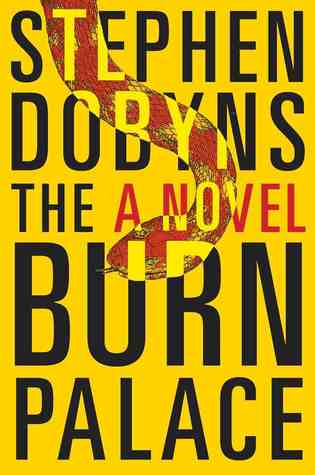
The Burn Palace: A Novel by Stephen Dobyns is an enchanting kind of book, a pick-it-up-at-the-bookstore-because-the-dandelion-yellow-cover-calls-your-name kind of book, a read-the-glowing-blurb-from-Stephen-King-on-the-back-and-you’ve-gotta-get-it-now kind of book, a happy-to-curl-up-with-its-little-towns’-happenings-at-night kind of book, a baby-turns-snake-while-vicious-coyotes-prowl-oh-my! kind of book.

In The Burn Palace, small town life get weird. The quaint community of Brewster begins experiencing bizarre (and possibly supernatural?) occurrences: coyotes turn cruel, and a baby disappears from a bassinet leaving a snake in its place. Characteristics of small town life once considered quaint and sleepy become glaringly inefficient in a crisis, and Dobyns ensures we are privy to each town resident’s struggle to adapt to the odd on-goings and the hysteria surrounding the events.

Dobyns writes in a fantastical tone, boldly dropping into the second point-of-view (that’s right, you heard me) to include the reader as a sort of peeping tom, an unseen witness or incredibly private private investigator, and we are taken flying through the town and into residents’ homes at intimate times, checking out their thoughts as they tuck themselves into beds, asking us to try and put together the puzzle pieces while we also feel the tension bubbling up within the community like a pot ready to overflow.

The one thing (okay, maybe two things) glaringly absent here were a map and a character list. With such a focus on the layout of the town of Brewster, and such a wide array of characters included, I kept flipping back to the beginning of the book seeking an illustrated map of the town that just wasn’t there. Would it have been a bit too cheeky? I think Dobyns already took us there, and it would have felt just right. So many characters were introduced so quickly and briefly, that I had a hard time keeping them straight. I think a map and a list of characters, their relations, and professions at the beginning of the novel would have been a greatly utilized tool to help readers further envision and understand the town we were being invited into.

In many ways, The Burn Palace feels like a light tale when compared with some of the gritty and gruesome mysteries that are popular today. I have a lot of love for darker mysteries, but some can get so graphic that I wonder where authors have left to go. When we’ve all visited our darkest nightmares, where will we go for our thrills? The Burn Palace reminds me that the shock value doesn’t always need to be there for a great mystery. All you need is a great story, one that people would enjoy gathering around a campfire to hear, maybe. One that perhaps starts in a small town, maybe a town named Brewster, on a dark and windy night…

The Burn Palace on Amazon.com/Indiebound.org

Related articles

Cataloging Influences – My Author Alphabet

alphabet2

Inspired by the Litquake post Cataloging Your Influences by Christopher Schultz, who was in turn inspired by the post A is for Achebe on BookRiot, I created my own author alphabet. Building an author alphabet allows you to catalog your favorite authors and influences with a twist. I first brainstormed all of my favorite writers, and then used either their first or last initial to place them into my alphabet. It was tricky to place each author so all my favorites would get a place on the list.

Here is my alphabet:

Chris Adrian
Charles Bukowski
Agatha Christie
Don Delillo
Edgar Allen Poe
David Foster Wallace
Italo (Giovanni) Calvino (ha! I had to look up his middle name.)
Ted Hughes
Kazuo Ishiguro
Jorge Luis Borges
Stephen King
Jonathem Lethem
A.M. Holmes
Vladimir Nabokov
Orson Scott Card
Sylvia Plath
David Quammen
Thomas R. Pynchon
Saul Williams
Lynne Tillman
Ellen Ullman
Kurt Vonnegut
Colson Whitehead
X – I couldn’t come up with an ‘X’…
Cormac McCarthy (I cheated here but couldn’t come up with a ‘Y’ fave author)
Mark Z. Danieleweski

I left out but would have liked to include:

Dave Eggers
Chuck Palahniuk
Margaret Atwood
Robert McCammon
Kate Walbert
Victor Lavalle
China Miéville
Phillip K. Dick

Which authors would make your list?

Review – Homeland: Phantom Pain by Glenn Gers

51eBSuUlb5L._SL175_

“You are truly the worst terrorist I have ever met. With nonsense like that and your friends in the CIA. I thought you would be another spider, hiding under the rug, sneaking out to bite. I have met them, these soldiers of god. That’s not you. You’re not even a good patsy. You think too much for yourself. And you care so much about individuals! It’s all personal for you isn’t it? You’re a fucking civilian!”

Although perhaps just a small blip on the grand radar screen of the literary world, Homeland: Phantom Pain is an Audible.com release worth mentioning. Showtime and Audible came together to create this free 3o-minute audiobook, narrated by Sergeant Nicholas Brody himself, Damian Lewis. A noir glimpse into Brody’s journey between Seasons 1 and 2, Phantom Pain is a chance to see what we miss when we can only spend an hour a week with these characters.

Lewis is a fantastic narrator, which isn’t always a given when actors turn to story narration. We can’t forget Molly Ringwald’s bracing performance of The Middlesteins, in which it seemed she was gasping her way through each line almost desperate for the book to end. Lewis’s narration is understated but comes across as softer than he portrays his character on the show, and there is something irresistibly charming about him writing a letter to Carrie:  “I tried to imagine what you were doing at that very moment. All mussed up in your bed or all put together in your suit, with your ID tag clipped to the pocket.”  Lewis manages to convey emotion without distracting from the words he’s reading, which can be quite a challenge.  Narrators must walk a fine line between blasé and hokey, Lewis does it well.

The story here is poignant for both the main characters on the show, and emphasizes a bit of the love story that has been lost in this second season without getting sappy. I was skeptical of listening to this at all, even thought I downloaded it quite a while ago, as I thought a TV tie-in work of fiction would be pretty low quality. I think anyone who likes to read and watches the show will be pleasantly surprised, however. This isn’t an adventure style promo-piece, it is a great addition to the show that gives us a realistic glimpse into Brody’s struggle to come to terms with being the most wanted man in the world, traveling in foreign lands, with memorable and untrustworthy characters.

This would make sense with Homeland, as with many of the TV shows as of late. As Difficult Men, a book I recently reviewed noted, TV has gone through a sort of cultural renaissance. Where it was once considered fairly low brow (and certainly, much of it still is), TV shows like Mad Men, Breaking Bad, The Wire, and certainly Homeland can claim to be works of art on par with many movies or books. It would then make sense that this type of television translates more successfully into literature.

The buzz is that more of these stories are on the way… We can only hope! If you don’t have an Audible.com account and you like to read, I can’t suggest it enough. The company lets you return any audiobooks you don’t like, no questions ask. They also giveaway a lot of stuff (like this story). I double (at least) the amount of books I read by listening to audiobooks in the car, while I’m doing chores around the house, and while I’m taking walks or doing other exercise. I have a Bluetooth headset so I don’t have to worry about being connected to my phone. People often ask me how I read so much–and I do, certainly, I read a bunch. But I also listen!

Homeland:  Phantom Pain on Audible.com

Related articles

Review – This is Rage by Ken Goldstein

this is rage

“Tell me your worst fear,” posited Dadashian, the melodrama unavoidable.

“Nuclear winter, followed by impure drinking water, global starvation, and mass untreated surgical needs, plus permanent damage to the earth’s ability to heal,” said Choy.

“As it pertains to business,” rephrased Dadashian.

–This is Rage, by Ken Goldstein

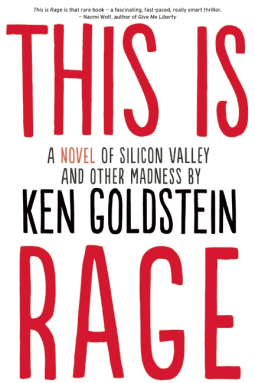
This is Rage: A Novel of Silicon Valley and Other Madness lives up to its subtitle, delivering all the madness of the Valley and then some. This novel is funny, smart, long (a 530 page thriller), and perhaps the polar opposite of that other recent release making a Silicon statement, The Circle. This is Rage’s plot sounds unbelievable but somehow works: at a party where investors, bankers, and engineers mingle (“Conversation as a conduit for data extraction…”) a pair of well-meaning, success-seeking entrepreneurs kidnap leaders of a powerful company, hoping either for ransom money or some start-up capital (are these two things that different, after all?). A washed-up radio host picks up the story, and the sort of mass hysteria that only today’s social media makes possible ensues.

The story here goes where The Circle didn’t: straight to the money. The book starts with a prospectus, and many of the chapters begin with a stock ticker. Although This is Rage takes place in Silicon Valley, Goldstein doesn’t want us to forget that “the Street” makes the Valley tick.  As much as any character in the novel is concerned with the safety of those who have been kidnapped, their company’s precious stock price is always sitting heavily on everyone’s shoulders, acting as the ultimate guidance and true leader.

Author and tech insider Ken Goldstein certainly knows his subject material: previously a VP for Disney Online, he currently advises start-ups and businesses through his company Corporate Intelligence Radio. Whereas David Eggers publicly stated he visited no tech campuses while writing his dark-tech speculative fiction work The Circle, Goldstein has been in the tech biz for years. To be honest, I was sort of worried when I read that a former CEO wrote This is Rage. It just doesn’t seem like the business world and the creative world of writing fiction mesh too often.  And I do think the story can get drift too far into investment jargon here and there. As a layperson, I had no idea what a few sentences explaining stock prices meant and I’m not sure it was important for me to understand their meaning.

This is a big book, but a fun one. The characters here range from the traditional tech guys (scruffy and ready to save the world by giving their employees free lunches), to a calculating self-made congresswoman, to a bitter radio announcer lost in today’s evolving media world, to an aging and insecure FBI agent. Part thriller and part satire, what really makes this novel a good read are the observations Goldstein has tossed in that are so right on.  He’ll throw in a snippet like, “Fools who wanted something responding to fools who claimed it was not theirs to have, rinse and repeat,” or “Attempted definitive action of any kind could always be touted as leadership,” and it reminds you that Goldstein may be writing a clever book, but he may also be sort of wise.  While especially in the last few pages this sort of statement-making could creep toward ranting, I didn’t see it that way.  I felt that This is Rage managed to beautifully balance sincere frustration with a raucous laughter at the madness of it all.

This is Rage: A Novel of Silicon Valley and Other Madness on Amazon.com

Ken Goldstein’s This is Rage page (with an excerpt from the book)

The Shining!

the shining

I just finished Stephen King’s The Shining, in anticipation of reading the recently released Doctor Sleep.  Doctor Sleep, a sequel to The Shining, features a grown-up but still traumatized Danny Torrance.  The Shining is one of the most horrifying books I’ve ever read, and it is amazing how King manages to heighten the fear around harmless things like topiary art to an intense level.

I love to read King’s comments on his work, as he always has great perspective. Here are some great thoughts written by the author in an introduction to a new edition of The Shining, written in 2001:

A killer motivated to his crimes by supernatural forces was, it seemed to me, almost comforting once you got below the surface thrills provided by any halfway competent ghost story.  A killer that might be doing it because of childhood trauma as well as these ghostly forces…ah, that seemed genuinely disturbing.

The decision I made to try and make Jack’s father a real person, one who was loved as well as hated by his flawed son, took me a long way down the road to my current beliefs concerning what is so blithely dismissed as “the horror novel.”  I believe these stories exist because we sometimes need to create unreal monsters and bogies to stand in for all the things we fear in our real lives…

That truth is that monsters are real, and ghosts are real, too.  They live inside us, and sometimes they win.

The Shining by Stephen King on Amazon

Doctor Sleep by Stephen King on Amazon /Doctor Sleep on Indiebound

Ender’s Game – Finally, a movie!

photo

So there’s a movie!  Ender’s Game, the science fiction book that we all know and love, has finally been adapted for the big screen.  I went and saw it yesterday, and I was bracing myself for the worse.  That being said, I thought Ender’s Game (the movie) was well done.  It stuck to closely to the plot of the book, albeit abbreviating everything madly for time.

Anytime a book I feel strongly about is adapted to the big screen, I’m ready for disappointment as its impossible to translate my personal reading experience into a film (how awesome would that be, though?).  The great thing about reading is each reader’s mind builds our own unique ideas of what the story looks like.  In this sense, books have access to our imaginations in a way I think films don’t.   Movies, while fun, are entertaining in a different way:  unless the creators of the film have a specifically nutty or imaginative vision, it can be a challenge to top a story you have already detailed to your own liking.

With the challenge of book adaptation in mind, I think the movie did a great job of casting and bringing to life some of the book’s characters: especially notable were Bonzo (Moisés Arias), Ender’s battle school enemy, and soft-spoken and small Bean (Aramis Knight), Ender’s sidekick.  Asa Butterfield as Ender does a great job balancing Ender’s insecurity and intelligence, especially through the first half of the movie.  A bit ill-suited for his brief part, I thought, was Jimmy Pinchak, who played Peter.  The visuals are, of course, stunning.  Battle School is viewed from space, with the Battle Room as a gigantic dome looming to the side, and the shot is startling.  The alien planets, and the videos of legendary battles between human and alien ships, are a great reminder for someone who doesn’t go to the movies too often (like me) of how neat today’s special effects can really be.

My main complaint is that this the movie was about 20 minutes too long.  I won’t give anything away here for those who haven’t read the book or seen the movie, but I think much of the last bit could have been saved for the next film.  Ender’s Game has sequels and prequels and novellas and spin-off series, and if there isn’t a sequel to the film it would be ironic as the book has just so many follow-ups.  It would also be a shame to not let the other characters (Bean especially pops to mind) have more screen time.

As I’ve mentioned before, Ender’s Game influenced my love of science fiction as a genre when I was young, as it seemed to with so many others.  (Before Orson Scott Card there was perhaps only H.M. Hoover, author of Away Is a Strange Place to Be, a young adult novel read to my rapt 3rd grade class by a librarian–hearing this book may have been the highlight of my mainly unpleasant elementary experience.)  My dad gave me a copy of Ender’s Game that I have lovingly kept even today, now worn, with a cracked binding, banded in a sparky hair band that reveals the book’s era.

I think Ender’s Game helped me see how far an author could really go within a novel.  I’m not sure how old I was when I read it, but I know I had begun moving from Nancy Drew toward Michael Crichton and John Grisham with my sister’s help. Coming from young adult fiction, the very seemingly huge amount of thin pages and hefty total weight of each paperback Crichton novel was daunting.  I remember my sister sitting me down and telling me about Congo, “You can read any amount of pages, the length just doesn’t really matter.  You can read that.” Hence I was able to take on the longer-than-Y.A. Ender’s saga series, and then move on to the rest of the big world of grown-up books.

I do think Ender’s Game has influenced a bunch of science fiction today, and I saw the Ender’s Game movie with a friend who asked me “This is like a Y.A. story right?” as we were walking into the theatre and talking about the book.  Comparing Ender’s Game to the Y.A. stories of today, there is a reminder of how it sort of translates into the same material and how it also sort of doesn’t.  Ender’s Game has a young underdog who struggles with bullies, but while The Hunger Games exudes love and revolution, Ender’s Game weeps manipulation and mourning.  Not as glamorous, by far.   When I was talking to my friend about the book’s sequels as we were walking out of the theatre she asked, “Man are they going to make a movie called Genocide?”  I think that is a very good question.

Ode to Daylight Savings 3

Ode to Daylight Savings 3


ODE TO DAYLIGHT SAVINGS 3

This is an ode to daylight savings!
With ads stalking me all day,
pouncing lions while i’m a slow something,
with fires burning up parks and down apartments,
with my waistline slowly expanding,
with another thing to buy,
another to do, and then another thing demanding,
with time spent at stoplights and
freeways and off ramps and highways
and toll plazas and tunnels,
with just trying to live and just getting around,
with madmen mad at the transit security administration
which didn’t exist until sept. 11, 2001,
with so many social media networks now and
now my friends not on any of one them,
all i needed was a single extra hour.

Review – The Never List by Koethi Zan

the never list

In honor of Halloween I’m reading some seriously scary books right now (revisiting The Shining, listening to Snow White Must Die). The Never List by Koethi Zan had been on my to-read list for a bit, and I decided this was the appropriate season to check it out. The Never List chronicles the aftermath of heroine Sarah’s traumatic kidnapping, in which she and her best friend were chained in a basement and tortured with two other girls.

The Never List is a quick read and it is hard not to fall for Sarah’s frank and wry narrative voice. You will find yourself cheering for her as she overcomes fears, deals with her past, and becomes a stronger person. I listened to this on audiobook and it was the best kind of story to listen to, as it kept me looking for chores around the house I could do while I kept listening.

Clearly, this is a book only for the bravest of readers. I was a bit hesitant about the subject matter, as I enjoy a great twisted tale of suspense but dislike the sort of gruesome and gory torture porn that horror films like Hostel have made popular.  The Never List is tastefully done for such dark subject matter, in the way that I think the best tales of suspense often are. Although we get flashbacks of what Sarah and the other girls suffered through, the focus of the book is not on human suffering.

Zan has done a great job of creating a gang of likable female sleuths who have overcome an awful trauma together. When the three kidnapping victims who escaped the basement are told their captor will be eligible for parole, they reunite to investigate loose ends of their case, assisted by a benevolent male FBI agent always a phone call away but slow to arrive in crucial moments. The Never List is the girl-power thriller that The Shining Girls wanted to be;  these women are honest, flawed, strong, taking control of their past and their future.

I heard about this book because of its odd timing – right around the time of its release (July 2013) we all watched in horror as women were rescued from Ariel Castro’s home in Cleveland. The similarities between the real life news story and the events in the work of fiction are bizarrely similar–three women kept chained in a house by a sadistic man. There is an interview on mybookishways.com about Zan’s almost surreal reaction to watching the news in Cleveland unfold. As she says, “I’d written a book based on my worst nightmare, and there it was on the screen—real.” It was such an eerie coincidence.

I look forward to Zan’s next work, as I believe this was her first novel and it was an impressive start. Having completed the The Never List, my house is swept, my laundry is done, and I’m all ready for Halloween.

The Never List on Amazon

The Never List on IndieBound

Related articles