Book Reviews

The good, the bad, and the ugly about books I’ve recently read.

Emily Schultz’s ‘The Blondes:’ Viral “Blonde Fury” Strikes Women and Our Standards of Beauty

blondes-coverEmily Schultz, founder of Joyland Magazine, has written about an epidemic in The Blondes. This is the story of a virus, yes, and about its outbreak. But like Megan Abbott, Schultz’s horror bubbles up from society’s standards for women and their appearances. This is an epidemic that seems to step down off billboards and rock the collective consciousness, as much of the world demands its women trustworthy, both well-coiffed and well-behaved.

We learn of the virus through the memories of Hazel, narrating to her unborn child. Both the child’s existence and the virus’s bloom up around Hazel’s innocent graduate student life, a Canadian visiting New York indefinitely, hoping to clear her head of romantic entanglements. The story alternates between then, Hazel’s life in New York as the virus hits, and now, as Hazel holes up in a cabin alone, pregnant, wondering if the woman she was living with will return or if she’ll be forced to give birth alone.

Hazel explains in the book’s opening, to her unborn daughter:

We are not like men; men shake hands with hate between them all the time and have public arguments that are an obvious jostling for power and position. They compete for dominance— if not over money, then over mating. They know this, each and every one. But women are civilized animals. We have something to prove, too, but we’ll swirl our anger with straws in the bottom of our drinks and suck it up, leaving behind a lipstick stain.

The virus, nicknamed “Blonde Fury,” removes the veil of civilized nature that Hazel refers to here. Although the science behind the virus isn’t explained, and is referred to vaguely, it targets blondes. It targets the image of blondes we are all familiar with–women towering tall in high heels and perfect lipstick. It leaves them snarling and disheveled, animal-like, unable to be subdued by uniformed men. It hits a group of flight attendants, as they storm down the hall of an airline. It turns what we’ve been taught to identify as beautiful into something animal, furious and deadly.

Men are told what to watch out for on the news. Women who have anxiety are quarantined, suspected of having the virus. Suddenly, the female is feared. The story of the outbreak itself, like all virus tales, is strange and surreal, and Hazel’s own lack of direction leaves her adrift in the effects of the virus both in Canada and the U.S., an observer in both her own life and the world. At times hilarious, at times lonely, The Blondes always relays a striking picture of a world quick to adapt to “Gold Fever.”

You can watch the sort of strange, perhaps not representative of the book at all, trailer here:

The Blondes by Emily Schultz on Amazon.com/Powell’s.com/Indiebound.org

Tom Cooper Brings The Bayou To Life In ‘The Marauders’

the maraudersIn 2010, the BP oil spill brings new disaster to the small bayou town of Jeanette, Louisiana, as it still reels from Hurricane Katrina, five years earlier. Tom Cooper’s The Marauders is a cataclysmic caper tale of this time, with the capers here being those of simple Southern men trying to survive when smarter folks have fled their seemingly cursed region.

In Jeanette, men get addicted to the hard stuff early, backbreaking work equating with muscles that call out for whiskey, and later oxycontin. Shrimpers find three-eyed catches in their nets, or no shrimp at all, and wonder if they should take the settlement money BP is offering, and give up trawling for good like so many of their friends and neighbors. Fancy New York restaurants are advertising shrimp from China–it is, perhaps, the worst of times to be a small town shrimper in the Gulf Coast.

The story rounds through a group of out-of-luck men, each character brilliant in their peculiarities, their regional drawls, their singular and often circular big dreams. Circuits cross between plot lines, friends are made, identities mistaken, lives lost.

Gus Lindquist is a one-armed shrimper, he lost his arm stoned in a boating accident and now he’s misplaced his fancy, fake prosthetic arm as well. But never one to be discouraged, Lindquist pops pills from a pez dispenser and tells knock knock jokes almost continuously, and at inopportune moments. He tirelessly scavenges the bayou for pirate treasure in his spare time, metal detector in his one good arm, dreaming of the secret stash he’ll someday find and the riches that will bring back the wife who has left him and the daughter who doesn’t visit.

Wes lost his mom in the hurricane and never quite forgave his father for insisting that the family stay put in the storm. He goes out with his dad on the shrimping boat despite shrinking catches and shrinking pay.

Cosgrove and Hanson are easygoing misfits. They meet on a community service detail, fixing up an old woman’s house so the city can seize it as soon as she dies. They reunite at a sweet gig cleaning birds drenched in oil for $15.

These are all lovable, and deeply flawed, characters, which makes their forward motion towards disaster all the more painful to read. As someone who has never visited this area of the country, Cooper brought the area to life with lush, striking descriptions of a landscape hostile enough that only the craziest of men try to access its bounties.

I often get so caught up in my mystery novel obsessions I forget what a pleasure humor is in novels. This isn’t a light book, but it is incredibly funny. The Marauders is a tragicomedy that managed to dismay me and still end on a triumphant, movingly positive note. And especially for a first novel, this is a big reach towards all the stars in that inky bayou sky. Cooper nailed it, and he’s definitely a name to watch in the future.

The Marauders on Amazon.com/Powell’s.com/Indiebound.org

No Secrets Are Safe In Harlan Coben’s The Stranger

We get mad at someone for cutting us off in traffic or for taking too long to order at Starbucks or for not responding exactly as we see fit, and we have no idea that behind their facade, they may be dealing with some industrial-strength shit. Their lives may be in pieces. They may be in the midst of incalculable tragedy and turmoil, and they may be hanging on to their sanity by a thread.

― Harlan Coben, The Stranger

the strangerHarlen Coben’s newest thriller, The Stranger, is a book about the secrets we keep, and what happens when they get spilled all over our usually well-kept lives.

Adam lives the American dream, settling in the posh but cozy town of Cedarfield, New Jersey, with his two lacrosse-playing boys and beautiful wife Corinne. Adam has it all. Or he had it all, until a stranger walks up to him in the local dive bar, where banker dads are gathering to form teams for sixth grade lacrosse, and reveals a bizarre and life-shattering secret. The stranger walks away, and when Adam steps out of that bar he steps into a new world, where people keep secrets and loved ones have double lives and justice takes strange forms that often get out of hand.

This sort of opening is Coben’s trademark–he’s a great fisherman and he’ll hook you every time. Although this could be considered a guilty pleasure, this is an example of a guilty pleasure done right. It doesn’t read like a script for a movie, as some fast-paced thrillers do. This type of book is Coben’s jam, and he has totally mastered his craft.

The Stranger on Amazon.com/Powell’s.com/Indiebound.org
If you like Harlen Coben, also try reading:

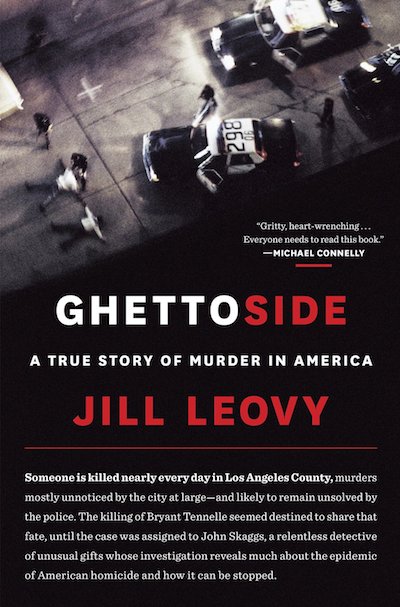
In Ghettoside, Jill Leovy Reveals The People Behind The Statistics

This is a book about a very simple idea: where the criminal justice system fails to respond vigorously to violent injury and death, homicide becomes endemic. African Americans have suffered from just such a lack of effective criminal justice, and this, more than anything, is the reason for the nation’s long-standing plague of black homicides.

–Jill Leovy, Ghettoside

ghettosideGhettoside might be one of the most important books published this year. As the news covers murder so disproportionately, Jill Leovy addresses the issue of high rates of violence within African American urban communities with intelligence and empathy. She embedded with the Los Angeles Police Department, following the homicide detectives, some dedicated, some overwhelmed, many there and then gone, and she kept her own statistics logs.

The statistics themselves are shocking, staggering, unlike anything I’d heard before although I’d lived in Oakland and seen brief news articles covering weekends of violence, summaries of staggering crime statistics that never went national. African American men are “just 6 percent of the country’s population but nearly 40 percent of those murdered.”

Leovy’s answer to this staggering statistic, especially affecting Los Angeles, was a Los Angeles Times blog called The Homicide Report, an attempt to give a story to each victim in LA. The intention here was to honor victims that often went nameless and faceless, when suburban white female victims captured so much of the news cycle.

At the LAPD, Leovy followed one case from the murder itself to its successful prosecution. This case, the murder of yet another young black man, Bryant Tennelle, is notable in that Bryant Tennelle was a respected detective’s son. Walking his bike, wearing the wrong color of hat, he was shot and left for dead. Tennelle’s death isn’t the only chronicled in Ghettoside. Focusing on the Watts area of South Los Angeles, the deaths come continually, providing just a glimpse, the tiniest blink, of what residents and police assigned to the area must feel, a continual wave of death followed by waves of retribution as communities seek their own justice through violence.

Leovy also introduces John Skaggs, a lanky white detective with ADD and a coffee addiction that allows him to work what seems like continuous overtime in an underfunded homicide department. The descriptions of Skaggs often gush, as he is the hero of this story. Never jaded in a department of exhausted officers, able to connect with victim’s mourning families and witnesses alike, Skaggs seems like a character pulled out of a novel. With so many videos released recently of police brutality, so many police gone wrong in current events, I was hesitant to trust this man. But this is part of Leovy’s argument–Skaggs is rare, and we need more like him.

Ultimately, a dedicated investigator like Skaggs is required to solve Tennelle’s murder, as the case is going cold until he takes it over. Solving a case takes good police work. It takes knocking on doors, and interviews, and gathering evidence. Just like any other criminal investigation. And this is the argument of Leovy’s book–there is an epidemic of street justice where the criminal justice system is lacking. The police just aren’t good enough in these high crime areas, she says. By the end of the book, Leovy chronicles a gang banger convincing friends to give the police a chance, knowing one of Skaggs’s team will be on the job. Knowing a good cop might offer justice, she convinces her friends to pause on seeking vengeance themselves.

This book is at times exhausting. It shines light on our country’s bleakest moments, things no one wants to look at and the media chooses not to discuss. It takes a hard look at America’s overtly racist history, from slavery onwards. But this is a book about making black crime into crime like any other–something that can be reported on, talked about, and ultimately solved by the police.

Ghettoside on Amazon.com/Powell’s.com/Indiebound.org

Further reading:

In Until You’re Mine, All That She Wants Is Another Baby

I’m at that age, early thirties, where everyone is getting married and getting pregnant. So are the characters in this thriller, but with much deadlier results than an avalanche of wedding invites and adorable Facebook photos.

Jon Ronson, Monica Lewinsky, And The Fierce Twitter Avalanche of Snowflakes

Jon Ronson comes to the realization that online, we are a vicious lot: “I suppose when shamings are delivered like remotely administered drone strikes nobody needs to think about how ferocious our collective power might be. The snowflake never needs to feel responsible for the avalanche.”

What We Talk About When We Talk About Vaccinating: Eula Biss’ On Immunity

In Eula Biss’ short On Immunity: An Inoculation, she lays bare the fears of being a mother today. As the mother of a young son herself, Biss takes a step back from the vaccine debate and looks at its framing, its history, and the concept of the self as impermeable by society.

William Gibson’s The Peripheral: The Past Is The Playground For The Future’s Rich

William Gibson is a master of near-future science fiction, he’s a speculative fiction genius who has been called a noir prophet, and The Peripheral is another example of why he gets all these accolades.

An Untamed State: Roxane Gay Stares The Violence Down

But another way of smashing the stereotype is leaning full in, like a twisty Sheryl Sandberg. This seems to be Roxane Gay’s approach, as her debut novel An Untamed State leans full in to the experience of a woman who is raped and tortured and used by men as a thing in her novel.

Where Are Our Jetpacks? In Daniel Suarez’s Influx, The Bureau of Technology Control Steals The Future

In Daniel Suarez’s thriller Influx, the government is gobbling up all that advanced technology, hoarding it away from the public and other countries.