book reviews

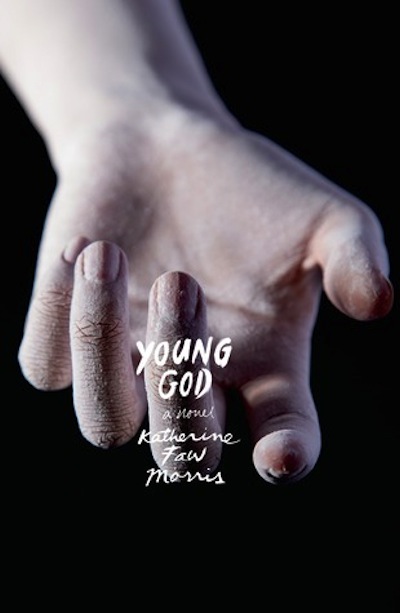
Review – Young God by Katherine Faw Morris

young god

Reading Young God is like being punched in the face over and over. It’s like eating sour candy until your tongue feels raw and your stomach aches but you just keep eating the candy anyways, knowing it isn’t fun anymore and it has possibly turned into a quite negative experience but dammit, there’s half a bag left. This book has few redeeming qualities but that doesn’t make it easy to put down.

We meet Young God‘s heroine Nikki, thirteen, in an opening scene that sets the tone for the rest of the novel: her momma falls off a diving cliff the wrong way, high on attention from a guy and who knows what else, and splits her head open. Nikki quickly runs from the scene of the accident with her mother’s lover and his backpack full of drugs, and the book is off and running at the pace of an adrenaline high. Nikki seems to be the girl the adage about years alone not truly measuring how much one has lived was made for, and this isn’t a tale of redemption as much as it is one of survival of the fittest and the maddest in a mad mad world.

Constantly fearing child services, just a call away, Nikki fights or flights her way from druggie guy to druggie dad, without the luxury of self-analyzation or insight surrounding the desperation of her situation. Things go from bad to worse, and from icky to really really icky, so if you can’t handle to darker stuff then this isn’t the book for you. It reminded me a bit of Tampa by Alissa Nutting in its breezy, un-analytic writing style of the most horrible aspects of human nature. Sometimes the murderers and rapists and pimps aren’t carrying on intense internal dialogue about life and ethics as they go about their dark business, these books seem to say. Sometimes people are just acting and reacting, bouncing off each other and feeding their animal drives and fleeing from consequences. A jarring statement to make, which leaves protagonists with little room for development, and even littler opportunity for us as the reader to comprehend any of their behavior. But hey, that’s life. To me this style of writing about this sort of subject is scarier than any horror novel.

I’m not sure how I feel about country noir as a genre in general. I haven’t read enough of it to make any sort of judgement, but I certainly hope we don’t see the emergence of Appalachian horror stories of poverty and blight as amusing simply because of the locale. The most intriguing characters aren’t stereotypes but the opposite, asking us to challenge our preconceived notions about the world and the way we see it. I became interested in this story after seeing a blurb shared on Elle’s Facebook page which declared the book a mix of Winter’s Bone and Breaking Bad. It feels to me as more a mix of Spun and Go Ask Alice. But Morris is a child of Appalachia herself, and she dated older men as a young rebellious thing trying to figure out her place in the world.

In the Elle interview, Morris says she cut down the novel from a longer version, and I would love to see the original story. I understand the purpose in editing it down to something brutally short for effect, but I need a bit more of a character’s internal dialogue to relate to their world. Young God is a story of drugs and violence, but its purposeful lack of depth makes it pulpy and a bit too grotesque for my taste.

If you like Young God, check out these books: 

Further reading:

Review – The Tyrant’s Daughter by J.C. Carleson

the tyrant's daughter 2

When reading the summary of The Tyrant’s Daughter by J.C. Carleson, I hadn’t even considered it could be a YA novel. Written by a former CIA agent, the book follows an unnamed Middle-Eastern despot’s family after his assassination. His wife, daughter, and son flee to the United States with the help of a shady CIA officer, where they struggle to adapt to life as non-royals while watching their home country self-destruct on TV.

But this is a YA novel, written from the perspective of the assassinated leader’s fifteen-year-old daughter, Laila. Sheltered for most of her life, she’s blissfully unaware of the atrocities her father committed against his people before his death. To her this man wasn’t a tyrant or dictator, but a beloved family member. Laila’s move to the US brings new adjectives used to describe her home and her father, like brutal and tyrant, and she struggles to synthesize new information and old.

The reader sees the world through the filter of Laila’s experience and upbringing: a school dance shocks not only because of the gyrating, but also because the crowd of bodies brings flashbacks of angry mobs. Afflicted with undiagnosed PTSD, Laila steps into classic YA fiction scenes only to be quickly jolted out of them with reminders of how different her own values are from those of American society.

Ideas from this book developed from author J.C. Carleson’s real life experiences as a CIA officer. She spent time in Baghdad in 2003, and saw elaborate playhouses left behind at one of Saddam Hussein’s compounds after he fled, which included multiple levels, an intercom system, and an elevator. This caused her to wonder the mindset of the children playing in such a wonderland–did they understand the circumstances around the man who built them such toys? As these questions stewed in her mind, years later, she noticed her son’s nonchalant reaction to the noise explosions which became a regular part of their life on a military base. Rather than jump to sounds of war, he would simply turn up the volume of the TV.

The Tyrant’s Daughter manages to come across as not ignorantly US-centric, as a book written by an American about the Middle East for young readers certainly could. Maybe because of Carleson’s experience, there is depth here that questions our American world view as insistently correct. Laila’s American friends seem insecure and boy-obsessed, and Laila charts her best friend’s countless style phases through the photos decorating her wall, a reminder that our freedom to express ourselves through clothing never really makes us as comfortable as we’d like. As shocking and flawed as Laila’s own culture seems to be, ours is certainly far from perfect.

The Tyrant’s Daughter by J.C. Carleson on Amazon.com/Powells.com/Indiebound.org

If you liked this book, try these non-fiction titles:

Review – The Luminaries by Eleanor Catton

the luminaries gif

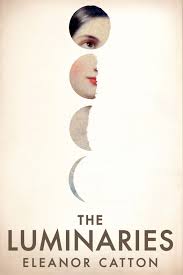
Reading The Luminaries is like being dropped in the midst of New Zealand’s Otago Gold Rush, blindfolded and totally without reference, and then being spun round in circles by a stranger and let loose to feel around the landscapes and stand near their inhabitants, prospectors and bankers and Chinese diggers and tattooed Māori streaming around you, the women left to pleasure and care for these teeming throngs of men nearly knocking you over as they rush this way and that, and just as you feel overwhelming lost amidst these endless characters, totally without equilibrium in this many-plotted story centered in a town where everyone wants to make it rich, Eleanor Catton comes and takes you by the shoulder and steadies you for just a moment, and you breathe in the smells of dirty men and sea water as ships wreck upon the beach and scavengers look upon the ships and you sigh and know that despite there being too much information here, maybe just too much life here, for one book to ever express, you must keep reading.

the luminaries full coverAnyone coming off of a Goldfinch buzz and wondering what their next ambitious, too-long book will be should look no further than The Luminaries. Both books are written with the crisp observations that make them so much more than plot recounted. These are stories of life, magnified. Stories of how life could be if we all drunk in details of each other’s quirks and charms, every insecurity and affect, every ugly part and every beautiful one, and then maximized them into sentence-formed still lives spilling over into paragraphs so illustrative of this human condition we’re stuck in they act like paintings on pages changing ordinary days into phenomenas, ordinary interactions into humorous, tragic, wonderful things worth documenting. This is how these books get to be close to 1,000 pages long–life magnified is a very big thing, indeed.

The Luminaries, as I’ve mentioned, is the story of New Zealand’s Otago Gold Rush, and the story of a plethora of characters drawn together by an unfortunate set of circumstances. Men in all sorts of businesses centered around profiting off of gold or the men who find it feel uneasily bamboozled, they all sense a caper of some sort, and yet trying to pin down who has down wrong when is like trying to sift the gold dust apart from the dirt. The plot is complicated, and meant to be, as that’s the fun and beauty of the thing. Also, this is a book that uses the word “whore” quite a bit. Prepare yourself for that.

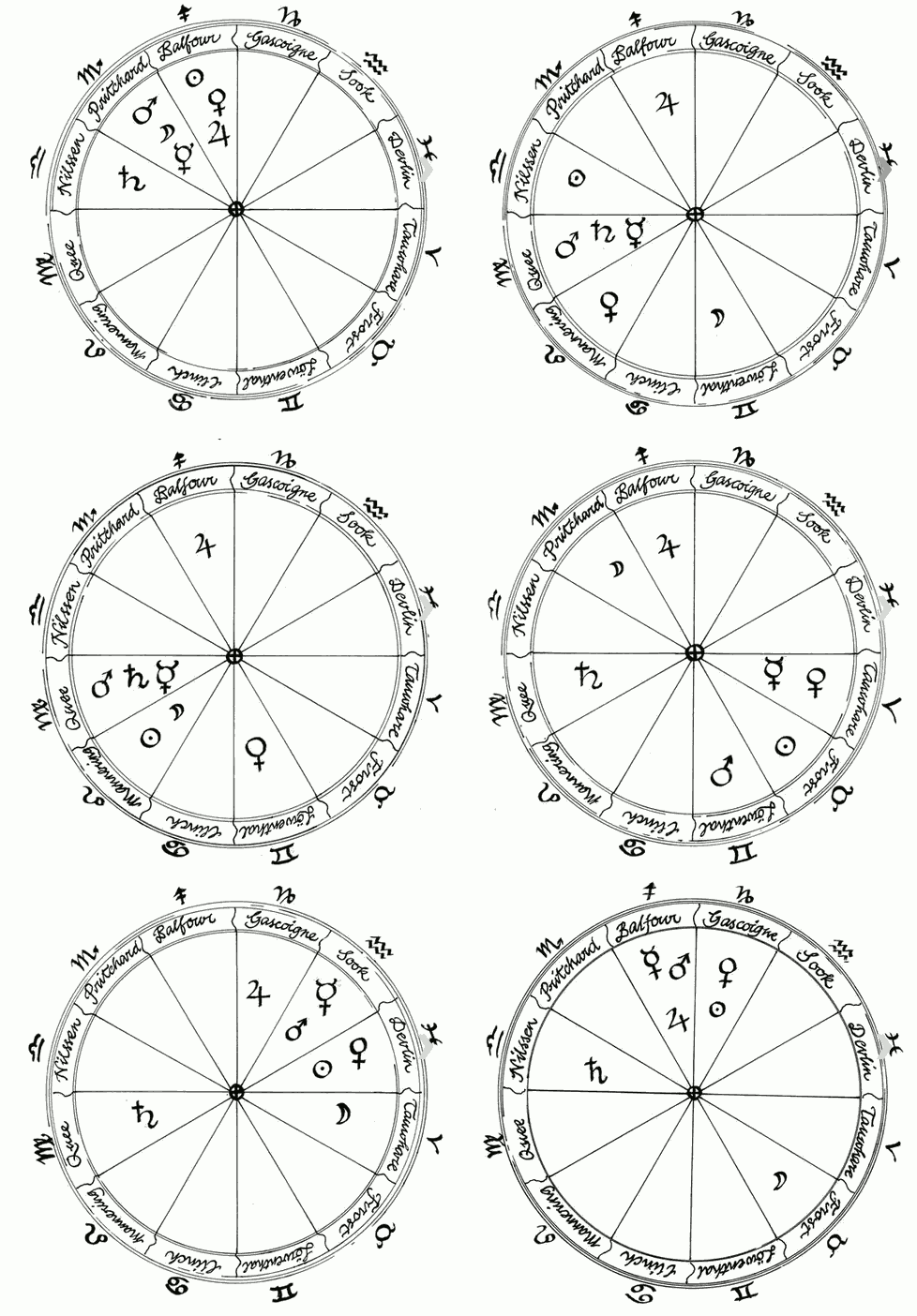
Catton includes all sorts of bells and whistles, but she really didn’t need to, as her writing stands on its own. There are astrological signs and charts of each character’s place on the zodiac, and there are chapter lengths that get progressively shorter by half until it seems almost hard to keep up with all the pieces that are being put together. As I listened to The Luminaries on audiobook, I missed much of this but gained narrator Mark Meadows deftly juggling the varied accents required amidst the cultural mish-mash of gold rush New Zealand. I appreciate getting lost in layers of meaning as much as the next book nerd, however, and I’ll be picking up a hard copy of the book to read again for further understanding of the whole astrological subtext.

I was quite fed up with non-linear narrative as a plot device, especially as so many authors now seem to use it as a cheap trick to create a sense of suspense where otherwise there would be none. The Luminaries, while not traditionally non-linear, told its story with such elegant disregard for linear storytelling that it renewed my faith in non-linear narrative. I wasn’t even aware of the story as non-linear until the elegant end of the book, which brought things to a fully circular close. “Oh,” I thought. “I see.” Books with a satisfying ending, that have so many twists and motives and lies and running through them, are rare indeed.

Eleanor Catton, author of The Luminaries via

Eleanor Catton, author of The Luminaries via

This was one of those books, that if you tune into the book world of things, became mildly controversial. The longest book to win the Man Booker Prize, by the youngest ever author to win it, The Luminaries is an astounding (literally record-breaking, although we save that sort of term for sports) achievement. After winning the prize, Eleanor Catton said in an interview with The Guardian that old male reviewers don’t take young women authors seriously, and they reviewed the book negatively. From the article:

I have observed that male writers tend to get asked what they think and women what they feel,” she says. “In my experience, and that of a lot of other women writers, all of the questions coming at them from interviewers tend to be about how lucky they are to be where they are – about luck and identity and how the idea struck them. The interviews much more seldom engage with the woman as a serious thinker, a philosopher, as a person with preoccupations that are going to sustain them for their lifetime.

I want to acknowledge Catton for voicing this issue, as a young woman of such mighty talent in the book biz. I’m sure this is something most women can relate to, as I have found myself sometimes saying to friends, “I wish people would want to know my mind, rather than see if I’m dateable.”

Some negative reviews by women asked why a young woman would write a book featuring only two women, one being a whore. This seems the saddest, most limiting sort of criticism–judging someone’s book content because of their sex seems to be an alarming double standard placed on a woman by a woman.

The Luminaries on Amazon.com/Indiebound.org 

Further Reading:

Review – The Martian by Andy Weir


the martian by andy weir_Fotor

If you love taking things apart and seeing how they work, if you had a soldering iron in middle school because you actually needed it for your various hobbies, or if you are obsessed with duct-taping solutions to life’s many problems, The Martian by Andy Weir is the perfect science-based thriller for you.

In Weir’s not-too-distant future, NASA has successfully sent two manned missions to Mars. The Martian focuses on the third Mars mission attempt, which goes badly in the most unpredictable of ways. Mark Watney, astronaut, botanist, and engineer, and protagonist is left behind when a dust storm causes the rest of the crew to evacuate in a blinded tizzy. Watney’s crew mates, thinking he has been mortally wounded, blast off the planet in the agreed-upon getaway craft, unwittingly leaving this single guy stranded on the Red Planet. Thus Watney becomes a sort of Martian himself, trying to frantically use all his knowledge in every clever, jury-rigged Survivorman-esque type trick in the book to stay alive until help can reach him. Sort of like the hardest test he’s ever taken, but hands-on, and often his oxygen, food, or water supply hangs in the balance. Billion dollar NASA-built equipment falls to pieces around him as he tries to push it past its intended use date or break it apart into more appropriate survival gear, and Watney plays genius-level whac-a-mole with complex problems in his struggle to stay alive long enough for rescue.

I confess I’m not a big fan of biology and chemistry myself, which is a bit frightening to realize as they are the basic building blocks of life, right? What can I say, I’m just an arts and letters type of girl. I found The Martian slow to get into as Watney tells his story through journal entries, detailing complex explanations and calculations of the many processes which Watney must depend on to survive, which went right over my head. I’m sure this aspect of the book was a welcome change from the usual thriller for the more skeptical among us, who are constantly bombarded with miraculous feats of survival with no explanation or logic behind them. If you wonder where the science is in much of your science fiction, its right here in The Martian, waiting for you.

Where the book came alive for me (and where my interests usually lie) was in NASA’s reaction to the predicament of this lone man stranded on Mars. Once characters at NASA are introduced, their struggle to balance the constant badgering of the media, and what comes to be the world’s obsession with this single man and his lone struggle for survival, with their own ultimate powerlessness over his situation created a much more interesting story. (Of course, CNN dedicates an entire program each evening to updating people on Watney’s status.)

The premise of The Martian is such an intriguing one that the book is difficult to resist, as the idea of a man being lost on an uninhabitable planet with only science to save him is haunting–there’s power there, as we made it to Mars, and then there’s fear there, as while we made it to Mars, we couldn’t make it back. As a firm grasp of science in the book is what makes the trip to Mars possible, that idea is then twisted when Watney must use those same skills, as an engineer, to harness the resources of a hostile planet and make it habitable. Can science dig us out of the messes we use it to plunge into? Watney, alone on Mars, armed with engineering and botany degrees and the supplies his team abandoned, attempts to answer that question.

The Martian by Andy Weir on Amazon.com/Indiebound.org

Further Reading:

Review – Beauty by Frederick Dillen

beauty

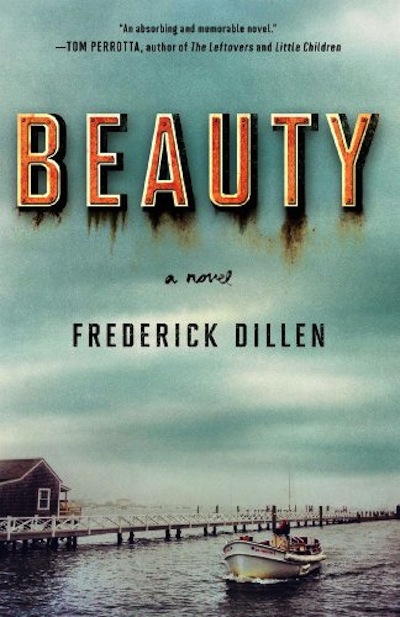
Beauty by Frederick Dillen is a hopeful little book, drenched in all the optimism its title suggests. This is the story of capitalism falling in love with community, the tale of a fisherman totally unversed in corporate sexual harassment policies falling in love, and deep down at its heart a book about claiming that little bit of space you always knew you needed but never realized was right there, waiting for you, to call it home. It is an odd combination of corporate-love-fishing story, but short and sweet enough to make it all palatable.

A tall, no-frills firing machine, corporate undertaker Carol McLean looks factory workers in the eye as she tells them their jobs are lost. The sneering men who run her firm call her “the Beast,” an unwanted nickname none too affectionately parroted by those she leaves jobless and disassembled in her wake. Despite the humanity she struggles to bring to her job of seeing companies through their last days, it is brutal and wearing. When Carol gets the ironic call that she too is being let go, her final undertaking flips from a mission in disassembly to a project in keeping the small fish processing plant going as her own company. With dreamy fisherman Easy by her side, Carol steps out of her role as the Beast and tries to use her business-savvy for good.

If Joshua Ferris’s Then We Came to the End was the modern corporate worker’s swan song, a final cry of agony from the suffering cubicle-everyman before he came back to the office with a gun or a stress-related illness, then Beauty is the corporate worker’s battle cry, of taking the power back and making googly eyes at your love interest, all at the same time.

Beauty by Frederick Dillen on Amazon.com/Indiebound.org

Review – Girl with Glasses: My Optic History by Marissa Walsh

girl with glasses

Girl with Glasses: My Optic History by Marissa Walsh is the cheeky, charming, light-hearted type of read that only a certain type of young woman can appreciate. Having serious visual impairment myself, with ever-thickening frames and glasses from a young age, I can totally relate to the rites and rituals recounted here. Walsh tells her coming-of-age story through the lenses of each pair of glasses she wore, from her first, to her dalliance with those maddening contact lenses, into the pair she now wears with pride.

When I talk with the non-glasses-wearing crowd, I’m constantly baffled at how the other half lives. Some of my friends have never (!) visited an eye doctor, and are confused by my yearly appointments for vision checks and blurriness-inducing dilation. I still remember, even though I’m not sure how young I was, how much my view of the world changed after I got my first pair of glasses. My mom says I was in kindergarten, but I think surely it has to be more around 3rd grade. Wearing those glasses for the first time on the way home, I gained access to a world far outside what I thought was meant to be viewed by one little person. It seemed like I had these crisp new laser-like eyes, beaming directly to store signs bordering the street as I peered out the car window, causing me to exclaim about every sign I could see. All these new layers of the world I had previously dismissed as a blur of haze and fuzz, now transformed into something speaking just to me.

This is the fun of Girl with Glasses, the ridiculous memories of being coached by an ophthalmologist’s assistant to put in contacts, the frustration of glasses in the rain, the impossibility of trying on a new pair of glasses when you can’t see what they look like on your face because you need your real glasses to see, and other common commiserations only GWG’s can really understand. I could see this being especially appreciated by middle school and teenage girls who are waffling between glasses and contacts, trying to pick between the two.

Those looking for a deep, contemplative memoir should look elsewhere. This isn’t that kind of book. Girl with Glasses is a fast and silly read, full of witty one-liners that aren’t afraid to border on cheesy. A few reviewers complain about the generalizations–as GWG’s, they don’t fit the stereotypes here. I don’t think the author fits all the stereotypes of a GWG either, and I don’t think she’s making a case here for stereotypes being accurate. I think she’s trying to have fun with the stereotypes, and use them to describe herself when she’s able. I see this as a statement about the stereotypes around glasses, rather than a statement about the accuracy of those stereotypes. That being said, I don’t think there’s too much deep stuff here. This is meant to be fun and funny. I suspect Walsh just wanted to talk about this unique aspect of her childhood, which she knew many others out there must be going through as well. And what better way to discuss all the absurdities of life with glasses, then through humor.

If you pick up Girl with Glasses, make sure you grab a printed version. The audiobook narrator is alarmingly overemphatic to the point she sounds like she’s trying to amp up a kindergarten class up for playtime. Great for a quick commercial selling something, but horrible for hours of narration where the cheese becomes tiring.

Girl with Glasses by Marissa Walsh on Amazon.com/Powells.com

Further Reading:

Review – A Death-Struck Year by Makiia Lucier

death struck year 400 border

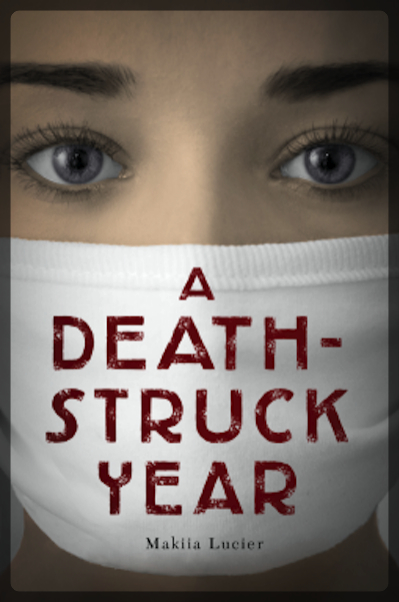
In a sea of uninspired Young Adult books, each struggling to be the next Hunger Games mega-hit in a battle so fierce it might as well be taking place in Panem, reading A Death-Struck Year by Makiia Lucier was, counterintuitively, like an honest and gripping breath of fresh air.

A Death-Struck Year shouldn’t feel so fresh because it takes place in Portland, Oregon, in 1918. For those of you who aren’t familiar with recent history, the Spanish flu (now known to be a variant of the H1N1 virus–ready to get your flu shot yet?) spread like crazy between 1918 and 1920, and killed 3-5% of the world’s population, ultimately killing more people than World War I.

A Death-Struck Year’s unsuspecting heroine Cleo, 17 years old and pensive about her future, watches in alarm as the pandemic closes in around her. First, the reports of sickness are distant, only in papers and heard as vague rumors; then Cleo notices restrictions on travel in town, and masks on faces of travelers; finally, she finds herself in a terrifying situation, as the city shuts down completely and people die in the streets or unnoticed in their homes.

The virus creeps into the community quick, and it is easy to feel Cleo’s confusion. Early on, Cleo’s school keeps a watchful eye on its students’ sneezes, but then it makes the decision to shut its doors completely. With family out of town, Cleo finds herself home alone in the middle of the flu pandemic. When the Red Cross calls for able women to assist the sick, Cleo shyly responds to the request, finding a bedraggled and understaffed Red Cross staff desperate for help. Before she fully comprehends it, a testament to how quickly pandemics seemingly spread, Cleo is driving her brother’s car around town, knocking on doors, educating her neighbors on the virus, calling help for the ill, and, sadly, discovering the dead.

Cleo finds comfort and friendship among the overworked staff at the Red Cross emergency triage center set up in Portland’s auditorium, where nurses, army doctors, and community volunteers group to battle the illness. Together they struggle through the pandemic, relishing small triumphs and mourning the much greater losses they suffer. A wounded army doctor catches Cleo’s eye, and a romance develops.

It seems like young readers are hungry for smarter material, and I think A Death-Struck Year is on the right track. Teens know there is more to a crush than a fast heart beat; there is more to suspense than a fight scene. Lucier has managed to create a gripping story that resonates as honest. Cleo must find in herself unimaginable bravery, and she is a strong heroine–but rather than drop Cleo’s character development as the action develops, Lucier is able to build her into a real young woman that could be any reader of the book growing up in a different time, rather than a caricature of what a girl should be like or think like. Lucier has studied up and written with a painstaking attention to historical accuracy, and the attention to detail certainly shows in the book.

Although at a higher reading level (age range is 12 and up), A Death-Struck Year reminded me of the American Girl books I used to read when I was a younger child. They would recount the struggle of a young girl in a pivotal time in history. I don’t read a ton of historical fiction (although I am currently reading The Invention of Wings by Sue Monk Kidd) but I understand how following a young woman through a more turbulent time in history could appeal to a Young Adult reader in the same way a dystopian novel would, but with a more grounded twist. Lucier reminds us of tragedy which took place in years not too far past, and the ability of history to tell us its thrills and heartbreaks.

A Death-Struck Year will be released on March 4th, 2014.  Author Makiia Lucier will be doing an Ask Me Anything in /r/books on Reddit at 12 pm ET on March 4th. Essentially, people ask Lucier anything and she answers.

For those who don’t know about Ask Me Anything (AMA) on Reddit, there is a great Atlantic article which explains the phenomena and speculates on why it works, and I think its title sums up AMA’s evolution: “AMA: How a Weird Internet Thing Became a Mainstream Delight.”

A Death-Struck Year on Amazon.com/Indiebound.org

Related Links:

On falling for Donna

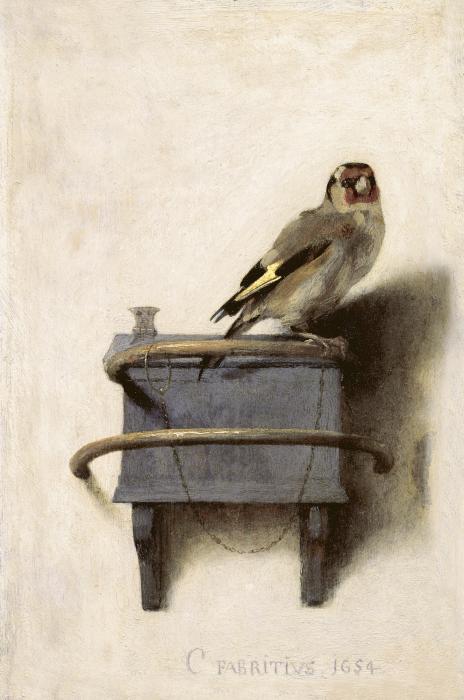
“I started off loving the bird, the way you’d love a pet or something, and ended up loving the way he was painted.”

Donna Tartt, The Goldfinch (p. 26)

Right now I’m reading The Goldfinch, and I’m so in love with Donna Tartt’s writing. Her dialogue, especially, just gets right down into me as something very true or very idealistically true of what people could say if they were bright and fascinating or ignorant and horrifying. I’m not sure why I didn’t really get into Donna Tartt’s work sooner. The name was always around, but there are so many good books out there and my to-read list is 300+ books long.

I actually readThe Little Friend a few years ago, and it baffled me. I understood it was great writing, but I went into it thinking there would be something more there, from the hype surrounding Tartt as an author. I had been so excited to settle in with what I thought would be an engrossing, intense, heavy, good book that the experience left me somewhat turned off to reading more of her stuff.

Recently, I had one of those amazing experiences where you are out to coffee with friends, someone new is there, and you realize they are an avid reader like yourself. When I confessed my love for mysteries, this fellow book lover suggested Tartt’s The Secret History as an excellent mystery-type book to check out.

And that suggestion got me to where I am, totally into Tartt. I listened to The Secret History on audiobook, what seemed to me to be a masterpiece narrated by the author. If you haven’t read The Secret History, now is the time. Small private college ideals of intellectualism go horribly awry, and the unfolding narrative account of what exactly went wrong amidst a studious group of Greek students manages to be enchanting and horrifying like only the best books can be.

The Goldfinch on Amazon.com

Review – You Are One of Them by Elliott Holt

9781594205286_YouAreOneOf_JKF.indd

The Americans with Russian girlfriends–“pillow dictionaries,” they called them, aware that these lanky, mysterious women were far better-looking than anyone they’d touched back home–began to sound like natives. They were peacocks, preening with slang…A little bravado goes a long way toward hiding the loneliness. You can reinvent yourself with a different alphabet.
― Elliott Holt, You Are One of Them

You Are One of Them by Elliott Holt is a love song of a book: a love song to foreign lands that always seem impossibly perfect until you get there; a love song to a different time when we were younger and everything around us looked so much bigger; a love song to the beliefs we have when we are children, and the hope that we can grasp tightly onto even as adults.

Narrator Sarah had a best friend growing up, a perfect best friend, named Jennifer Jones. They grew up in Washington, D.C. together during the paranoid madness of the Cold War. Sarah’s mom is neurotic, charting nuclear fallout on huge maps spread along the dining table, while Jennifer’s parents are so idyllic they seem quaint.

The girls write letters to the Soviet Union asking for peace, and suddenly Jennifer Jones (just Jennifer Jones, not Sarah) is famous. Her letter has been published in the Soviet papers and answered by their president. They’ve asked her to come to the USSR as an ambassador of sorts. As Sarah watches from home, Jennifer is made America’s darling. And, as Sarah watches from home, Jennifer and her parents crash into the ocean on a small plane, never to be seen again.

Then, years later, Sarah receives a mysterious e-mail from Russia. A woman who knew Jennifer as a child, who hosted her when she visited, asks, “Would Sarah come? Doesn’t she have questions?” She will, and she does. Sarah packs up, and is off to Russia, searching for a truth she isn’t sure exists regarding her long lost friend Jennifer.

If there is a single strong point in Holt’s writing, it is paralleling the disorienting experience of childhood with the disorienting experience of wandering a new country alone. In both situations Sarah seems totally lost and at the mercy of those around her, almost adrift in a sea of people she needs to lean on but may not be able to trust.

In the best way possible, You Are One of Them reminded me of The Gardens of Kyoto by Kate Walbert, one of my favorite books when I was younger. Both books very much have this “Let me sit you down and tell you what I do and what I do not know about my past” feel to the narration, which creates a feel of unraveling a web of dark secrets and drama with the narrator as they explore their own memories.

You Are One of Them by Elliott Holt on Amazon.com/Indiebound.org

Related links:

Review – Elders: A Novel by Ryan McIlvain

elders

A story of faith and doubt, a study of two young men’s struggle to navigate a forced, brief, intensely personal relationship, and ultimately a look at what we think makes us good and what really shows us to be good; Elders by Ryan McIlvain is a character study, so close-up it hurts, of the dance we do as we try to navigate those around us even as they echo our own weaknesses.

Elders takes place on the dusty and seemingly silent streets of Brazil, where Mormon missionaries do the thankless work of knocking on unanswered doors day-to-day. Elder McLeod is anything but a model Mormon: he’s had questions about the faith and its beliefs in the past, and he’s happily nearing the end of his time in Brazil. As if by a test from God himself, Elder McLeod’s new companion (Mormon missionaries work in intense twosomes, they are forbidden to ever leave their companion’s side) seems to be his foil: Elder Passos, a converted Brazilian who is fired up about the church, is immediately enforcing regulations, preaching enthusiastically, and getting under Elder McLeod’s skin.

Having heard of the book from a friend, the summary of the plot didn’t sound that intriguing. Such a character-driven rather than plot-driven book, especially as a first novel, sounded possibly dull or bogged down with each character’s introspection. Once I gave the book a chance, I found this wasn’t the case at all. McIlvain chronicles the emotional struggle of each character with such intensity that this was a hard book to put down, more so than any plot-based thriller. Rather than over-writing and letting the words get in the way of the story, McIlvain seems to have written just enough to make his characters become fully realized and no more.

This book has been dropping onto and off of my radar since its release in the Spring of 2013. I grew up in Utah, in a suburb outside of Salt Lake City, but I didn’t belong to the dominant LDS religion. One of my elementary school teachers brought in pictures of her mission to share with us her experience, and the question “What ward are you in?” became a normal one for me to hear and answer. To furrowed brows and pursed lips, I would explain that my family wasn’t any religion. At a sleepover in my pre-teens, several of my best friends tried to give me a Book of Mormon. They didn’t even need me to read it, they explained earnestly, with their big, concerned eyes gazing into mine. Cornered against the side of a pink and blue quilted bed while we all lay akimbo on swishy sleeping bags, I pushed the book under the bed once the subject was changed, where its fate remains unknown to me.

My parents certainly didn’t realize the extremism of the Mormon religion in Utah before we moved there, and I think I can safely speak for them in saying had they known we wouldn’t have made the move in the first place. Once I left Utah, wide-eyed at California’s huge freeways and city streets, I began to realize what a bizarre experience living in Utah as a non-LDS kid had been. When people ask where I’m from, I immediately follow my “I’m from Utah” with a “But I’m not Mormon,” as the expected follow-up question. I laugh at recognizing restaurants, slang, and culture from the TLC show Sister Wives, and tend to check out books pertaining to the religion as I feel I have an intimate, if  outsider, knowledge of its pervasiveness in some areas of our country. By no choice of my own, my own story became enmeshed with the story of this religion.

After reading only a few pages of the Elders, my question was, is this author Mormon? The answer is on the book jacket’s back flap, on McIlvain’s author bio: “Ryan McIlvain grew up in the Mormon church and resigned his membership in his midtwenties.” Elders must have been an intensely personal book for the author to write, and it manages to resonate as such. I can’t wait to see what comes from McIlvain in the future.

Elders by Ryan McIlvain on Amazon.com

Related articles: