Book Reviews

The good, the bad, and the ugly about books I’ve recently read.

Review – The Weight of Blood by Laura McHugh

cover38288-medium

Mr. Girardi spent an entire class period comparing Henbane to paintings of hell. The land was rocky and gummed with red clay, the thorny underbrush populated by all manner of biting, stinging beasts. –Laura McHugh, The Weight of Blood

If we learned one thing from Winter’s Bone, it was that the often overlooked Ozarks have powerful stories to tell. Laura McHugh understands the forested, mountainous region covering the lower half of Missouri and drifting down into Kansas, Oklahoma, and Arkansas; she knows the allure of, and the distrust present in, those small towns nestled deep within the Ozark Mountains, as she lived in Ozark County (pop. 9,723) as a child. The Weight of Blood, McHugh’s first novel, allows its rustic setting to combine with a familial mystery so dark and paranoid it borders on surreal.

The Weight of Blood introduces the indomitable Lucy Dane, a model of teenage self-sufficiency. The mystery Lucy encounters (foremost, her friend Cheri dismembered and stuffed into a tree) unravels itself along with the mystery of Lucy’s mother, who went missing shortly after Lucy’s birth. The narrative perspective alternates between that of Lucy and her mother, between now and then. As the story progresses, the perspective changes to that of other characters surrounding the two women.

This alternating narration makes the story unpredictable and addictive. The Weight of Blood isn’t a whodunnit as much as a family drama where the reader must anxiously await to find out who exactly knew what was going on, and when they knew it. As with many deep dark family secrets, there are layers of willful ignorance surrounding the actual crimes. The Weight of Blood peels back layers of involvement like an onion, as everyone surrounding Lucy recounts their own experience.

I made the mistake of starting The Weight of Blood during finals, and it called out to me as I tried to study. I read many books of this type (I love mysteries of varying quality), and I rarely come across something with enough intrigue to keep me reading even when I’m tired. The Weight of Blood kept me reading way past bedtime, trying to get through just one more chapter…

None of the individual characters stood out for me here (Lucy herself, as with most teenage protagonists, borders dangerously close to a static Young Adult heroine) as much as the complicated motives and social dynamics between the characters enmeshed in each others’ lives. The Weight of Blood reminds us that other people, their intentions and their ties, are the truly unsolvable mystery.

The Weight of Blood on Amazon.com/Indiebound.org

Related Links:

Review – Orange Is the New Black by Piper Kerman

orange is the new black book cover

Yes, Orange Is the New Black was a memoir before it was a hit series on Netflix. For those of you resisting the future of television: What happens when a nice girl gets locked-up? Orange Is the New Black: My Year In a Women’s Prison by Piper Kerman tells us, as she recounts her journey through the American prison system.

The Smith-educated, upper-middle class, white, blonde Kerman had a happy life in New York, working as a freelance producer and living with her magazine editor boyfriend, when two Federal Customs Agents showed up at her door and changed her life forever.

Her past, long-forgotten, caught up with her in the form of a federal indictment. As she explains in the memoir, the mild-mannered Kerman sought adventure post-college, eventually falling in with a heroin-smuggling, bulldog-faced, world-traveling lesbian from the Midwest (this is why memoir works–you seriously can’t make this stuff up). Although Kerman and her smuggling girlfriend traveled to exotic locales and had some really good times, they also casually laundered cash like no big deal and eventually, Kerman smuggled cash herself. Thus, customs agents at the door, and federal prison time. And then, a memoir and streaming television series.

FCI Danbury, where Kerman does her time.

FCI Danbury, where Kerman does her time.

Despite its flippant title, Kerman tells us in her memoir that orange is decisively not the new black, for herself or anyone else who gets stuck in the American justice system. The book comments as much on the prison system as it does on Kerman’s struggles within that system. Kerman seems aware, as a writer, of the risks she takes as a wealthy white women writing about jail time: too much complaining about the facilities could come off as a woman spoiled and not willing to do the time for her crime; too much exposé on her bunkmates could read as exploitative of women not wanting or able, for their own reasons, to tell their stories at a public level. Kerman seems to walk a fine line both in prison and in her writing, acknowledging her place of privilege without discounting her own experience.

Orange Is the New Black is carried by Kerman’s charm, and the memoir owes much of its fun vibe to her easy banter with fellow inmates, combined with self-deprecating stories revealing both humor, insecurities, and a hugely inept prison system. In prison, she seems to get along with most and form touching bonds with many, and she identifies with the other prisoners despite prison guard’s efforts to separate her from her fellows.

Taylor Schilling as Piper Chapman on Netflix's "Orange Is the New Black"

Taylor Schilling as Piper Chapman
on Netflix’s “Orange Is the New Black”

“So, is it like the show?” This is what people ask when I tell them I’m reading Orange Is the New Black, if they aren’t surprised to learn the hit Netflix series is based on an actual memoir.  The series stars the saucy and endlessly watchable Taylor Schilling, star of cancelled NBC medical drama Mercy, as Piper Chapman, whose character is based on the real Piper Kerman.

The memoir and the TV show have similarities, but they aren’t so similar that reading the memoir after watching the show will create a sort of discordant echo that creates confusion. Remember, though, that the memoir is exclusively Kerman’s story. It contains not only humorous snippets from her time inside, but also facts and experiences about our prison system any reader can easily get upset about. After reading Orange Is the New Black, I understand how Kerman is now active in organizations for reform in the prison system. I see how she must fight against what she experienced and saw others experience.

The Netflix series, while staying true to Kerman’s basic storyline, belongs to the women in prison other than the Kerman/Chapman character. The show’s creator, Jenji Kohan, called Kerman’s character her “trojan horse” in an NPR interview:

You’re not going to go into a network and sell a show on really fascinating tales of black women, and Latina women, and old women and criminals. But if you take this white girl, this sort of fish out of water, and you follow her in, you can then expand your world and tell all of those other stories. But it’s a hard sell to just go in and try to sell those stories initially. The girl next door, the cool blonde, is a very easy access point, and it’s relatable for a lot of audiences and a lot of networks looking for a certain demographic. It’s useful.

So read the book understanding Kerman isn’t able to give background or history on her fellow inmates, as that isn’t her story to tell and that was the choice of the Netflix show’s creator, Kohan.

Some surprising elements of the show, which actually happened (spoiler alerts!): Kerman does end up in the same federal prison as her ex-girlfriend, the heroin-smuggling lady who partially was responsible for Kerman getting into the whole mess. They do work things out, but they don’t sleep together. Kerman does offend Pop, the actual strong-willed woman who runs the kitchen by insulting her cooking.  Kerman does end up working in electrical where she trains herself by reading a huge manual, and yes, there is a pacifist nun in federal prison along with Kerman.

Orange Is the New Black on Amazon.com – Kindle edition is $5.99 right now!/Indiebound.org

Piper Kerman’s website

Related links:

Review – A Death-Struck Year by Makiia Lucier

death struck year 400 border

In a sea of uninspired Young Adult books, each struggling to be the next Hunger Games mega-hit in a battle so fierce it might as well be taking place in Panem, reading A Death-Struck Year by Makiia Lucier was, counterintuitively, like an honest and gripping breath of fresh air.

A Death-Struck Year shouldn’t feel so fresh because it takes place in Portland, Oregon, in 1918. For those of you who aren’t familiar with recent history, the Spanish flu (now known to be a variant of the H1N1 virus–ready to get your flu shot yet?) spread like crazy between 1918 and 1920, and killed 3-5% of the world’s population, ultimately killing more people than World War I.

A Death-Struck Year’s unsuspecting heroine Cleo, 17 years old and pensive about her future, watches in alarm as the pandemic closes in around her. First, the reports of sickness are distant, only in papers and heard as vague rumors; then Cleo notices restrictions on travel in town, and masks on faces of travelers; finally, she finds herself in a terrifying situation, as the city shuts down completely and people die in the streets or unnoticed in their homes.

The virus creeps into the community quick, and it is easy to feel Cleo’s confusion. Early on, Cleo’s school keeps a watchful eye on its students’ sneezes, but then it makes the decision to shut its doors completely. With family out of town, Cleo finds herself home alone in the middle of the flu pandemic. When the Red Cross calls for able women to assist the sick, Cleo shyly responds to the request, finding a bedraggled and understaffed Red Cross staff desperate for help. Before she fully comprehends it, a testament to how quickly pandemics seemingly spread, Cleo is driving her brother’s car around town, knocking on doors, educating her neighbors on the virus, calling help for the ill, and, sadly, discovering the dead.

Cleo finds comfort and friendship among the overworked staff at the Red Cross emergency triage center set up in Portland’s auditorium, where nurses, army doctors, and community volunteers group to battle the illness. Together they struggle through the pandemic, relishing small triumphs and mourning the much greater losses they suffer. A wounded army doctor catches Cleo’s eye, and a romance develops.

It seems like young readers are hungry for smarter material, and I think A Death-Struck Year is on the right track. Teens know there is more to a crush than a fast heart beat; there is more to suspense than a fight scene. Lucier has managed to create a gripping story that resonates as honest. Cleo must find in herself unimaginable bravery, and she is a strong heroine–but rather than drop Cleo’s character development as the action develops, Lucier is able to build her into a real young woman that could be any reader of the book growing up in a different time, rather than a caricature of what a girl should be like or think like. Lucier has studied up and written with a painstaking attention to historical accuracy, and the attention to detail certainly shows in the book.

Although at a higher reading level (age range is 12 and up), A Death-Struck Year reminded me of the American Girl books I used to read when I was a younger child. They would recount the struggle of a young girl in a pivotal time in history. I don’t read a ton of historical fiction (although I am currently reading The Invention of Wings by Sue Monk Kidd) but I understand how following a young woman through a more turbulent time in history could appeal to a Young Adult reader in the same way a dystopian novel would, but with a more grounded twist. Lucier reminds us of tragedy which took place in years not too far past, and the ability of history to tell us its thrills and heartbreaks.

A Death-Struck Year will be released on March 4th, 2014.  Author Makiia Lucier will be doing an Ask Me Anything in /r/books on Reddit at 12 pm ET on March 4th. Essentially, people ask Lucier anything and she answers.

For those who don’t know about Ask Me Anything (AMA) on Reddit, there is a great Atlantic article which explains the phenomena and speculates on why it works, and I think its title sums up AMA’s evolution: “AMA: How a Weird Internet Thing Became a Mainstream Delight.”

A Death-Struck Year on Amazon.com/Indiebound.org

Related Links:

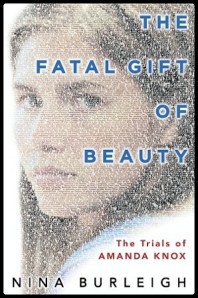
On Knox – The Fatal Gift of Beauty: The Trials of Amanda Knox by Nina Burleigh

knox cover 2_Fotor

Falling into the rabbit hole of media spectacle swirled with true crime drama that creates the Amanda Knox story is easy. Like Dorothy being swept up from Kansas and crashing down into Oz, Knox seems caught in a perfect storm of good looks and incomprehensible behavior that, when thrown to overzealous and conspiracy-seeking police and press, can be just as inescapable as any fairy tale.

I read Knox’s own memoir, Waiting to Be Heard, shortly after it was released in April of last year. Like so many others fascinated by the case, I was eager to hear Knox’s own recounting of events. When Knox and her former boyfriend Raffaele Sollecito were found guilty of Meredith Kercher’s murder for the second time at the end of January, I researched other books on the whole debacle and decided on Nina Burleigh’s The Fatal Gift of Beauty: The Trials of Amanda Knox.

Burleigh’s book interested me, amongst all the others, as it addressed the petri dish which grew the police and media attention on Knox. I knew there was a man convicted of Kercher’s murder that no one seemed interested in. I knew Knox’s sexuality brought up as a piece of evidence used to indicate her guilt. I saw the list of sexist, appearance-based names Knox was called by the press.

Burleigh spends much time exploring the circumstances in which this perfect storm was created. She explains Perugia in detail: as an ancient city, “creative people who find themselves there today complain that the city retains a feudal mind-set that resists creativity and change.” In recent years Perugia has become a pit stop on organized crime trading routes, where prostitutes are trained before being moved along to larger cities. The headlines scream of crimes contradicting the laid-back and party-fueled college town atmosphere. The city’s beauty, Burleigh says, can be deceiving.

The Fatal Gift of Beauty also introduces another concept I wasn’t aware of, the idea of “cronaca nera” or a black chronicle. Burleigh explains that while murder is common in Italy, “a cronaca nera possesses an element of the macabre, diabolical, or obscene that journalists instantly recognize.” Of course it isn’t just Italians that are intrigued by this type of crime. Media in America pander to the white, beautiful girl.

Our first lesson should be to acknowledge and try to understand why we are so much more interested— obsessed even— with the occasional allegedly evil female and so bored with the much more common, and therefore more lethal, sexually aggressive, domestically violent male. When was the last time we saw a garden-variety wife- or girlfriend-beater or violent rapist perp-walked through one news cycle, let alone hundreds? -Nina Burleigh, The Fatal Gift of Beauty: The Trials of Amanda Knox

Rudy Guede's mugshot via

Rudy Guede’s mugshot (via)

One of the most frustrating aspects of the Kercher murder media coverage, the buzz and chatter surrounding the beautiful white Amanda Knox, is the lack of equal coverage of Rudy Guede. Whenever the case comes up in discussion with those around me, I find myself explaining the basic facts to someone who is unaware a man is in prison for the murder of Meredith Kercher. I think (hope) this has changed now as more articles are released, and more people read Knox’s own memoir. Rudy Guede, for those who don’t know, was without a doubt involved in the crime. Physical evidence concludes that. His handprint was on a pillow under Kercher’s body, his DNA was on Kercher’s purse and in her body, and his bloody footprints (police originally claimed these were Sollecito’s) stepped through the crime scene.

Katie Crouch, who is writing a novel based on the events of Kercher’s murder, said in a Salon article, “It is strange, actually, that Knox has the starring role in this drama, as Rudy Guede had the most interesting life of them all.” I certainly agree. Why does the media insist on discussing the fairly unremarkable Knox, when a fascinating (black, male) character much more deserving of attention is kept at the sidelines.

Guede was born on the Ivory Coast, in Africa, to a polygamous, Christian father. Roger Guede was a bright guy with hopes of attaining a degree in mathematics, forced to give up his dream and work as a mason once he and his son immigrated to Italy. Rudy Guede was neglected from a young age, and his teacher, in The Fatal Gift of Beauty, remembers Rudy wandering the streets as a child. Teachers and neighbors would come together to feed Guede dinner. As a teenager, Guede was brought into a wealthy family, only to be kicked out of the family as his behavior became more erratic. He continued his wandering into adulthood, begging to sleep at friends’ homes or sleepwalking into stranger’s homes or businesses, eating their food and using their bathrooms. Despite all the evidence linking him to the scene and the somewhat bizarre aspect of his sleepwalking (what if this was a sleep-murder?), it is Knox the press wants.

Amanda Knox (via)

Amanda Knox (via)

People built myths around feminine beauty before they learned the written word. Helen and her beauty are at the center of the fall of Troy in The Iliad. Making appearance the focal point of any story, however, is like trying to summarize what is written in a book by glancing at its cover. We know very little of Helen’s actual character, other than the uproar raised by the men surrounding her. Helen of Troy is a contradictory figure in many ancient accounts, maybe sad and lonely, maybe nefarious and mocking men in the Trojan horse. All we know for sure is that she had a pretty face.

Knox, like Helen, was little in the press (definitely at first, now she is able to speak for herself) but her appearance, her supposed sexual activities, her inappropriate kisses and yoga poses. Knox behaved inappropriately, failing to properly emote over the death of her roommate and causing some serious cultural misunderstanding. Burleigh explains:

Americans traveling abroad must learn and respect other national norms and points of view. . . . Neither Knox’s parents nor she had the foggiest idea that her athleticism, sexuality, extroversion, naiveté, stoicism in the face of tragedy, and lack of gravitas would doom her in the eyes of Italians, whose young women are not athletic, who grieve openly, and who comport themselves with great formality— who dress and speak and act within a code of conduct that is far different from what passes for the same in Seattle or, for that matter, most American cities.-Nina Burleigh, The Fatal Gift of Beauty: The Trials of Amanda Knox

Italian police and press vilified Knox for her odd behaviors and lack of proper emotional display after the death of Kercher, her roommate. I sympathize with this, as I know so many young women who smile when they are nervous or fear they might cry. In uncomfortable situations, I tend to laugh.

In The Fatal Gift of Beauty, Knox describes herself as someone who loves to smile at strangers on the bus, trying to make them smile back at her. This can seem charming, but it also possibly could be some sort of nervous affectation. So much of the trouble Knox got in with the police stemmed from trying to anticipate the needs of those around her, with a dangerously naive lack of understanding of what was truly at risk. While her Italian roommate’s lawyer was at their home almost immediately after the murder, Knox didn’t think to imitate this behavior. Certainly, a girl who wants nothing more than to see those around her smile is at the most risk for giving a false confession when placed in a room with police officers who want nothing more than an admittance of some sort.

The most important lesson to take away from the case is that all authorities in any country where the rule of law is paramount, all police and prosecutors, should remember that it is far, far better to admit error and pursue due diligence in investigations than to force facts to fit theories that defy logic and, ultimately, derail justice.-Nina Burleigh, The Fatal Gift of Beauty: The Trials of Amanda Knox

Burleigh, most alarmingly, spent time detailing the history of Giuliano Mignini, Perugia’s town magistrate. A man admittedly obsessed with conspiracy theories, he told Burleigh, ““Why do they call it a conspiracy theory?” he asked. “What does ‘conspiracy theory’ mean? How can you call a conspiracy theory the fact that more than one person did a crime together? Why are they called conspiracy theories? Caesar was killed by twenty senators, is that a conspiracy theory? It’s normal that people work together.” A man who cites the epic conspiracy of Caesar’s men to assassinate him as an example of normal human behavior should be cause for concern right away. At one time working closely with a psychic, Mignini developed a theory for a string of unsolved murders involving masons and satanic rites. Investigating this theory eventually led him to an abuse of office charge in 2010. This was the man investigating Kercher’s murder–a man not interested in looking at facts, but seeking to connect dots. He was interested in Knox’s behavior of hitting her head when trying to think during interrogation, because masons hit their foreheads in their rites.

The spectacle surrounding Knox has caused the police to lose sight of justice and, in their struggle to capture Knox, let the real killer practically go free. Guede is now able to leave prison to study. Guede, who has changed his story regarding the whereabouts of Knox and Sollecito during the crime multiple times, seems to be benefitting most from the police interest in Knox and Sollecito. Originally sentenced to thirty years, his sentence has now been reduced to sixteen years; this sentence is less than both Knox and Sollecito received at their most recent retrial. This is despite the fact that Guede is the only one involved with physical evidence linking him to the scene.

The Fatal Gift of Beauty: The Trials of Amanda Knox by Nina Burleigh on Amazon.com/Indiebound.org

Related Links:

  • Amanda Knox and Italy’s ‘Carnivalesque’ Justice System
  • Amanda Knox, what really happened: Writing toward the actual story
  • Injustice in Perugia site
  • Review – Beyond Belief: My Secret Life Inside Scientology and My Harrowing Escape by Jenna Miscavige Hill

    beyond belief large w border

    Next, we had to yell at square glass ashtrays at the top of our lungs. The idea was to train ourselves to express absolutely clear intentions, and by mastering this we’d be able to guide our future preclears to successfully confront things. And it didn’t end there. Directing our intentions into particular parts of the ashtray, we’d ask our ashtray very specific questions. The belief was, that whenever you asked a question, you had the intention of getting that question answered, as you should when you had a preclear in session. The ashtray was required to be square. We were to direct questions into each of its four corners.
    “Are you an ashtray?”
    “Are you a corner?”
    “Are you made of glass?”
    The same principles that we were trying to learn and understand as auditors were the principles that prevented us from questioning these ridiculous tasks. We’d been trained to follow instructions, just as we were now learning how to make others follow ours. Outlandish as all these tasks were, none of them ever struck me as odd, but remembering the scene now, they were. . . . All these courses were supposed to be about training auditors to be smooth with their communication, and less distracting to preclears in session. But the result is that it made all of us more robotic. It automated our responses, turning everything we said into a script.
    -Beyond Belief, Jenna Miscavige Hill

    Jenna Miscavige Hill (via)

    Jenna Miscavige Hill was raised in an alternate reality, with its own hyper-abbreviated lingo, strict work ethic, and complicated belief system. She was raised as a Scientologist, and amazingly survived her bizarre upbringing of manual labor and indoctrination to leave the church and write a memoir, Beyond Belief. As Scientology is a relatively new development (started in 1952), it seems safe to assume these stories (and memoirs) may become more common as more children are raised in these situations, flee, then report back to the outside world what exactly they experienced inside the secretive church.

    Beyond Belief is simply written, as Hill doesn’t spend much time waxing poetic. She documents her experience, and allows the reader to infer from her life what they choose. She repeated L. Ron Hubbard mantras over and over in what was called “Chinese School”; she and other kids did manual labor at the ranch they lived on, after class and on weekends; she saw her parents once or twice a year at times; and when she and others encountered the usual trials and tribulations of adolescence they were interrogated or banished. What seemed like fun and games to Hill as a young child began to cause pain and heartbreak as she aged and thought more independently.

    Some of the situations recounted in Beyond Belief seem so ridiculous they are almost comical (Hill is asked to sign a one-billion year contract when she is seven years old), others are painful to read about. Much of Scientology’s power over its members seems to be derived from separating family members, and Hill struggles to communicate with family and loved ones throughout the book.

    Certainly one of Hill’s intrigues is her last name. While both her parents held prominent positions in the church, her uncle, David Miscavige, ultimately took over the church and is still its leader today. Those seeking insider information regarding David Miscavige or an overview of the church’s intense and nefarious business dealings may want to look elsewhere before reading Beyond Belief. This is ultimately Jenna’s personal story, as it should be. For a thorough overview of the church, I suggest Inside Scientology: The Story of America’s Most Secretive Religion by Janet Reitman (although I realize there is high praise for Going Clear: Scientology, Hollywood and the Prison of Belief by Lawrence Wright I haven’t had a chance to read it yet). Without some background on the Church of Scientology, you may find yourself lost amidst all the practices unique to the church in Hill’s story: abbreviations and talks of preclears and auditing, which are explained briefly in Beyond Belief but examined in more detail elsewhere.

    Even after reading other books about Scientology, I was surprised by how extreme Hill’s childhood experience was. She now works with the website Ex-Scientology Kids to provide support to others leaving the church. In this type of situation, where Scientology values its image so much and markets itself as a church, it does seem like one of the most powerful things to do is to make these voices heard.

    Beyond Belief: My Secret Life Inside Scientology and My Harrowing Escape by Jenna Miscavige Hill on Amazon.com/Indiebound.org

    Related links:

    On falling for Donna

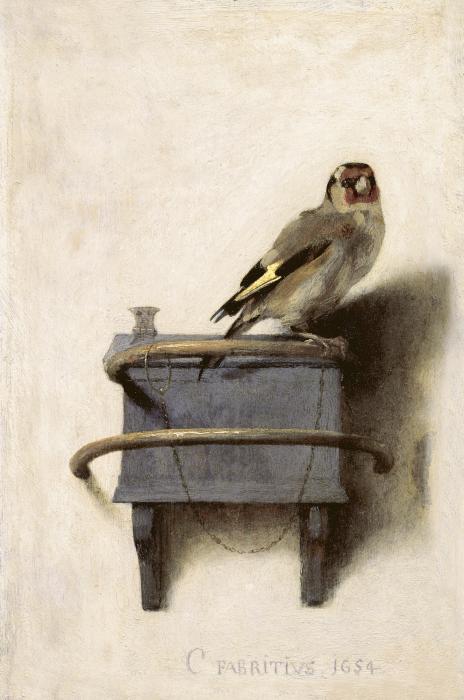
    “I started off loving the bird, the way you’d love a pet or something, and ended up loving the way he was painted.”

    Donna Tartt, The Goldfinch (p. 26)

    Right now I’m reading The Goldfinch, and I’m so in love with Donna Tartt’s writing. Her dialogue, especially, just gets right down into me as something very true or very idealistically true of what people could say if they were bright and fascinating or ignorant and horrifying. I’m not sure why I didn’t really get into Donna Tartt’s work sooner. The name was always around, but there are so many good books out there and my to-read list is 300+ books long.

    I actually readThe Little Friend a few years ago, and it baffled me. I understood it was great writing, but I went into it thinking there would be something more there, from the hype surrounding Tartt as an author. I had been so excited to settle in with what I thought would be an engrossing, intense, heavy, good book that the experience left me somewhat turned off to reading more of her stuff.

    Recently, I had one of those amazing experiences where you are out to coffee with friends, someone new is there, and you realize they are an avid reader like yourself. When I confessed my love for mysteries, this fellow book lover suggested Tartt’s The Secret History as an excellent mystery-type book to check out.

    And that suggestion got me to where I am, totally into Tartt. I listened to The Secret History on audiobook, what seemed to me to be a masterpiece narrated by the author. If you haven’t read The Secret History, now is the time. Small private college ideals of intellectualism go horribly awry, and the unfolding narrative account of what exactly went wrong amidst a studious group of Greek students manages to be enchanting and horrifying like only the best books can be.

    The Goldfinch on Amazon.com

    Review – You Are One of Them by Elliott Holt

    9781594205286_YouAreOneOf_JKF.indd

    The Americans with Russian girlfriends–“pillow dictionaries,” they called them, aware that these lanky, mysterious women were far better-looking than anyone they’d touched back home–began to sound like natives. They were peacocks, preening with slang…A little bravado goes a long way toward hiding the loneliness. You can reinvent yourself with a different alphabet.
    ― Elliott Holt, You Are One of Them

    You Are One of Them by Elliott Holt is a love song of a book: a love song to foreign lands that always seem impossibly perfect until you get there; a love song to a different time when we were younger and everything around us looked so much bigger; a love song to the beliefs we have when we are children, and the hope that we can grasp tightly onto even as adults.

    Narrator Sarah had a best friend growing up, a perfect best friend, named Jennifer Jones. They grew up in Washington, D.C. together during the paranoid madness of the Cold War. Sarah’s mom is neurotic, charting nuclear fallout on huge maps spread along the dining table, while Jennifer’s parents are so idyllic they seem quaint.

    The girls write letters to the Soviet Union asking for peace, and suddenly Jennifer Jones (just Jennifer Jones, not Sarah) is famous. Her letter has been published in the Soviet papers and answered by their president. They’ve asked her to come to the USSR as an ambassador of sorts. As Sarah watches from home, Jennifer is made America’s darling. And, as Sarah watches from home, Jennifer and her parents crash into the ocean on a small plane, never to be seen again.

    Then, years later, Sarah receives a mysterious e-mail from Russia. A woman who knew Jennifer as a child, who hosted her when she visited, asks, “Would Sarah come? Doesn’t she have questions?” She will, and she does. Sarah packs up, and is off to Russia, searching for a truth she isn’t sure exists regarding her long lost friend Jennifer.

    If there is a single strong point in Holt’s writing, it is paralleling the disorienting experience of childhood with the disorienting experience of wandering a new country alone. In both situations Sarah seems totally lost and at the mercy of those around her, almost adrift in a sea of people she needs to lean on but may not be able to trust.

    In the best way possible, You Are One of Them reminded me of The Gardens of Kyoto by Kate Walbert, one of my favorite books when I was younger. Both books very much have this “Let me sit you down and tell you what I do and what I do not know about my past” feel to the narration, which creates a feel of unraveling a web of dark secrets and drama with the narrator as they explore their own memories.

    You Are One of Them by Elliott Holt on Amazon.com/Indiebound.org

    Related links:

    Review – Elders: A Novel by Ryan McIlvain

    elders

    A story of faith and doubt, a study of two young men’s struggle to navigate a forced, brief, intensely personal relationship, and ultimately a look at what we think makes us good and what really shows us to be good; Elders by Ryan McIlvain is a character study, so close-up it hurts, of the dance we do as we try to navigate those around us even as they echo our own weaknesses.

    Elders takes place on the dusty and seemingly silent streets of Brazil, where Mormon missionaries do the thankless work of knocking on unanswered doors day-to-day. Elder McLeod is anything but a model Mormon: he’s had questions about the faith and its beliefs in the past, and he’s happily nearing the end of his time in Brazil. As if by a test from God himself, Elder McLeod’s new companion (Mormon missionaries work in intense twosomes, they are forbidden to ever leave their companion’s side) seems to be his foil: Elder Passos, a converted Brazilian who is fired up about the church, is immediately enforcing regulations, preaching enthusiastically, and getting under Elder McLeod’s skin.

    Having heard of the book from a friend, the summary of the plot didn’t sound that intriguing. Such a character-driven rather than plot-driven book, especially as a first novel, sounded possibly dull or bogged down with each character’s introspection. Once I gave the book a chance, I found this wasn’t the case at all. McIlvain chronicles the emotional struggle of each character with such intensity that this was a hard book to put down, more so than any plot-based thriller. Rather than over-writing and letting the words get in the way of the story, McIlvain seems to have written just enough to make his characters become fully realized and no more.

    This book has been dropping onto and off of my radar since its release in the Spring of 2013. I grew up in Utah, in a suburb outside of Salt Lake City, but I didn’t belong to the dominant LDS religion. One of my elementary school teachers brought in pictures of her mission to share with us her experience, and the question “What ward are you in?” became a normal one for me to hear and answer. To furrowed brows and pursed lips, I would explain that my family wasn’t any religion. At a sleepover in my pre-teens, several of my best friends tried to give me a Book of Mormon. They didn’t even need me to read it, they explained earnestly, with their big, concerned eyes gazing into mine. Cornered against the side of a pink and blue quilted bed while we all lay akimbo on swishy sleeping bags, I pushed the book under the bed once the subject was changed, where its fate remains unknown to me.

    My parents certainly didn’t realize the extremism of the Mormon religion in Utah before we moved there, and I think I can safely speak for them in saying had they known we wouldn’t have made the move in the first place. Once I left Utah, wide-eyed at California’s huge freeways and city streets, I began to realize what a bizarre experience living in Utah as a non-LDS kid had been. When people ask where I’m from, I immediately follow my “I’m from Utah” with a “But I’m not Mormon,” as the expected follow-up question. I laugh at recognizing restaurants, slang, and culture from the TLC show Sister Wives, and tend to check out books pertaining to the religion as I feel I have an intimate, if  outsider, knowledge of its pervasiveness in some areas of our country. By no choice of my own, my own story became enmeshed with the story of this religion.

    After reading only a few pages of the Elders, my question was, is this author Mormon? The answer is on the book jacket’s back flap, on McIlvain’s author bio: “Ryan McIlvain grew up in the Mormon church and resigned his membership in his midtwenties.” Elders must have been an intensely personal book for the author to write, and it manages to resonate as such. I can’t wait to see what comes from McIlvain in the future.

    Elders by Ryan McIlvain on Amazon.com

    Related articles:

    Laughter, the best medicine?

    tumblr_myj78oOVRl1r7tu05o1_500

    <via>

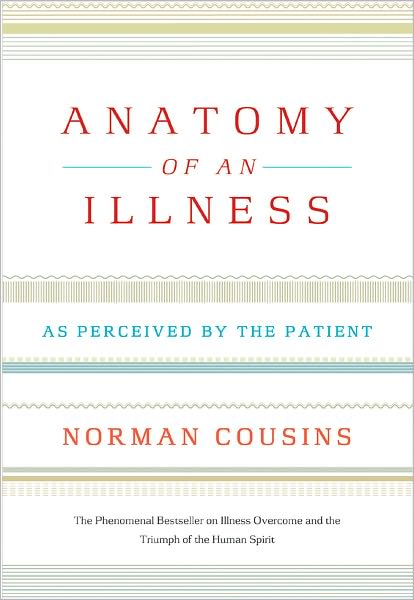
    Norman Cousins, a journalist and professor, believed in taking massive doses of Vitamin C and laughing to cure illness. Perhaps more important than either one of those specific treatments, he believed in the power of placebo and each person’s ability to heal their own illnesses. I just finished Cousins’ Anatomy of an Illness as Perceived by the Patient: Reflections on Healing and Regeneration, originally published in 1979 and now considered an important classic of patient involvement in medical care. Cousins documents his own path to healing from his diagnosis of a serious form of arthritis called ankylosing spondylitis (doctors give him a chance of recovery of 1 in 500): he stops taking his prescribed medications, and he leaves the hospital, which he views as not conducive to his healing. He checks into a hotel, and watches funny movies, laughing bunches. After he laughs, he sleeps. He gets an IV of Vitamin C, a slow drip so his body can absorb the Vitamin C better than if he consumed it all at once. And then he gets better.

    cousins smile

    Norman Cousins, smiling.

    Obviously, there is much debate about Cousins healing himself this way. Many doctors speculate that he has experienced a placebo effect, or perhaps (it is now speculated) a misdiagnosis. Rather than protest the placebo idea, Cousins embraced it. “Many medical scholars believed that the history of medicine is actually the history of the placebo effect,” he said. The history of medicine is full of toxic remedies, and we survived these things and even felt better once we took them as cures, perhaps because of placebo. “The placebo is the doctor who resides within,” Cousins said, claiming placebo as an amazing part of our own capacity to heal.

    While some of the book is outdated, some of it comes across as an almost prescient warning of what will be lacking in medical care in the future. I have been reading Ben Goldacre‘s Bad Pharma as well. If Cousins’ book, written 30 years ago, was a warning shot fired into the air that something was wrong with the way we demand and receive medical care, then Goldacre’s book is the summation of that dysfunctional medical train rolling forwards at full speed.

    anatomy of the illness cover

    Anatomy of An Illness as Perceived by the Patient,
    20th Anniversary Edition

    In the chapter called “Pain Is Not the Ultimate Enemy,” Cousins speaks to one of the main themes of his book, the overprescription of unneeded drugs. We are overeducated on pills we can take, while being undereducated on usual causes of pain (like stress) and how to solve those problems ourselves. He says, “We know very little about pain and what we don’t know makes it hurt all the more. Indeed, no form of illiteracy in the United States is so widespread or costly as ignorance about pain–what it is, what causes it, how to deal with it without panic. Almost everyone can rattle off the names of at least a dozen drugs that can deaden pain from every conceivable cause–all the way from headaches to hemorrhoids.” Cousins suggests we could combat this lack of knowledge with education about pain in schools, and “If our broadcasting stations cannot provide equal time for responses to the pain-killing advertisements, they might at least set aside a few minutes each day for common sense remarks on the subject of pain.” I do wonder how Cousins would react if he saw the advertisements on television now, not only for over-the-counter pain medication but for prescription drugs tailored towards every ailment you can imagine, side effects crammed into a voice-over while people dance through a field on screen for the last ten seconds of the commercial, like some bizarre bad joke. This Celebrex ad, in which a woman calmly talks about bleeding and death while a man and his dog calmly bike through a blue screen, is something out of a science fiction novel.

    In the last chapter, “Three Thousand Doctors,” Cousins talks of the importance of touch in the doctor/patient relationship. I have talked about this with so many people, how doctors seem to just read charts and then prescribe medicines without doing much of a physical exam anymore, and how odd that is. A pain doctor recommended facet injections for lower back pain without feeling the area of my lower back that was in pain. Did the doctor know what he was doing? Probably. Am I confident in my doctor, knowing he will shoot a needle in my spine without taking the time to feel what is going on in my lower back? Certainly not. In this chapter Cousins also brings up what seems like a quaint idea to me, that in order to have trust with your physician, they need to be the one to meet you at the Emergency Room during a heart attack. Who has that sort of relationship with a doctor now?

    And finally, Cousins encourages laughter. He encourages it for everyone, especially those with serious diseases, morose and in bed. At one point he explains the purpose of laughter to a depressed young woman with a progressive illness:

         What was significant about the laughter, I said, was not just the fact that it provides internal exercise for a person flat on his or her back — a form of jogging for the innards–but that it creates a mood in which the other positive emotions can be put to work, too. In short, it helps make it possible for good things to happen.
         Carole wanted to know how she could find things worth laughing about. I said she would have to work at it, just as she would have to work at anything else worthwhile.

    There is some debate about Cousins’ actual diagnosis. Thirty years later, it seems that Cousins may have been saving himself from bad medical advice and incorrect diagnoses for much of his life. He was misdiagnosed with tuberculosis when he was young. While in the sanitarium, he stuck with the kids who believed they were healthy until he was released; he was diagnosed with a heart problem and told to stay in bed, he refused (and later he was told that vigorous exercise probably kept him alive), and there are a lot of suggestions on the web that Cousins was suffering from reactive arthritis (from some sort of infection) rather than his more serious diagnosis of ankylosing spondylitis.

    Here is Cousins discussing his health (for the first few minutes he is rambling about baseball, ha! Hang in there.); the Hans Selye book he mentions, I assume is The Stress of Life:

    .

    There was also a movie made based on Anatomy of an Illness, by the same name. Cousins was reportedly unhappy that Edward Asner was chosen to play him. Here are the first four minutes of the film:

    Further recommended reading:

    Review – Lost Girls: An Unsolved American Mystery by Robert Kolker

    Image

    The demand for commercial sex will never go away. Neither will the internet; they’re stuck with each other. It may no longer even matter anymore whether the sale of sex among consenting adults is wrong or right, immoral or empowering. What’s clear is that no good can come from pretending that the people who participate in prostitution don’t exist. That, after all, is what the killer was counting on.
    –Robert Kolker, Lost Girls

    Lost Girls starts with a story straight out of a mystery novel, a trendy Scandinavian crime thriller: a panicked prostitute disrupts a sleepy and isolated beach community, usually peaceful behind its private gate, when she sprints from door to door, asking for help, hiding behind bushes and parked boats. A man in a black SUV chases the woman down as she sprints away from his headlights. The stunned community calls the police. Cops show up too late–forty-five minutes later, they arrive to no trace of the girl or the black SUV. In their search for the young woman months later, police start to discover bodies. Four of them, clustered together, at first.

    This mysterious sequence of events, seemingly created in the dark mind of a mystery novelist, is pulled from recent history. Robert Kolker‘s Lost Girls documents the unsolved murders of four women (possibly more) on Oak Beach, a barrier island of Long Island. All four women were prostitutes; all four were using Craigslist to solicit johns. It seems the killer in this case realized what apparently many killers do: prostitutes are often not reported as missing, and their deaths are often dismissed as the price of their chosen vocation. Kolker eloquently describes this after one especially frustrating police ruling: “the police seemed to be saying that [the missing woman] had died because her soul had been rent asunder by a life in the streets.”

    Lost Girls asks the traditional true crime questions–who is the murderer? Why haven’t they been caught? Why weren’t the bodies noticed? And what about the pathologically lying, limping doctor who lives on Oak Island? But there is an even greater mystery at hand which Lost Girls chooses to explore–how does someone end up on Craigslist, offering their body to strangers for cash? Kolker, in a fascinating, touching, and intimate way, tracks the story of each woman back by finding those who knew her best, from childhood forward. Illustrated by maps charting each woman’s ominous progression towards her final destination point of Oak Beach, NY, Lost Girls documents the four women’s lives. They all encounter hiccups, struggles, and tragedies along the way that lead them to prostitution and Craigslist; their stories all halt mid-frame as each young woman goes missing in the midst of a life they were planning to earn just a bit more from and then get the hell out of.

    By making Lost Girls the story of the murdered women, much more than the investigation or the killer-at-large, Kolker manages to shine light on a glaring and uncomfortable point of the sex trade: police seem to dismiss reports of missing prostitutes. Or their friends, working girls themselves, are too fearful to report them missing. When the women are found murdered, and the police are forced to show more interest, they still seem to chalk murder up to a direct result of prostitution, placing the blame with the women and the women’s families. Kolker documents some unbearable victim-blaming by the police, and near the end of the book, it gets to be difficult to read: police describing the women as “greedy”, suggesting they can’t resist going with a serial killer john who offers them a lot of money to hop into a shady situation.

    The only thing I did feel was missing, and it seemed to be achingly absent from the second half of the book, was documentation of some of the police work done on the case. I’m not sure if this is because the killer is still out there and the police didn’t want to reveal too much of their investigation, or if there was another reason for this, but Kolker doesn’t document the police investigation itself. It seems that Kolker has one brief interview with the Suffolk County police commissioner and his chief of detectives, both desperately needing a lesson in PR. I kept waiting for more detailed information on the police investigation that never came.

    Mysteries without a clear solution are captivating, exhausting, frustrating. As noted in my review of The Hanging Judge a few weeks ago, there can often seem to be a moment when looking over all the evidence, in puzzles both real and created, where it is clear no single explanation can possibly explain past events. Kolker has managed to write clearly about a puzzling mess of facts, rumors, and biases which have built this unsolved case into something daunting and nonsensical. He writes about what happened in the only way we can understand, for now: by telling the stories of the victims, overlooked for so long, unable to speak for themselves. These women were, truly, lost girls. Kolker dared to try to find them. Sadly, he was too late.

    Lost Girls: An Unsolved American Mystery on Amazon.com/Indiebound.org

    Robert Kolker’s Author Page/selected articles written by Kolker for New York Magazine

    Related Links: