book reviews

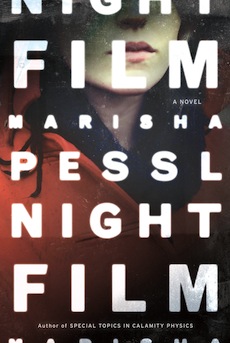
Review – Night Film by Marisha Pessl

Image

“‘Anyway,’ he added softly, ‘a man’s ghoulish shadow is not the man.'”  –Night Film, Marisha Pessl

Night Film by Marisha Pessl is a big, bold statement of a book; released at the perfect time, right before Halloween when everyone is craving a scary story told in the dark.  Pessl brings us “a myth, a monster, a mortal man” in Stanislas Cordova, the film producer at the core of the novel.  He’s described as “a crevice, a black hole, an unspecified danger, a relentless outbreak of the unknown in our overexposed world.”  Cordova’s films are outlawed (an inspired copycat killed a girl in imitation of one film), and bootlegged “black tapes” are passed among obsessive Cordovites.  Renegade underground screenings of Cordova’s films take place, and fans flock to a secret website where they post their darkest secrets as well as the most mundane bits Cordova trivia.  The film producer’s beautiful but haunted daughter Ashley commits suicide, and a ragged journalist past his prime, Scott McGrath, decides to look into the death.  McGrath reluctantly picks up a few delightful sidekicks, and they begin to unravel the mystery surrounding Cordova, his family, and his films.

I was originally listening to Night Film as an audiobook, and I realized I must be missing something as at times the narrator seemed to be reading captions from photos and newspaper articles.  I discovered a used copy of Night Film at Diesel Books for $8 (score!) and was glad I did.  The book features photos of Ashley before her death, articles and pictures from the New York Times on Cordova and his films, and other pieces of evidence displayed as they are discovered.  Until they add a .pdf to the audiobook, I’d recommend grabbing an actual copy of the book to avoid missing out on the full story.  There is additional media built around the book, including an app called the Night Film Decoder and Night Film found footage on the web.  I’m sure cynics will see this as too much hype, but I saw it all as a great addition to the story.

Night Film is reminiscent of the post-modern masterpiece House of Leaves by Mark Z. Danielewski and the terrifying European hit Syndrome E by Frack Thilliez. All of these books are built around creepy (and nonexistent) films; in House of Leaves, a documentary about a house with shifting boundaries is studied, and in Syndrome E, a terrifying old film is found and blinds a man who watches it.  I’m not sure why reading imagined documentation is so irresistable and terrifying.  In Night Film, Pessl takes care to blend Cordova and his horrors into our current culture, pointing out details of the films in which fans have found meaning.  This careful interweaving of fiction and reality heightens fear by making stories feel real.  All these imagined dark films are made all the more terrifying by people’s reactions to watching them, which in the real world we just don’t see or experience.  A man begins to lose his mind when reading about the documentary in House of Leaves;  Cordova’s films are “so horrifying, audience members are known to pass out in terror.”

I haven’t read Pessl’s first book, Special Topics in Calamity Physics, even though it was highly praised. It is now at the top of my list of books to get next.  The plot of Night Film is fantastic, but being able to place the looming figure of Cordova believably at the center of our world took some serious writing talent.  Pessl has wit, and displays it Night Film‘s moments of much-needed comic relief.  The Night Film Quotes page on Goodreads is full of memorable gems.  Night Film is the best kind of horror novel, with just the right amount of brains and brawn on board.

Related articles

Review – Me Before You by Jojo Moyes

Image

I didn’t know too much about Me Before You before I picked it up and started reading.  I thought the cover was fun and funky, and had a vague recollection of a positive blurb in a magazine.  I’m glad I stumbled into this book without knowing too much about the plot–I’m not too much of a romance buff, but I was pleasantly surprised by this story.  Instead of the usual boy-meets-girl, the concept here is that girl (Lou) is hired to look after quadriplegic man (Will), paralyzed when a motorcycle struck him as he crossed the street.  Lou and Will must interact for 8 hours each day as it is her job to keep him company and assist him with daily activities.  Emotions ensue.

Glance through the .gifs featured on Goodreads reviews of Me Before You, and it appears to be the most devastating novel ever written. Although I didn’t find it that heartbreaking, there were some times I chose to put the book down and take a break; it is some seriously heavy reading material, confronting moral issues and human emotions with the same brutal honesty of a Jodi Picoult story.

All the love aside, what I really appreciated about this book was its broach of a topic I haven’t often encountered in popular fiction, the day-to-day experience of a quadriplegic man in our world.  As Lou began to see the world from Will’s perspective, I did too.  Lou points out: “There are things you don’t notice until you accompany someone with a wheelchair.  One is how rubbish most pavements are, pockmarked with badly patched holes, or just plain uneven.  Walking slowly next to Will as he wheeled himself along, I saw how every uneven slab caused him to jolt painfully, or how often he had to steer carefully around some potential obstacle.”  Moyes does a great job of describing the discomfort people have when interacting with someone who is paralyzed or immobile.  There are failed handshake attempts, people obviously attempting to avert their eyes, and others noticeably staring.

Me Before You was similar, in some ways, to The Dive From Clausen’s Pier by Ann Packer.  In that book, a young man is paralyzed after a dive into a shallow lake, and his fiancé chooses to flee the situation.  The Dive from Clausen’s Pier shows us the significant other’s perspective.  In Me Before You, Will’s girlfriend has already tried to make it work and left him; we see the aftermath of this from his perspective rather than hers.  Both books are worth checking out.

This was the first book by Jojo Moyes I had read.  Her latest novel is called The Girl You Left Behind and sounds to be in the same love-through-history vein as Beautiful Ruins by Jess Walter, which was a hit.

Me Before You on Amazon

Me Before You on Indiebound

Jojo Moyes webpage

Related articles

Review – Five Days at Memorial by Sheri Fink

Image

Five Days at Memorial:  Life and Death in a Storm Ravaged Hospital was everything that makes nonfiction great to read:  a subject worth uncovering, documented by a voice with a clear penchant for obsessive detail.  Sherri Fink recounts the struggle for survival at New Orleans’ Memorial Hospital, which acted as a port in previous storms, in the days following Hurricane Katrina; she discusses at length the choices made by hospital staff (several doctors and nurses made the choice to euthanize patients they felt couldn’t be evacuated) and the investigation that followed.

I listened to this as an audiobook, and I could not stop telling people about it. First off, I had no idea things got this bad at Memorial Hospital during Hurricane Katrina.  The scenes described were more harrowing than any fiction could be: hospital staff stuffing preemie babies in their shirts to evacuate as there was no space for incubators, nurses ventilating patients by hand due to power outage, stifling heat with smashed windows acting as the only ventilation, while gunshots were heard outside, and rumors of martial law were spreading.  Hurricane Katrina was a testament to our government’s inability to organize a response to disaster, and Five Days at Memorial illustrates the high human costs of that inability.  This was at points a difficult book to get through; the descriptions are so clear I felt sick even imagining such an experience, let alone living through it.  I kept asking myself, “Why doesn’t the army come to relieve these exhausted hospital staff members, and help them evacuate these dying patients?”  It was so frustrating to know this happened in America and there was nothing I could do about it now.

The questions of justice presented here are some of the most difficult questions that exist about human life, and at points reminded me of the perplexing moral issues presented in Michael Sandel’s epic Justice class at Harvard, free on iTunes U.  Is it right to evacuate the most able-bodied people, who need the least help and will be the quickest to get into helicopters? Or is the more moral choice to evacuate the most sickly to safety first, as they are the most in pain and most in need of help? The questions presented at Memorial Hospital in that hellish time after the storm speak to historical ethical dilemmas, and Fink does a great job of explaining the dangers with and benefits of each choice.

Kirsten Potter narrated the audio version of the book, and did an incredible job. This story could have easily been overdone by a different narrator.  Potter managed to stay neutral but interested, the voice of a reporter bearing witness to history rather than a character actor.

Although the second part of the book (covering the aftermath of choices made at the hospital) may not be as gripping as the harrowing account of survival in the storm, I think this is the portion that makes this book so important.  We can all guffaw at the tragedy, but examining it with a critical eye is the only thing that will keep it from happening again.  Perhaps the most terrifying part of Five Days at Memorial is its end, when Fink embeds with American medical disaster teams after the earthquake in Haiti.  Seemingly logical decisions to preserve oxygen for those who need it most almost cost a young woman her life.  It seems like in a disaster, the luck lies with those who have the most innovative, creative doctors who are able to see beyond the complicated machines of modern medicine.

Five Days at Memorial on Amazon.com

Five Day at Memorial on Audible.com

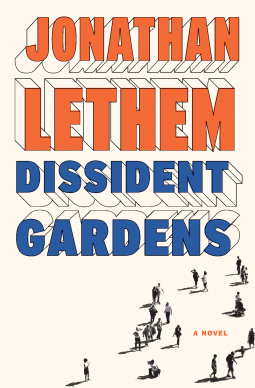
Review – Dissident Gardens by Jonathan Lethem

dissidentgardens

I’m a huge fan of Jonathan Lethem.  His books are always oddness worded authentically, and I think he is able to capture a lot of the bizarre struggle of life we go through in a way only the greatest authors can.  My favorite of his books are the ones considered the more genre-fied odd ducklings of the bunch, such as This Shape We’re In, Gun, With Occasional Music, and As She Climbed Across the Table.  I think the fact that he can dabble in different genres (like Margaret Atwood is so easily able to) is a testament to his ability to write great stories, regardless of their setting.

Lethem’s newest novel Dissident Gardens, released last month, is not a genre novel.  The story documents the struggles of three generations of a radical Leftist family.  Rose is the almost-Jewish Communist matriarch, “a dark tower, a ziggurat.” Struggling to escape mom’s shadow, “like crawling out of a bomb crater,” is daughter Miriam; a cool, confident hippie chick in the way only the daughter of a rebel can be.  Miriam’s Quaker-raised son Sergius struggles to find his own identity amidst the mayhem of his history.  Stealing the show is Cicero, a sort of step-son to Rose, a frustrated gay black professor who prides himself on making the simpletons surrounding him uncomfortable:  “Cicero, like Rose in the end, preferred his listeners stunned and bleeding, all masks on the floor, or on fire.”  There has been much talk of what this more realist book means for Lethem – is he growing up, is he demanding respect as a legitimate author, is he giving in to reviewers’ requests that he give up comic books already?  Lethem has a great interview on Slate answering many questions about the book. The summary: the metaphysical here is the concept of ideology, of that intangible better way of living each character is searching for.  And I can certainly dig it.

I was hesitant when reading the summary of Dissident Gardens, because I love a story with bells and whistles (a mystery, an apocalypse, a drug-laced seedy background).  Once I began reading, however, I was reminded immediately that Lethem could rewrite the phone book into something meaningful said in a way I never would have imagined.   His unique but effortless wording had me doing double takes.  Even the first scene, of Communists gathering in Rose’s kitchen, has sentences so well crafted it is hard not to pause and mull over them for a while:  “They’d overdressed, overcompensated with vests and jackets, now arraying themselves on her chairs like some Soviet oil painting, postured as if on some intellectual assignment.  In pursuit of that chimera, the Dialectical Whosis, when really there was to be no dialectic here. Only dictatorship.  And the taking of dictation.”  An ocean atmosphere is “noon-luminous”, Cicero allows his class to sit in silence and “plummet into that abyss of the inexpressible where the truth lies.”

The intensity and accuracy with which Lethem allows his characters to document their emotional landscapes, and the room with which he gives them to grow large in his words, remind me here of that other Jonathan who has created epic American family dramas, Jonathan Franzen.  And like that other Jonathan, Lethem shows us everything it is to be part of a family, everything there that isn’t as simple as love.

The surreal feeling of past books is there, when Miriam competes in a TV quiz show and begins to have almost hysterical fantasies under the blinding studio lights.  It is there as Rose falls for, and meets, Archie Bunker.  The surrealism is there as these characters reach out for a sense of certainty in their beliefs, struggling to reconcile an imagined idealism with the harsh realities laid out before them.  Lethem shows us that struggling through true life, with bizarre self-talk and strings of random experience molded into belief, can be just as disorienting as any supernatural tale.

Dissident Gardens on Amazon.com

Dissident Gardens on Powell’s Books

The Bone Season by Samantha Shannon – What went wrong?

BoneSeasonSamShannon

I recently read the “highly anticipated” novel The Bone Season, by Samantha Shannon.  Reading this book just confirmed two of my beliefs:

1)  Marketing campaigns can easily hurt the books they are promoting.

2)  The best non-fiction authors do an amazing job of incorporating facts seamlessly into their stories.

First, point one.  Marketing campaigns can hurt books and disappoint their readers.

All the readers who reviewed The Bone Season on Goodreads seemed to feel the same way about it I did.  Way too much information being thrown out, with a beginning that is almost comical thanks to its info-dumping.  I wanted to love this book so much (as did every other reviewer on Goodreads, it seemed).  A cool young woman publishing a hit?  What isn’t there to love about that story.  Someone, somewhere compared this poor girl to JK Rowling and immediately set her up for failure.  As we saw with The Cuckoo’s Calling, JK Rowling’s writing can’t even build a new JK Rowling-level of success.  The blurbs for this book are also overly optimistic–U.S.A. Today called The Bone Season a combination of George Orwell and J.R.R. Tolkein!  No pressure, right?  What this means is the expectations for The Bone Season were incredibly high.  Readers were expecting an Orwellian brand-new Lord of the Rings series that could create a Potter-worthy hysteria.  With that sort of hype, of course readers are going to be disappointed.  I often feel this way when a book is declared a “hit of the summer” or “next Girl with the Dragon Tattoo” or “new Hunger Games”.

In Janet Maslin’s brilliant and brutal review of The Bone Season at the New York Times, she calls it “a human interest story, not a book.”  She points out that much of the hype around the book has been on the author and her success-the movie options, the money.  Obviously the average reader isn’t looking for a literary masterpiece, but the fact that books have become hollow hype machines similar to blockbuster movies is something to notice.

And that brings me to point two:  The Bone Season’s writing itself.  It takes skill to make information become digestible  and the best non-fiction authors are masters of this.  I think studying how great non-fiction incorporates facts into vivid stories would absolutely help The Bone Season become readable.  This is such an information-laden book (granted, the information conveyed is regarding a fictional world but there is a ton of it), I think it would have benefitted from a more journalistic narrative.  Great non-fiction books pack an incredible amount of information into a readable story.  I think The Bone Season would have benefited from the focus on creativity and details which build a picture of the facts.  There is a saying in writing that you “Show, don’t tell,” and The Bone Season is a book of telling.  Great non-fiction manages to show all its information.  Spillover, a non-fiction book by David Quammen about the spread of zoonotic diseases, is 600 pages of scientific facts and history.  Quammen is such a brilliant writer that these facts go unnoticed in the story.  Bad Pharma, a huge non-fiction book covering the pharmaceutical industry’s faults, reads more clearly than The Bone Season.  I think great non-fiction has the ability to place the reader in a story rather than simply conveying a story’s information.  I also think this was exactly what The Bone Season was lacking.  The Bone Season was a textbook of information, a list of ideas with little explanation as to why we should care.

How would I fix The Bone Season?  Clearly there is a world inside Samantha Shannon that needs to get out.  We all want to hear about this world she has created and fall in love with it, we just need her to show us what its like there.  I would start with Paige at the protests in Ireland when she was six.  Make that the introduction to a book entirely based upon Scion’s beginnings in a world which sees ghosts, and Scion’s growth from Paige’s view.  Cut the rest of the plot, with its aliens and secret islands.  Get rid of some action and focus on the context.  I would focus on conveying all that information thrown at us in The Bone Season’s first chapter into an entire book, tidbit by slow tidbit.  Once we understand the creepy world under Scion rule in a clear way, other books could bring in more information.  The second book could focus on Paige’s gang, and allow us to get to know them better.  And maybe, by the third book, when all this information is embedded into our memories in a less overwhelming way, we could approach the whole alien demon species thing.  We’re all cheering for you, Samantha, but please give us something we can work with next time!

There is some absolutely great and really dark stuff in The Bone Season.  The idea of masks that seal to a person’s face, making them unrecognizable, was wonderful.  The terms of endearment were beautifully executed in the dialogue, pulling off a new-world slang that rang true.  There is a lot of great stuff here, and I will definitely read the next book with hopes of a smoother story.

The Bone Season on Amazon.com

Review – The Salinger Contract by Adam Langer

Image

I was pleasantly surprised with The Salinger Contract.  This is a theme mystery, focusing on literature, and I’m always skeptical of theme mysteries (cat mystery novels, and now yoga mystery novels?  really?).  However, this book worked.  As I love books and I’m interested in writing, I appreciated the look into the life of the less glamorous authors out there.  The lives and livelihoods of average authors are made charming, if bleak, here. The Salinger Contract is a glimpse into the world of the starving artist, with a literary tilt.

The narrator is a one-time author and journalist, Adam Langer (yes, same as the author), who was forced to adapt to the life of a stay-at-home dad after the literary mag he writes for closes down.  The book is broken up into four parts:  1) Upon Signing, 2) Upon Submission, 3) Upon Acceptance, and 4) Upon Publication.  It is a tricky mystery to explain without giving too much away.  Langer seeks out a favorite author from his former life as a literary journalist, and an odd plot unfolds involving rich old men in limousines, secret and unknown classical mystery novels, guns, accents, theft, and sassy YA writers who lack manners but have huge followings.  What more could you ask for?

This is a very unique book – its pacing is uneven by design, as it goes from a very fast-paced recounting of events to a slower-paced status quo.  In many books that use this style of storytelling within a book, it feels like the present is just unnecessary filler taking up time until you get to the important flashbacks which seem to be the true meat of the story.  In The Salinger Contract, when action isn’t being recounted, we are getting to know Adam Langer.  With no opportunity and no glamour in his life, Adam Langer (narrator) comes across as charming rather than pathetic.  He seems to be an everyman just trying to make it through our tough financial times.

The writing here is clear and simple, and this book is a fast, light read – great for anyone who is craving a creative and fun mystery, or anyone who is big into reading and writing.  Although I don’t think I’d classify this as a cozy, it has a cozy feel – not a lot of grit or gore.

My only complaint is that quite a jump is taken at the end that left me raising an eyebrow.  You’ll know it when you get there, and you’ll also be like, “say whaaat?”

From “The Making Of” the novel on OpenRoadMedia.com, Langer explains:  “It came about through wanting to satirize the idea, so often repeated in interviews, that a book can change your life. It’s a cliché and so rarely true and so I wanted to write a book where that idea is literally true—a writer’s life depends on writing this book. I’ve also been fascinated by this idea of literary recluses—of people like B. Traven and J. D. Salinger and Thomas Pynchon who disappear and how these stories develop around them. And I wanted to explore some very compelling reasons as to what would explain an author’s disappearance.”

The Salinger Contract on Amazon.com (release date September 17th)

Review – The Skies Belong to Us by Brendan I. Koerner, narrated by Rob Shapiro

51TmaVUMKwL._SL175_

Brendan Koerner has tapped into a fascinating piece of US history – what he calls the “golden age of hijacking” on US planes.  Hundreds of planes were hijacked in America in the late 1960’s and the early 1970’s, and many planes were hijacked on the same day by coincidence.  Koerner paints the picture of a time totally opposite of flight today.  There was little security at airports, there were no bag checks, and passengers could pay for their flight after they boarded.  In our post-9/11 world, envisioning this former era is near impossible.

The story here focuses on Roger Holder and Cathy Kerkow, a pair of skyjackers who committed the longest hijacking in American history.  I felt the details of their specific story sometimes dragged here – Koerner spends a lot of time covering their pre- hijacking and post-hijacking lives.  I began to lose interest with all the meandering details – other than the fact that they hijacked a plane, I’m not sure if either of these people lived a life remarkable enough to write about.

Where The Skies Belong to Us shines in its portrayal of this Mad-Max-in-the-sky time period.  The sheer number of successful skyjackings from the 1960’s and 1970’s is astonishing.  The young flight industry’s attempts to deal with security on planes while also rushing to accommodate the demands of each plane hijacking are almost humorous.  The naivety here is remarkable – at one point, the head of the FAA discuss the impossibility of searching each passenger pre-flight.  I found the variety of skyjackers and their motives to be more interesting than the specific story of Holder and Kerkow.  There were a variety of reasons people skyjacked, and a huge spread of types of people involved, and many of the skyjacking plans were simple and poorly executed (yet often successful).  As with the best non-fiction today, this story is too bizarre to make up.

The Skies Belong to Us:  Love and Terror in the Golden Age of Skyjacking on Amazon.com

The Skies Belong to Us website

Review – MaddAddam by Margaret Atwood

maddaddam  margaretatwood

“Why is war so much like a practical joke? she thinks.  Hiding behind bushes, leaping out, with not much difference between Boo! and Bang! except the blood.  The loser falls over with a scream, followed with a foolish expression, mouth agape, eyes akimbo.  Those old biblical kings, setting their feet on conquered necks, stringing up rival kings on trees, rejoicing in piles of heads — there was an element of childish glee in all of that.”  — MaddAddam, Margaret Atwood

I remember my discovery of Oryx and Crake, the first book in the MadAddam trilogy.  I was down with the stomach flu and had recently bought the novel at a used book store, as I was a huge fan of Margaret Atwood‘s other works (The Blind Assassin, The Handmaid’s Tale).  I wasn’t sure what to expect with Oryx and Crake, but I was blown away once I started reading.  Despite my aching stomach, I read the book all the way through without stopping, moving from chair to floor and back again trying to ease my aches from the flu.  I think Oryx and Crake is easily one of the best apocalyptic novels of our time, and I recently listed it in my list of the best apocalyptic audiobooks.

I bought The Year of the Flood, the second book in the trilogy, shortly after its release.  The Year of the Flood takes place in the same dystopian period as Oryx and Crake, but can stand alone as its own novel.  Margaret Atwood has created a new world in these stories, and the possibilities of her imagination are endless – both books are funny, sad, and brutal.

And now comes MaddAddam, the third (and final? let’s hope not!) release in what is being called a trilogy.   If you haven’t read the first two books and are considering checking out MaddAddam, I’d say to read the other two first.  There is much more to appreciate in this novel with an understanding of the story thus far.  That being said, I haven’t read the first two books in quite a while and the brief summary at the beginning of the new book helped me recall where each of the stories ended.

As with the sequel to Justin Cronin’s hit apocalyptic book The Passage, MaddAddam has a lot to live up to.  I could barely wait to see which direction Atwood would choose to take things.

And go off in a direction she did – MaddAddam reads like the Waiting for Godot of the trilogy, all wit and wait.  This story begins where the other two books ended – with Jimmy and the Crakers (characters from Oyrx and Crake) encountering Ren, Toby, and Amanda (protagonists of The Year of the Flood).  Those hoping for the quick pace of the first two books may be disappointed – much time is spent on debating  the next move, on waiting for others to come back from various missions, and on reminiscing about times before the fall of man.  At one point Toby wonders what she is supposed to do, where to go from here, and we are all right there with her. There is a feel here of a post-apocalyptic version of David Eggers’ The Hologram for the King.  Where The Hologram for the King leaves us waiting in the harsh landscape of a foreign desert nation, questioning the purpose and productivity of American business, MaddAddam leaves us waiting in a harsh dystopian future, questioning our own potential demise and what is left to do for those of us who survive.

As heavy as this sounds, MaddAddam is a book full of jokes and jesters.  The Crakers (leaf eating, genetically modified semi-humans created to flourish in the new world) act as a Greek chorus of sorts, commenting on all they don’t understand from before their creation, inadvertently asking us to evaluate our most basic assumptions.  As she illustrated in The Penelopiad, a beautiful book of Penelope’s thoughts on The Odyssey, Atwood is a master of myth.  MaddAddam could be a study in the creation of myths (as could much science fiction), as the Crakers’ mythology continues to evolve on what they hear from humans.

Aside from The Crakers, who steal the show in this novel, the other star of the story is Zeb.  Zeb is a unique character for Atwood to take on, as many of her books feature strong female characters, and readers may be predictably dismayed that he is the focus rather than the more gentle Adam or the matriarch of the group Toby.  Zeb is masculine to the max – swearing and crude, he picks on his scrawny brother, he kills without regrets, he woos the women around him.  In the same pre-apocalyptic flashback style used in the first two books, we get to learn of Zeb’s history and his role in the disasters which struck the human race.  Atwood writes at one point “The old symbol systems follow us around,” and they surely do here.  Toby’s struggle with loving an alpha-male like Zeb could stand just as well in a tale from the frontier West or current suburban America.

As always, Atwood’s writing is stellar.  Her descriptions are short knife slices, her dialogue is smart and funny.  A woman in the group  “looks flinty-eyed, like a wood carving of herself.  She’d make a good executioner…”  As with Oryx and Crake and The Year of the Flood, part of the joy here is reading Atwood’s vivid creation of a future gone mad – nefarious corporations, company backed oil-worshipping churches (“Church of PetrOleum, affiliated with the somewhat more mainstream Petrobaptists”), porn devolved into simulated or real violence, genetically modified animals grown for human profit (Mo’hairs – “Hair Today, Mo’hair Tomorrow went the add when the creatures had first been launched.”)  “Funny old thing, the human race,” Zeb says at one point in the story – and Atwood’s future shows the human race to be a funny thing indeed.

Atwood’s dystopian world has now spanned over a 10 year time period (Oryx and Crake was published in 2003), and I have to wonder if MaddAddam will really be the last addition to the series.  By the end of MaddAddam it is clear there is so much more to be explored – especially regarding Blackbeard, the charming Craker who becomes Toby’s shadow early in the story.  MaddAddam feels more to me like an interlude than a final chapter.  More is revealed here, and enemies become allies;  but this world is enchanting, gruesome, and hard to let go.

MaddAddam by Margaret Atwood on Amazon

Margaret Atwood’s home page

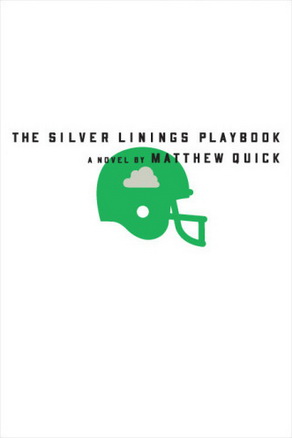
Review – The Silver Linings Playbook by Matthew Quick, narrated by Ray Porter

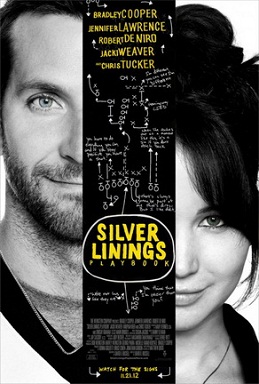
The_Silver_Linings_Playbook_Cover  Silver_Linings_Playbook_Poster

“Life is hard, and children have to be told how hard life can be…So they will be sympathetic to others. So they will understand that some people have it harder than they do and that a trip through this world can be a wildly different experience, depending on what chemicals are raging through one’s mind.”   – Matthew Quick, The Silver Linings Playbook

The Silver Linings Playbook as a movie was a huge hit.  It was nominated for the top five Academy Awards (Best Picture, Best Director, Best Actor, Best Actress, Best Screenplay), and Jennifer Lawrence won the oscar for her performance as Tiffany.  Although I’m not usually a fan of the rom-com genre, I appreciated the movie’s banter and its tender look at the quirks of mental health.  And who could not love that incredible dance at the end?  Epic.  I was pleasantly surprised with the whole thing –  the movie oozed charm.  If you haven’t seen it, check it out on your preferred media subscription program.  (I was going to say check it out on iTunes, and then I added in Netflix, and then I thought about On Demand options and people who prefer to download things or rent them at Redbox, and I realized we’ve seriously expanded since the days of everyone renting a video at Blockbuster.)

After listening to the novel the movie is based on, I understand why other readers at Audible.com sing its praises from the mountaintops.  The story’s protagonist and narrator, Pat, gains a lot of his charm through dry descriptions of his erratic behavior.  The ease with which Pat explains his odd, compulsive actions and his simplistic outlook on life results in a very amusing read.  I am not a laugh out loud person, which makes watching comedies slightly uncomfortable for me, but I did spontaneously laugh out loud a few times while listening to The Silver Linings Playbook.

The novel is Pat’s tale – he stands out from a crowd of slightly flat supporting characters.  In the movie, the character of Tiffany (Jennifer Lawrence) has been fleshed out and amped up to meet Pat (Bradley Cooper) at his level of charm.  Jennifer Lawrence’s Tiffany steals the show in the film, and in the book Tiffany doesn’t have a few of her most memorable scenes.

Another standout feature of the book was its portrayal of the joy of rituals surrounding Pat’s beloved football team, the Philadelphia Eagles.  I am not a sports fan and I did just do a quick Google search to confirm that the Eagles are, in fact, a football team;  however, this book made me understand and appreciate the sheer pleasure of rooting for a team with all your closest friends, yelling chants and getting hyped.

Maybe predictable for the Hollywood version of any story, the movie feels a lot lighter than the book.  Extra plot arcs are created to make the movie goer care a bit more.  Although laden with humor, the subject matter here is at its core bleak – mental illness, family dysfunction, loss.  The jokes based on Pat’s narration, clever and fresh at the beginning of the novel, felt stale by its end.

Movies that are better than the book they are based on are rare birds – it takes a vivid, complicated movie to master a novel’s plot.  Like Fight Club before it, I believe The Silver Linings Playbook has pulled off this feat.  The book is charming and witty, but the movie reaches a higher level of creativity.

Matthew Quick has written several books since The Silver Linings Playbook and they all sound worthy of a read.

Matthew Quick’s page

The Silver Linings Playbook on Audible.com

The Silver Linings Playbook movie page

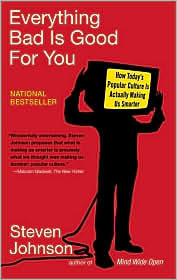
Review – Everything Bad Is Good For You by Steven Johnson

Everything_Bad_Cover

Steven Johnson begins Everything Bad Is Good For You with a claim:  “This book is an old-fashioned work of persuasion that ultimately aims to convince you of one thing:  that popular culture has, on average, grown more complex and intellectually challenging over the past thirty years.”

This is a brave stance to take, as we’ve all been calling television a wasteland for years, shaking our heads at kids who stay glued to a screen playing games and watching shows.  Johnson avoids covering well-trodden ground by refusing to discuss the morality of content.  As he explains, “No one complains about the simplistic, militaristic plot of chess games.”  If you can get past this purposeful exclusion (it seems like a lot of other reviewers can’t), this is a book of simple and brilliant concepts.  Flash bulbs were going off in my head on each page.

A book that covers current culture dates itself quickly – Everything Bad is Good For You was originally published in 2005, and although the games and TV shows cited may not be relevant today (Joe Millionaire?) the ideas presented here seem timeless.  Other media theorists, such as Marshall Macluhan (who Johnson cites), presented concepts 40 years ago which we still refer to today.

Everything Bad Is Good For You is at its best exploring the evolution and cognitive advancement of games, television, and reality television.  Film and the internet are mentioned briefly, almost in passing.  As a reader of The Shallows by Nicholas Carr, Johnson’s stances on the internet made for a great opposing argument.  Johnson does come across as theoretical, and I think this works well as many of his arguments are simple and make sense.

Johnson points out the development of multiple threading in prime time television – television’s increasing use of weaving many complicated threads throughout a show rather than having a single narrative plot.  When he compares Dragnet (from the 1950’s) to the Sopranos (of 2000’s) the difference is striking.  He talks about reality shows as tests of social skill, sort of live action video games.  Drop a group of people in a controlled but unpredictable environment and see how they behave, and observe how they use their emotional intelligence to deal with those around them.  This explains to me the appeal of reality television much more plausibly than other claims out there (we’re all watching to zone out, we’re all watching people be humiliated).  Everything Bad Is Good For You also points out that as a nation our intelligence is rising – would it make sense if our entertainment didn’t advance with us?

I love to think serious thoughts and read big books, but I’m hooked on The Bachelor and Game of Thrones like everyone else.  Arguments which state I’m watching this stuff because it is violent garbage, exploitative and simple-minded, don’t ring true to me.  This book helped me feel a little less guilty about what I’ve always considered my “bad” habit of TV watching.  I also downloaded Lumiosity for my phone, an app that claims to build your brain with simple mental games.  They are fun, and who knows?  Gaming could be good for me.

Everything Bad Is Good For You by Steven Johnson on Amazon.com

Steven Johnson’s website