I’ve been thinking about the sort of lost art of legends or folk tales handed down through generations in our society, and the way we seem to have replaced this with the continual adaptation of intriguing stories in new and current mediums. Retelling stories with new twists and from different perspectives used to be a sort of individual or private act, and now as our roles have changed into passive consumers of entertainment media (television, books, movies, magazines, comic books, radio, etc) it seems that the folklore or legends are developed in these realms. Entertainment absorbs and re-imagines everything it meets that it deems worthy. With stories constantly eaten up and churned out anew, we are living in an almost post-post modern world where we no longer even acknowledge the level of redevelopment and repositioning going on around us as an art form in itself. Comic books turn into television shows, books turn into movies turn into tv shows, everything looked at by a different author and then developed again. Developing legends, retelling folk tales. Our own version of sitting around a camp fire, listening to a story – staring up at a screen, eyes wide. The legend of Hannibal Lecter is a wonderful example of this. We all know him, of his almost superhuman cunning and reptilian lack of empathy, now.

Hannibal Lecter, the icy cold and brilliant psychopath most of us are familiar with today, was first created by Thomas Harris in the 1981 thriller novel Red Dragon. The book isn’t written around Hannibal’s story, but rather he’s presented as a haunting figure from a past case of the protagonist Will Graham, an FBI profiler. Hannibal does seem to steal the show, and quickly becomes a pivotal point of the current investigation.

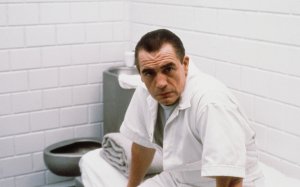
And then our first re-telling of the story begins. The novel Red Dragon was turned into a little-watched film called Manhunter in 1986. Dennis Farina played Will Graham, and (I think this is great casting) Brian Cox played Hannibal Lecktor, whose last name they had decided to change for some odd reason.
The Hannibal story continues in 1988, with Thomas Harris’s second book, the Silence of the Lambs. In this book, Hannibal is not just a overbearing presence on the sidelines but he is on the main stage – he is freaking us all out with his cool-headed and calculated sociopathy, he is shocking us with his sudden acts of viciousness and face-biting, and we can’t get enough. It sold well, it won a few awards, and suddenly the world had a favorite cannibal.
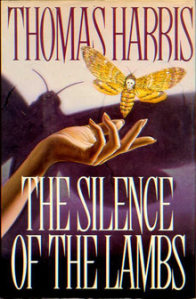
But as in some crazy volleyball move, where one teammate sets up the ball for another to spike it over the net and solidly win the point, the novel The Silence of the Lambs was really just the tip of the iceberg. If Thomas Harris, the author, was setting up the ball, then Jonathan Demme and Anthony Hopkins were the guys spiking it hard across the volleyball net to win the point for the team. In 1991, the movie the Silence of the Lambs, produced by Jonathan Demme, was released. It starred Anthony Hopkins as Hannibal Lecter and Jodie Foster as Clarice Starling. As everyone knows, this movie was a huge hit. It swept the Academy Awards, winning Best Picture, Best Actor, Best Actress, Best Director, and Best Adapted Screenplay. It grossed $272 million.
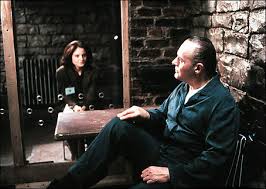
Even at this point, it is interesting to pause and wonder what about this 1991 film caused Hannibal Lecter to be the right thing, at that moment. He’d been in existence, at this point, for 10 years. Was The Red Dragon material just not as good as The Silence of the Lambs story? Was The Silence of the Lambs just a better movie than Manhunter?
With such large successes, there came sequels. The novel Hannibal (1999) focused on Hannibal’s life after The Silence of the Lambs, and a prequel called Hannibal Rising was released in 2006. For film, in 2001 Hannibal was adapted with Anthony Hopkins keeping his role, and in 2002 Red Dragon, the novel previously adapted as Manhunter, was again adapted (this time keeping its original name). Anthony Hopkins played Hannibal again and Edward Norton played Will Graham. Hashed, and re-hashed again, Hannibal had lived on for well over 20 years.
And now, the most recent rendition: NBC has brought us the TV series Hannibal, a beautiful prequel to the Red Dragon material, written and produced by Brian Fuller with Mads Mikkelsen as Hannibal Lecter and Hugh Dancy as Will Graham.

The legend has once again grown, our giant world of entertainment like a huge collage everyone is working with, with the TV series beginning with Will Graham’s cases which have just been mentioned in passing in the novel Red Dragon, building entire story lines out of brief histories barely discussed in Red Dragon. Fun, or funny, adaptations have been made – a fat, stocky male journalist from the novel is now an easy-on-the-eyes female (yet they both keep the same name – Freddy).
I wonder what Thomas Harris, the creator of the character of Hannibal Lecter, thinks of all this. His character has grown into a legend, acted by many men, a mythical representation of evil for our time, the ultimate imagined serial killer of our time. It is hard to know what the novelist thinks, as Thomas Harris is reportedly reclusive and doesn’t give interviews. 30 years later, and here we are – back at Red Dragon, telling each other the same legends with different faces.


 kalireads.com
The Legend of Hannibal Lecter.
Kali · July 11, 2013 · Musings of a different nature · Anthony Hopkins, book adaptations, Clarice Starling, cultural commentary, Hannibal, Hannibal Lecter, legends, Manhunter, myths, Red Dragon, Silence of the Lambs, Thomas Harris, Will Graham · No Comments
I’ve been thinking about the sort of lost art of legends or folk tales handed down through generations in our society, and the way we seem to have replaced this with the continual adaptation of intriguing stories in new and current mediums. Retelling stories with new twists and from different perspectives used to be a sort of individual or private act, and now as our roles have changed into passive consumers of entertainment media (television, books, movies, magazines, comic books, radio, etc) it seems that the folklore or legends are developed in these realms. Entertainment absorbs and re-imagines everything it meets that it deems worthy. With stories constantly eaten up and churned out anew, we are living in an almost post-post modern world where we no longer even acknowledge the level of redevelopment and repositioning going on around us as an art form in itself. Comic books turn into television shows, books turn into movies turn into tv shows, everything looked at by a different author and then developed again. Developing legends, retelling folk tales. Our own version of sitting around a camp fire, listening to a story – staring up at a screen, eyes wide. The legend of Hannibal Lecter is a wonderful example of this. We all know him, of his almost superhuman cunning and reptilian lack of empathy, now.
Hannibal Lecter, the icy cold and brilliant psychopath most of us are familiar with today, was first created by Thomas Harris in the 1981 thriller novel Red Dragon. The book isn’t written around Hannibal’s story, but rather he’s presented as a haunting figure from a past case of the protagonist Will Graham, an FBI profiler. Hannibal does seem to steal the show, and quickly becomes a pivotal point of the current investigation.
And then our first re-telling of the story begins. The novel Red Dragon was turned into a little-watched film called Manhunter in 1986. Dennis Farina played Will Graham, and (I think this is great casting) Brian Cox played Hannibal Lecktor, whose last name they had decided to change for some odd reason.
The Hannibal story continues in 1988, with Thomas Harris’s second book, the Silence of the Lambs. In this book, Hannibal is not just a overbearing presence on the sidelines but he is on the main stage – he is freaking us all out with his cool-headed and calculated sociopathy, he is shocking us with his sudden acts of viciousness and face-biting, and we can’t get enough. It sold well, it won a few awards, and suddenly the world had a favorite cannibal.
But as in some crazy volleyball move, where one teammate sets up the ball for another to spike it over the net and solidly win the point, the novel The Silence of the Lambs was really just the tip of the iceberg. If Thomas Harris, the author, was setting up the ball, then Jonathan Demme and Anthony Hopkins were the guys spiking it hard across the volleyball net to win the point for the team. In 1991, the movie the Silence of the Lambs, produced by Jonathan Demme, was released. It starred Anthony Hopkins as Hannibal Lecter and Jodie Foster as Clarice Starling. As everyone knows, this movie was a huge hit. It swept the Academy Awards, winning Best Picture, Best Actor, Best Actress, Best Director, and Best Adapted Screenplay. It grossed $272 million.
Even at this point, it is interesting to pause and wonder what about this 1991 film caused Hannibal Lecter to be the right thing, at that moment. He’d been in existence, at this point, for 10 years. Was The Red Dragon material just not as good as The Silence of the Lambs story? Was The Silence of the Lambs just a better movie than Manhunter?
With such large successes, there came sequels. The novel Hannibal (1999) focused on Hannibal’s life after The Silence of the Lambs, and a prequel called Hannibal Rising was released in 2006. For film, in 2001 Hannibal was adapted with Anthony Hopkins keeping his role, and in 2002 Red Dragon, the novel previously adapted as Manhunter, was again adapted (this time keeping its original name). Anthony Hopkins played Hannibal again and Edward Norton played Will Graham. Hashed, and re-hashed again, Hannibal had lived on for well over 20 years.
And now, the most recent rendition: NBC has brought us the TV series Hannibal, a beautiful prequel to the Red Dragon material, written and produced by Brian Fuller with Mads Mikkelsen as Hannibal Lecter and Hugh Dancy as Will Graham.
The legend has once again grown, our giant world of entertainment like a huge collage everyone is working with, with the TV series beginning with Will Graham’s cases which have just been mentioned in passing in the novel Red Dragon, building entire story lines out of brief histories barely discussed in Red Dragon. Fun, or funny, adaptations have been made – a fat, stocky male journalist from the novel is now an easy-on-the-eyes female (yet they both keep the same name – Freddy).
I wonder what Thomas Harris, the creator of the character of Hannibal Lecter, thinks of all this. His character has grown into a legend, acted by many men, a mythical representation of evil for our time, the ultimate imagined serial killer of our time. It is hard to know what the novelist thinks, as Thomas Harris is reportedly reclusive and doesn’t give interviews. 30 years later, and here we are – back at Red Dragon, telling each other the same legends with different faces.