Book Reviews

The good, the bad, and the ugly about books I’ve recently read.

Elizabeth Kolbert’s ‘The Sixth Extinction’ Is The Saddest Story In All The Land

the sixth extinction

What if I told you that a nonfiction book, published in 2014, was the saddest story ever told? More tragic than Travis shooting Old Yeller, that faithful dog of childhood fiction? More gut-wrenching than Searchlight’s heart bursting within 100 yards of the finish line in the ever-traumatizing Stone Fox?

Elizabeth Kolbert’s The Sixth Extinction: An Unnatural History is that book. When I relayed its subject matter to friends, they wished I hadn’t. But it was just too much for me to bear alone–I couldn’t stop talking about. Its information is overwhelming, exhausting, and important.

The Sixth Extinction, as its title suggests, brings to the public the scientific concept of a sixth extinction. Scientists believe that we may be in the midst of a mass extinction event, an event so dramatic that it has only happened five previous times in five hundred million years, since the primordial ooze wiggled out of oceans and onto dry land.

To paraphrase Kolbert: extinction rates are soaring, and the texture of life is changing (2).

We are only learning now about the Big Five previous extinction events, and “the history of these events is recovered just as people come to realize they are causing another one (2).” Kolbert weaves a narrative from the present, where amphibians are dying off in alarming numbers, to the past, as scientists and researchers study previous mass die-offs and hypothesize what to expect for this one.

How bleak is this book?

Kolbert enters a cave of bats so full of dead bat carcasses that it is impossible to not step on them, crushing them as she walks with other researchers.

She visits herpetologists in Panama, frantically building artificial environments for frogs once plentiful, but now extinct, in the wild. References to Noah, and the ark, are plentiful.

She recalls humanity’s total annihilation of the once abundant great auk.

She talks with scientists who hypothesize that coral reefs will become “ecologically extinct,” eroding as early as 2050 (130).

She visits Suci, a Sumatran rhino, and looks at our failed attempts to save the species (feeding them hay when they needed fresh greens, and killing them in our attempts to capture them for breeding purposes).

She looks back at Homo Sapiens possible part in destruction of Neanderthals.

The information is staggering. I haven’t even touched on everything she covers. The Sixth Extinction won the 2015 General Nonfiction Pulitzer, and it is easy to see why. Kolbert manages to take a huge subject, exploring past extinctions over a time period so vast it is almost impossible to comprehend, and makes it digestible. Comprehending a mass die-off of species in the numbers she is describing is difficult, but through striking visuals and comparisons, Kobert conveys the almost unbelievable facts. She includes pictures of her travels and discoveries. And amidst all this devastating information, she isn’t afraid to crack a joke here and there.

Although she does try to end the book on a lighter note (after visiting frozen zoos, where scientists are trying to preserve species in liquid nitrogen after their extinction), she doesn’t intend to soften the blows. In The Sixth Extinction, Kolbert brings information scientists understand to the layperson. She makes their urgency and their concern real for the average suburbanite, who may be disconnected from frogs and bats and the great wilds of the earth. Prepare for tragedy, prepare to be heartbroken, and read this book.

The Sixth Extinction on Amazon.com/Powell’s.com/Indiebound.org

Further reading:

In Jonathan Kellerman’s ‘The Murderer’s Daughter,’ A Victim’s Advocate Goes Vigilante

the murderer's daughter

Who can resist a novel with a title like The Murderer’s Daughter?

Not me.

Jonathan Kellerman’s newest release, The Murderer’s Daughter tells the story of survivor Grace. Grace grew up brilliant but fearful, passed from abusive (murderously so, hence the title) family to stereotypically unstable foster homes.

Now, a sought after therapist, considered a “victim whisperer” by those who need just such a soothsayer most, Grace’s dark childhood has caught up with her. A mysterious man seeks a session with her, intrigued by a little-known paper she wrote on families of criminals. Is he related to an offender himself? Does he look familiar?

Before Grace can find answers to any of these questions, the man loses his nerve and stumbles out of the session. Out of the session and right back into the grips of whatever violent element haunted his life.

There was a lot to love about The Murderer’s Daughter, and a lot I just wasn’t feeling. I appreciated Grace as a brilliant, independent, and manipulative woman, and the story of her upbringing interweaved with modern day was as intriguing as the mystery itself. As for the mystery, much of Grace’s investigation was done on the internet–while this may be realistic, it isn’t exactly the most thrilling way to reveal information to a reader.

In the age of Dexter, books with a bad seed turned to justice are all the rage: Chelsea Cain’s One Kick is my favorite thus far. If you love the vigilante justice of Dexter and the heady analysis of psychological thrillers, check out The Murderer’s Daughter.

The Murderer’s Daughter on Amazon.com/Powell’s.com/Indiebound.org

Linwood Barclay starts new trilogy with ‘Broken Promise’

Book Review-Broken Promise

I was excited to dig in to blockbuster thriller writer Linwood Barclay’s Broken Promise after I read his stand-alone mystery Trust Your Eyes. Barclay built Trust Your Eyes around a concept wacky enough to be truly memorable in a field of lookalike plots. A schizophrenic man obsessed with a Google Street View-like program, who spends his hours touring streets all over the world, sees something he shouldn’t. Trust Your Eyes is definitely worth picking up, if you haven’t checked it out!

So what about Broken Promise? It centers in Promise Falls, a small town with all the dressings: cops with inflated egos, an amusement park and newspaper both gone belly up, and a nefarious ex-Mayor circling for power. As I went into the book cold, I didn’t realize that Broken Promise is the first of a planned trilogy about Promise Falls. So (a bit of a spoiler alert here), those expecting loose ends packaged up nicely in a bow, be prepared! You’ll have to wait for books two and three to find out what’s rotten in this not-so-ideal American setting.

And there’s definitely something stinking in this city–attempted rapes on the college campus, squirrels hung in an odd formation in a local park, mannequins with a veiled threat riding on the Ferris wheel in the abandoned amusement park after hours. In the midst of some of this madness is out-of-luck journalist David Harwood, who returned to his hometown of Promise Falls for a job at the local paper just before it went out of business. Now he’s unemployed, and living with his parents and his young son.

While the strange happenings in Promise Falls are intriguing background noise, the main plot of this novel centers around David’s cousin Marla. Marla’s been slightly unhinged since she lost her baby a few years ago. When David arrives at her home to deliver some food, and finds Marla caring for a baby boy, he knows something isn’t right.

This mystery wasn’t my favorite–it seemed fairly obvious to me, once all the characters were introduced, what exactly had happened. However, because I’ve enjoyed a previous book from Barclay so much, and because he’s so highly praised as a popular thriller author, I’ll be tuning in to the rest of the series and seeing what’s in store for David and the town of Promise Falls.

Broken Promise on Amazon.com/Powell’s.com/Indiebound.org

Good Games Go Wrong In Christopher J. Yates’s ‘Black Chalk’

black chalk

Who doesn’t love a game, meant to spice up a dull year, played like a train crash? A story of reckless fun gone dangerously wrong? This game is played by six friends in their first year at Oxford, too young to imagine repercussions, but too pompous to back down.

Six people, a number of rounds, each one separated by a week. A game of consequences, consequences which must be performed to prevent elimination. These consequences take the form of psychological dares, challenges designed to test how much embarrassment and humiliation the players can stand. Throughout the rounds players who fail to perform their consequences are eliminated until only one is left standing.

–Christopher J. Yates, Black Chalk

And the award, at the end of this game, will not only be the glory of winning, but also 10,000 pounds.

The book is told in a now and then style, flashbacks taking the narrator back to the naivety of youth, a time before the game got out of hand, before tics and affectations fully blossomed into obsessive compulsive rituals. Before hearts were broken. Before lives were lost.

The story here is complicated, masterfully crafted, and full of twists that make a review difficult without giving too much away. Although it was released in the U.K. last year, it was released in the U.S. last week with a stunner of a cover (shown above). Pick it up and prepare to be boggled several times over!

Read the first two chapters here.

Black Chalk on Amazon.com/Powell’s.com/Indiebound.org

Post-Pandemic World Is Playground For The Rich In Taylor Antrim’s ‘Immunity’

immunity

What’s natural is the microbe.

All the rest–health, integrity, purity (if you like)–is a product of the human will, of a vigilance that must never falter.

Immunity, epigram, from The Plague by Albert Camus

Officials said the best line of defense was vigilance. Report symptoms immediately. Yours. Family members’. Friends’. Get the TX test every three months. Ninety Days… It’s the Law ran the ads. Carry your MED card at all times. Don’t gamble with symptoms. Don’t travel if you’re sick. These messages had been drummed into the public through news and magazine stories and stacks of bestselling how-to books on surviving another full-scale TX pandemic–which would come, the scientists said. It was just a matter of time.

Immunity

Taylor Antrim’s Immunity tells the story of a post-plague world, a Spanish flu-like epidemic (named TX, after the state of its origins) adapted for our modern times. The Department of Health has ballooned into Big Brother, setting up checkpoints on corners and scanning bodies on sidewalks. Anarchists cough on people as an act of rebellion, terrifying everyone they hack and sneeze at as they run madly through the streets. And then there’s the rich, that ever-present buzz of an upper-class doing better than the rest of us, hovering above the fray, as the elite do, and ready to take some sort of action.

In Antrim’s post-pandemic New York, the wealthy get bored and things get ugly. Protagonist Catherine finds herself, after a vague job interview, working in a sort of concierge call center for the city’s wealthy men. Requests like the perfect gift, reservations at a great restaurant–you give these gals a call, and they’ll take care of it for you. But there’s a bigger vision behind the company, an idea of real experience taken to an uncomfortable maximum level. There’s a place called The Hideaway, there’s an endless supply of coke and booze. And then the guns come out.

Aside from this plot, a sort of rich men gone wild, Catherine is implanted with what promises to be a chip providing immunity from the TX virus. A perk of the job, of being amongst the rich and elite. But nothing is so simple in this complicated world, and nothing comes for free.

The New York Times book review hails Immunity as an “effortlessly assembled” novel. After reading the Times’s triumphant review, I bought Immunity in a sort virus-mad fervor, imagining a book full of dreary desperation and high stakes health risks like David Quammen’s non-fiction tome Spillover. What I got, the plot and statement made by Immunity, was far from what I imagined. I’m still not sure what to make of it. It’s different. It’s strange in a 12 Monkeys-conspiracy-The Most Dangerous Game type of way. Instead of being the usual dystopian fare, Immunity questions our desire for dystopia in general, and our need to take the power back from greater traumas surrounding us.

Immunity on Amazon.com/Powell’s.com/Indiebound.org

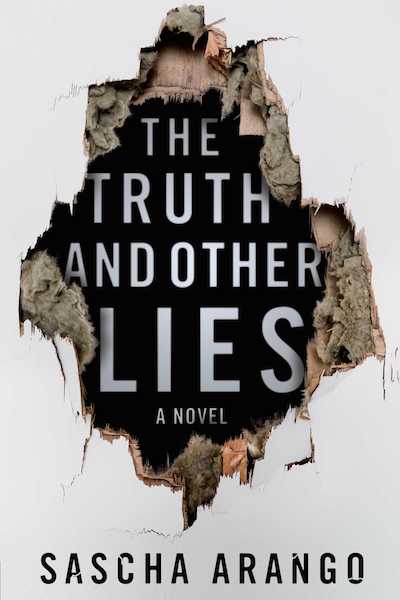
Sascha Arango’s ‘The Truth and Other Lies’ Is A Dark And Churning Comedy

the-truth-and-other-lies-9781476795553_hr

My boss and I were trekking through the oven-like dry heat of another Arizona evening, finished with another day at work. “What are you reading, Kali?” she asked.

How to explain this one, I thought myself.

At the time I was reading The Truth and Other Lies by Sascha Arango, an ever-churning book, a dark comedy that dives deeper and deeper into the sea it takes place beside. The death and destruction here are oddly gleeful. Sascha Arango is a popular German author who has already won awards for his detective series Tatort. And now, of course, I need to know–when is Tatort being translated? Give it to us, please.

In The Truth and Other Lies, Henry Hayden should be a man of mystery and yet he’s astonishingly simple. When he met his future wife Martha, he wasn’t too taken with her, but after falling upon a brilliant manuscript underneath her bed, he realized she was something special. As the simple Martha desired no fame, Hayden reluctantly agreed to publish Martha’s amazing novels under his name. The novels have become booming successes (think Stephen King-level hysteria), and Martha’s authorship is entirely unknown. Profiting from his wife’s writing ability, Henry lives a simple, comfortable life, enjoying the riches of success.

Until his mistress announces her pregnancy.

While Martha is clearly a master of plots, Henry’s attempts to solve his problems lead him deeper and deeper into a tangled web of betrayal and violence. Who is Henry Hayden, really? Henry’s lovers, along with the police, and a childhood friend who recalls Henry’s poor writing skills from grammar school, all seek to answer this question. The results are often interrupted, always hilarious, and occasionally terrifying.

I won’t tell you how I explained the book to my boss, as I summarized so many plot twists I’d be spoiling things. “Wow,” she said, “that sounds really dark.”

“Dark,” I said, “but very funny too!”

The Truth and Other Lies on Amazon.com/Powell’s.com/Indiebound.org

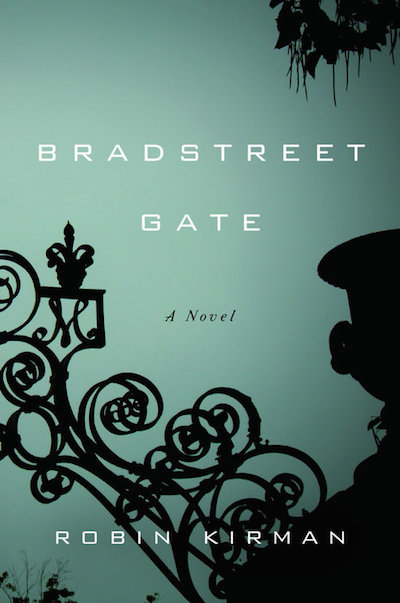
In Robin Kirman’s ‘Bradstreet Gate,’ College Is Hell

bradstreet gate

Robin Kirman’s Bradstreet Gate elicits strong emotions, good and bad. I read it in two days. I saw its premise online and knew I needed an advanced copy STAT. Once I found one and dove in, I wasn’t able to put it down, causing sleep deprivation and a neglect of life’s other demands for a day.

Bradstreet Gate focuses on the bright, beautiful, blonde Georgia Calvin, the crush of all young Harvard men from the day she steps foot on campus. Aloof from years spent transferring schools, trailing after a successful photographer father, the story follows Georgia and those put under her spell through their years at Harvard and beyond. The story is juicy and unpredictable from the start, as Georgia becomes involved with headstrong and moody professor Rufus Storrow. We meet Georgia’s small circle of friends as they each take turns narrating, illuminating their own motives, insecurities, and views of each other. There is young Republican, bow-tie wearing Charlie, and cold, determined journalist Alice.

Harvard’s small enclave is rocked when a student, Julie Patel, is murdered on campus. Friendships begin to fall apart as Professor Storrow, Georgia’s secret lover, is the prime suspect in the murder. But this isn’t primarily a mystery novel. It is a book of betrayals and hidden motives, our private definitions of success and those we measure ourselves against.

The novel is less literary than some of the college-friends-gone-wrong fare we’ve known and loved: it is compared to Donna Tartt’s The Secret History in its blurb, which I’m glad I didn’t see until after I completed it. If I had gone into this book with Secret History-esque expectations, I would have been disappointed. Based on plot alone, I went in expecting a soap-opera-style drama set on a college campus, and I feel those expectations were certainly met.

Professor Storrow reminded me of an unhinged Christian Grey, popping up at odd times, saying inappropriate things, making demands. The murder, while a background mystery, just hung like a foreboding cloud over this small group of friends and their already strained relationships. Those relationships, these characters, are the focus of the book. If you don’t fall in love with Georgia Calvin, you’ll definitely want to be her. The fiercely disciplined, slightly unhinged Alice is the perfect combination of wicked and vulnerable.

I read this on my Kindle and when I got to the last page, I kept madly poking the screen to get to something more. If you are the type of person who needs their endings nicely tied up, you might want to skip this one or prepare to be infuriated at the end. But if you can tolerate ending with questions unanswered, Bradstreet Gate’s characters are compelling and the story of their high points and struggles will keep you riveted.

Bradstreet Gate on Amazon.com/Powell’s.com/Indiebound.org

Hempel And Climent Bare Their Teeth In ‘The Hand That Feeds You’

the hand that feeds you

Imagine your bright, brave friend is dying of cancer. Imagine she falls in love, in spite of her illness. And then, imagine your friend betrayed, as the man she fell in love with was already married to another woman. Inspired rather than scorned, she decides to write a book about the experience. And then she dies, less than a chapter of the novel created.

Is this the plot of A.J. Rich’s The Hand That Feeds You? No, not at all. This is the plot behind the plot. A.J. Rich is not a person, but a pseudonym, a merger of three names: A. (Amy Hempel), J. (Jill Climent), and Rich for Katherine Russell Rich. Hempel and Climent wrote The Hand That Feeds You to honor their friend Katherine Russell Rich, who passed away without the chance to put to paper her own idea for a story. The Chicago Tribune explains:

“And then she, this amazing accomplished woman, met a guy,” Ciment says. “And he knew she had Stage IV cancer and he fell in love with her. Over the course of a period of time, she discovered — and I notice it always happens at Christmastime, when you discover that your lover is married.”

And out of heartbreak, out of death, comes a thriller of heartbreak and death. I love books unafraid to peer under the bed where the monsters live, and this is where The Hand That Feeds You goes. Hempel and Climent hand you a flashlight, and urge you to push into the darkness, beckoning you into the closets and basements where their bold questions about the nature of crime and its victims await.

The Hand That Feeds You begins with a mauling. It’s gruesome, and it gave me nightmares. Victim and victimology student Morgan arrives home to what she thinks are rose petals on the floor. At second glance, she realizes she’s looking at red paw prints. Her dogs are covered in what looks like red paint. But it isn’t paint, and her fiancé’s body is in the bedroom. Morgan is shocked that her beloved dogs (big dogs, but tame ones) mauled her fiancé Bennett, and left him lying dead.

As Morgan seeks to make sense of the tragedy, as she seeks Bennett’s family to notify them of his death, things that normally should fall into place after such an incident don’t. The body remains unidentified at the morgue–the man she knew as Bennett was a fraud, the family he told her lived in Canada nonexistent. Who was this man, and how was she, a student of the ways criminals take advantage of their victims, susceptible to such a lie? How was she not immune?

This is a book that pushes boundaries at every twist and turn. Morgan, as narrator, isn’t a strong and independent femme fatale but a woman rocked to her very core by past events and current ones, a woman trying to protect herself by intellectually understanding the evils of the world, and failing miserably.

The Hand That Feeds You on Amazon.com/Powell’s.com/Indiebound.org

Horror Gets Meta In Paul Tremblay’s ‘A Head Full Of Ghosts’

head full of ghosts

Think of the classic exorcist story reinterpreted with a modern hook: innocent girl turned evil, religious obsessives gone mad with thoughts of casting the demons out, documentary cameras filming every move. Even this doesn’t sound very interesting, because we know this story, right? Plenty of current movies chronicle this sort of thing. Even with that modern handheld camera twist, it’s already been done.

But now take it to a level of deeper awareness, in which the girl possessed may or may not be riffing off of those old classic films. In which the documentary film crew is from the same television station that brings you hits like Duck Dynasty, and they may or may not be staging the entire thing to make great TV. Paul Tremblay’s A Head Full of Ghosts nestles into a sort of self-awareness of its genre and its story that leaves its characters questioning themselves at every turn.

In small town New England, a family is being pulled apart from financial strain and something else. Something is not right with Marjorie Barrett. She’s either going through a serious case of teenage angst or she’s showing signs of a very dark and very creepy mental illness. Or, as her out-of-work blue collar father John concludes, Marjorie might be in need of a more religious variety of healing.

As Marjorie fights against normal psychiatrists and the Barretts savings dwindle, the sort of precarious agreement that makes fiction great is brokered between John Barrett’s local Catholic church and a documentary film crew. John wants his daughter saved and is convinced an exorcism is the solution, and is desperate for the money to do it. The church brings in the film crew to record the ordeal, thus saving the family from financial ruin while locking them in to an agreement to air their daughter’s struggles on nationwide television.

Thus, The Possession is created, a television documentary part-terrifying and part-homage to all the horror that came before it. A Head Full of Ghosts Marjorie’s illness and the making of the documentary about it through the eyes of her younger sister Merry. In the novel, a biographer seeks Merry’s side of the story fifteen years after the events of The Possession. Merry’s interactions with the biographer and her memories of childhood alongside Marjorie are spliced with blog posts from horror fangirl Karen, who analyzes both the intricacies and the gaping holes throughout The Possession.

If a novel about a fictional TV documentary has you thinking of that other book about a fictional documentary, House of Leaves, you’re correct in making the connection. Where House of Leaves never lifts the mask on its facade, A Head Full Of Ghosts picks up that eerie aura and throws it around, shines a light on it, then drops it down some stairs. This is mind-bending, very scary stuff that laughs at itself all the way to hell.

A Head Full of Ghosts on Amazon.com/Powell’s.com/Indiebound.org

In ‘The Bones of You,’ Debbie Howells Channels Alice Seobold’s ‘The Lovely Bones’

the-bones-of-you

The Bones of You channels a popular mystery that came before it, The Lovely Bones, in both title and narrative style. When Jo’s daughter Rosie goes missing, neighbor Kate steps in to provide comfort. When Rosie’s body is found, and news of foul play emerges, Kate finds herself becoming more enmeshed with the Anderson family during their time of grief: beautiful, trim housewife Jo; her newscaster husband, Neal; and their surviving timid daughter Delphine.

The story is told not only through Kate’s eyes but also through Rosie’s, who is now all-seeing in some heavenly afterlife. What Kate couldn’t know about the Anderson family because she sees only their perfect kitchen, breath-taking garden, and stylish clothes, Rosie reveals in an angelic mash of memories. Behind closed doors, the family is falling apart. Rosie reveals a mess of abuse and suffering that may or may not have led to Rosie’s death.

Dreadful scenes of Rosie’s home life contrast with Kate’s naivety as she becomes more involved with Jo. Kate is all concern and stability, a trainer of horses who appreciates their ability to intuit human emotions. Jo, after losing her daughter, is all blank stares and pretty blouses, ordering new furniture while she stays stoic and tries not to reveal any emotion. Her behavior, as well as that of her husband and Delphine’s, is strange. As the novel continues and the reader knows more than Kate, thanks to the passed-on Rosie’s angelic narration, the thrill becomes less “whodunnit” and more “when will sweet Kate get a clue, a bad vibe, anything…”

The Bones of You is compulsively readable, and fans of The Lovely Bones will appreciate the nod to its narrative style. I enjoy a book where the clues are discovered rather than revealed through narration, so this omniscient angel-esque narration style isn’t my favorite. In spite of that, I read it in a few days, and was always eager to get back to it and settle in with its eerie atmosphere. Get your (patriotic) snacks and settle in, once you start this one you won’t come up for air until you’ve finished.

The Bones of You on Amazon.com/Powell’s.com/Indiebound.org

Read an excerpt of The Bones of You