Book Reviews

The good, the bad, and the ugly about books I’ve recently read.

The Nightingale: How War Affects Women, How Women Affect A War

the nightingale

I started listening to Kristin Hannah’s The Nightingale on audiobook and stopped several times this year. I would get through the first few chapters, as an older woman relays a tough childhood in France, then lose interest. I read a lot of books, I don’t really push through if they don’t capture my attention.

Recently, however, Audible named The Nightingale Audiobook of the Year, so I decided to give it another listen. And this isn’t a poor orphan story, but a war story. It’s a World War II story. And most importantly, it’s a lady story. A novel about how war affects women, and how women affect a war.

Author Hannah read about the roles of French women in the resistance during World War II, most notably Adrée de Jongh, who smuggled fallen airmen out of France through the Pyrenees mountains. She also read about women who quietly sheltered Jewish children or were forced to house German soldiers, and realized she had to tell these stories.

Her research helped her create The Nightingale‘s Vianne Mauriac, whose husband has left their small village to fight at the Front. While he’s gone, it is up to Vianne to tend to her small daughter, and find some way to survive with German soldiers who invade her home. Vianne’s younger sister, Isabelle, was rebellious before the war started. Once it begins, she is determined to join the resistance in any way she can.

Both these women will be tested in endless, exhausting ways. Isabelle flees from Paris in a gigantic, desperate swarm of refugees. Vianne’s best friend and next door neighbor is Jewish, and Vianne witnesses stricter and stricter restrictions placed upon her. I don’t often read historical fiction, but this book kept me going, equal parts horrified, intrigued, and entranced. I listened to this audiobook in the same time period that I watched Amazon’s The Man in the High Castle, and it was Nazi overload. I would not recommend it. I’m now grateful I’m not living in Nazi-occupied France or Nazi-occupied America on the daily.

My main issue with the book, as powerful as it was, is the message that women after wartime don’t talk about their tragedies and triumphs. I guess you’ll have to read the book to know what I’m referring to here, but that a mother could keep such a large secret from her son seems odd to me. I’d be interested to know how everyone else felt about this message. I wonder if Hannah absorbed this from her research, that earlier generations were simply more stoic about doing what needed to be done? Anyways, check it out! Report back with your thoughts.

Also, movie rights for this one have been picked up so… that’s exciting!

The Nightingale on Amazon.com/Powell’s.com/Indiebound.org

Drench Yourself In The Sweet, Sweet Sap of Jennifer Weiner’s ‘Who Do You Love’

who do you love

People are hard on Jennifer Weiner. I’m probably too hard on Jennifer Weiner. She speaks up for her genre, those books that the literati cast aside as chick-lit. She speaks out against guys like Jonathan Franzen, who have buffooned up into odd caricatures of themselves. She’s like a lone woman speaking out against a vast structure of how literature works today. I play on both teams, I love both sides of this argument. I’m a fan of chick-lit, but I also love some books for plot and others for language and see it as a fact, not as discrimination. But props to Weiner, I think her discussions bring her more into focus in my world, which is great marketing.

All this Weiner-debate got me Weiner-curious, and I decided to pick up her latest release, Who Do You Love. Who Do You Love takes sweetness to Cotton Candy Crème Frappucino level, as Rachel Blum and Andy Landis come together and tear apart what feels like a billion times throughout their childhood, teen years, and then adulthood. They first lay googly love-eyes upon each other, in the now chic fashion of Fault in our Stars, in the ER as children. Rachel, a frequent hospital resident due to a heart condition, strays from her ward at night. Andy, a bit of a shy and neglected ruffian, broke his arm and (scary!) arrives at the ER with no parental escort.

When they reunite on a trip for Habitat for Humanity in high school, love blooms. First love. Tummy butterfly love. They seem perfect together, but life gets in the way (doesn’t it always?). Love tracks these two through life like gum on a sneaker. They always fall back into each other’s arms. Feelings for Rachel follow Andy as he trains for the Olympics, being a gifted runner since he sprinted on his paper routes. Feelings for Andy nag Rachel during awful blind dates with other men. This is a “Will they, or won’t they?” book. A “How many times will they try?” book. And a, “Really, how plausible is this?” book.

But that’s okay. Weiner doesn’t mind taking the love story full nacho cheesy, and it is delicious. (I have no idea why all my metaphors for a sappy love story are food and beverage related. But I can’t stop.) If you are a slightly bitter person seeking fine literature and emotional depth, then pick up A Little Life and stop reading this review already. There’s nothing wrong with that! But if you love love, you will love Who Do You Love. It will remind you of your awkward first loves, your horrible break-ups, and (maybe) make you hopeful for the love-ly miracles still to come. There’s something a little bit magic about an unapologetic romance laying it on thick, playing all your emotional chords like a sad, beautiful symphony. Prepare to laugh, to feel the tears welling up, to get angry, and then be exhausted that this couple is still fighting or not talking or with other people. Prepare to feel all of this, and then go back in for more.

Who Do You Love on Amazon.com/Powell’s.com/Indiebound.org

Karin Slaughter Takes On Family And Other Gruesome Things In ‘Pretty Girls’

pretty girls

Karin Slaughter is legit. I say this having only read one of her huge Will Trent/Grant County series, Criminal, which didn’t totally blow me away. Where I did fall in love with that story was in its portrayal of women on the police force in the 1970’s, which Slaughter so intensely described it kept me up at nights, skipping the present-day, Will Trent sections of the book to get back those flashbacks of his mentor’s times on earlier, much meaner streets.

This means I was definitely a fan of Cop Town, Slaughter’s stand-alone novel focusing on women police in 1970’s Atlanta. And when Slaughter’s newest release, Pretty Girls, was announced as another stand alone, I was excited, just as Will Trent fans everywhere were dismayed.

In Pretty Girls, posh, confident Claire’s successful architect husband, Paul, is murdered in a robbery gone wrong. Immediately after his death, things stop making sense for Claire. She’s left in a stark, excessively large home she never wanted. A robbery takes place at Claire’s home during the funeral, and police and the FBI are a bit too interested in the case, a bit too attentive to Claire’s needs.

Meanwhile, Claire’s sister Lydia, estranged from the family, is revisiting old wounds as another young girl goes missing in the media. Where Claire is classy and sophisticated, Lydia is overweight and runs a pet-grooming service. As different as the sisters are, they both are haunted by the the memory of their third sister Julia, who went missing in their childhood.

The sisters’ stories alternate until they intertwine, as they come together to figure out just what the police could want from Claire, and who Paul really was.

The best part of this book, and maybe all thrillers for me, was its tense beginning. Claire, nervous and in mourning, realizes something isn’t right. But what, exactly? Everyone is acting strangely, the husband she relied on is dead, and she is left entirely on her own to discover his dark secrets. Like Stephen King’s A Good Marriage, the idea that you may not know the person you married, the person you sleep in bed next to each night, is terrifying.

There is quite a bit of gore, with some really ugly stuff presented. These scenes are brief, and play a role in explaining character development.

The story complicated itself as it progressed, and it began to lose a bit of steam for me, raising too many red flags of plausibility. I didn’t need that many twists for the book to be good. Despite feeling a bit bogged by the end, this is a finely-crafted thriller, with well-developed and realistic female characters confronting both family issues and much uglier, darker things. I know Will Trent fans are eagerly awaiting Slaughter’s next book in that series, but I’ll be eagerly awaiting her next stand-alone release.

Pretty Girls on Amazon.com/Powell’s.com/Indiebound.org

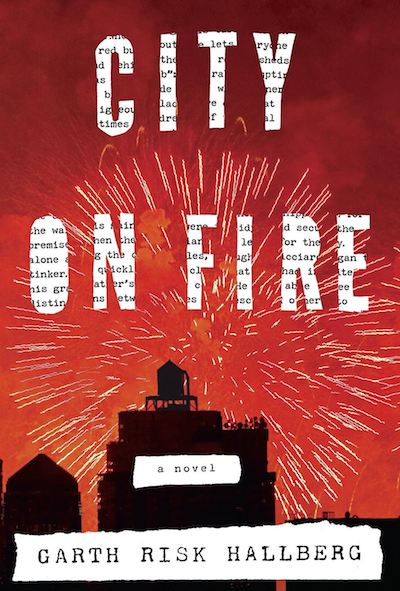
Garth Risk Hallberg’s ‘City on Fire’ Is Too Big To Describe Here, But I Can Try

city on fire

For what Carmine Cicciaro had learned by then, and I suppose I had, too, concerned not only the baffling multiplicity of all things, but also their no less baffling integration. No amount of art, even of the Great American variety, can elevate you above, or insulate you from, the divisions, the cataclysms, of ordinary life. Still, as I turned to shake his hand and tell him I’d be seeing him, I couldn’t quite get free of how it used to feel, waiting for the July 4th display, back on the humid town common of the Tulsa where I was a kid. How, down on the bandshell, a local vocal quartet would be warming up, their candy-striped jackets a pink mess in the heat. How I would lie on my back on the blanket, slightly apart from my cousins, dreaming. At some point, the Rutabaga Brothers and the Lemon Sisters would rouse us to our feet and lead us in patriotic song, and then it would begin: signal lights ascending the sky, two, three, a dozen, a hundred.

I had no other associations then for the sound of mortar fire, for the cascades of color swimming up to meet their counterparts in the face of the swollen brown river. All I wanted was more, more, more. I’d ask myself at each volley, in an ecstacy of anticipation, was this the last one? Was this? But maybe that is what, in the end, brings this particular art closer to life than its more mimetic siblings can ever manage–what I’d glimpsed in the summer of 1976, watching the Bicentennial on a TV 2,000 miles away: Each display of fireworks is utterly time-bound. A singularity. No past and no future. Save for the fireworker himself, no one ever knows the grand finale is the grand finale until it’s over. And at that point, wherever one is, one won’t ever really have been anywhere else.

–Garth Risk Hallberg, City on Fire

Garth Risk Hallberg’s City on Fire is just a bit too big in all sense of the word. So much hype! So many characters! I’ve finished it, and I’m not sure I can fit it all in my brain.

The book is an intimate examination a large group of characters living in New York in 1977, with alternating narration and interludes from the story for various characters artistic endeavors: zines, letters, a piece of investigative journalism. These characters connect and come apart like pick-up sticks, meeting in brief moments then pushing apart again.

How can I summarize what this book is about in less several pages? How can I do it in even a few sentences? This book is about punks and the super-rich, fireworks and rock and roll, corruption and jealousy and love and family. This book is about a guy from a wealthy family who used to be in a band and now has a drug problem and a group of whacked out punks following him. This book is about another guy who wants to write a great novel but is really just in love with someone who doesn’t love him back and is hurt and angry about it. A woman who left her husband and is on her own with the kids. A bunch of kids who don’t know what it means to love or to grow up or to put down the pipe when you start to hallucinate. It’s about a cop who should retire but can’t because there is a young woman laying in a hospital bed who will never walk or talk again. And then, this book is about the New York blackout of 1977. The lights going out, the streets coming alive.

At 944 pages, City on Fire follows in the footsteps of those big books we’ve all so recently read and loved: The Goldfinch (771 pages), The Luminaries (834 pages), A Little Life (720 pages). But Hallberg’s was the first book of this length that I’d read and thought to myself “Jesus, this book is sooo long!” As perspective switched yet again at a critical juncture, as I’d slogged through so much and not gotten to any sort of epic blackout, as another long interlude came up, I began wondering–just how much is too much? And did City on Fire push me over my big book edge?

Hallberg received a much-hyped nearly $2 million dollar advance for this debut novel, after a bidding war amongst publishers. The movie rights were sold before the bidding war even began. The novel was compared, by the agents who had copies of the nearly thousand page manuscript, to Michael Chabon and Thomas Pynchon. This was hype with a capital H. I learned about City on Fire through its (also) much-hyped ARC’s. Those in the highest echelons of bookland received a seven-volume advanced reader’s copy with beautiful artwork. This caused some people to freak out with joy and City on Fire to become a most wanted book of the season, as others stood back and asked WTF.

When I got my approval for an advanced copy this Fall (a Kindle copy, no higher echelon girl here!), obviously I was totally excited. And Hallberg’s writing is good, no doubt about that. He peels back people’s skin, examining their insides, the reason each individual ticks and is hurt, wants or fears. These reasons are often totally unknown to those closest to them in the novel, creating a sense of disconnection for each character. Everyone in the story seems to be wading through their own thoughts first, and the hustle and bustle of life in New York second. Which is a shame, because the action here is the best stuff. The plot itself, the interweaving of all these seemingly random characters into each other’s lives, the delight of the chance encounters, all those puzzle pieces of lonely life fitting together into one great canvas of New York City–this is what made City on Fire great.

City on Fire on Amazon.com/Powell’s.com/Indiebound.org

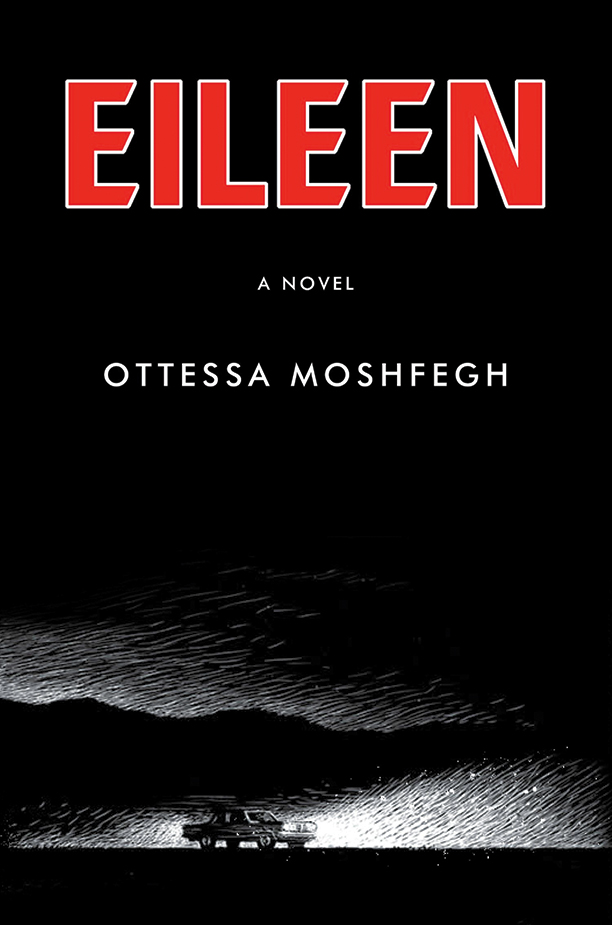
Ottessa Moshfegh’s Wry, Oddball ‘Eileen’

eileen

I looked like a girl you’d expect to see on a city bus, reading some clothbound book from the library about plants or geography, perhaps wearing a net over my light brown hair. You might take me for a nursing student or a typist, note the nervous hands, a foot tapping, bitten lip. I looked like nothing special. — Ottessa Moshfegh, Eileen: A Novel

Thus opens Ottessa Moshfegh’s Eileen, a narrative which might indicate our title character is just another girl. But Eileen is an odd young woman, obstinate and unaware in her peculiarities, and this novel’s glimpse into her strange world is at once intimate and incredibly uncomfortable, like a stranger standing too close in an elevator.

It is 1964, and Eileen’s life is bleak. Unmarried, single past her prime in a period not kind to women aged out of the dating pool, Eileen lives with her father. Dad is a former police officer with such a drinking problem, Eileen hides his shoes to keep him from bolting, blackout drunk, into the neighborhood to stir up trouble.

Eileen’s combinations of repression and disinhibition read like a roller coaster of the roles our society demands women to fill. She works at a juvenile detention center, called a boys’ home in those days, and fantasizes about one of the guards, while simultaneously fearing and trying to control her own body, its needs and its functions.

As a character study alone, Eileen is a beautiful, bizarre joy to read. But the real fun comes with the arrival of teacher Rebecca Saint John to the prison. The dazzling, poised Rebecca forms an unlikely friendship with Eileen, albeit a relationship unequal on all levels. The reader can see what Eileen is too girl-crushed to notice–what does this charming vixen want from our dowdy, awkward, dark little narrator?

The big reveal, appearing like a band-aid ripped off in a magnificent and unexpected twist, made me guffaw aloud, which I rarely do. I won’t give anything away here. This is a clever and unique read, full of strange things and strong, warped women.

Eileen on Amazon.com/Powell’s.com/Indiebound.org

Further reading:

Commute As Turning Point: Joshua Mohr’s ‘All This Life’

all this life

But perhaps this is what love looks like in the twenty-first century. There’s the heart pumping in our chests, and the one that thrums online, beating a binary rhythm, zeroes and ones. Paul has to find that version of his son.  –Joshua Mohr, All This Life

The morning commute is a lot of things–life-changing is normally not one of them. But on one morning of traffic crawling across the Golden Gate Bridge seemingly like any other, fog rolling across the Bay and not yet fully removed from drivers heads, father Paul and son Jake see something. Something that causes them to stop their car and stand out on the road and cry out. And from that day forward, their lives are changed.

Joshua Mohr’s All This Life is the story of Paul and Jake, the gap between them, and the story of the tragedy they witnessed. Paul, divorced and alone in every way, can’t connect with a world always on Facebook and texting with emoticons. Paul’s character reminded me a bit of something a more authentic, less snarky, Joshua Ferris would write. Paul’s son Jake is the epitome of this tech world: he’s always plugged in, headphones on. Siri’s voice, calling his name, soothes him in a way his father’s never could. He films content on his phone and loads it online as he believes creating content to be his generation’s calling.

Paul and Jake’s lives intertwine with those of others down on their luck but ever-hopeful: there’s Sara, living in a small town in the Arizona-Nevada border desert where men road-fish (literally pretend to fish in the road) for fun. Unfortunately, and without explanation, her boyfriend has just released a sex tape, allowing Sara to become a slut of the week on amateur sites.

Sara’s first love, Rodney, another main character of the story, is now known as balloon boy throughout his neighborhood, as he plummeted in a fall off a weather balloon, and (among other injuries) has aphasia, unable to speak as clearly as he thinks.

Rodney’s mom, Kathleen, abandoned her family after her son’s accident. She is now a caricaturist drawing portraits for tourists on the boardwalk in San Francisco, allowing the story to come full circle. Kathleen’s portion especially lends the story a now-ness, as she lives in San Francisco’s Mission District and identifies with the area’s artists, looking down upon the new luxury housing being built to accommodate the ever-burgeoning influx of tech bros. I understand Mohr’s desire to work a gentrification, tech boom slice of the city into the narrative, but it doesn’t ring true, as Kathleen is a recent transplant herself.

Mohr’s prose is rich and heady, as he taps into the heartstrings of both a middle-aged man going through a life crisis and an adolescent millenial. He describes everything from suicide to emotional breakdowns in crisp, staggering beauty. Most notably, he describes the thought process of a kid who thinks in Google searches (“A Google search of his favorite things would not reveal the boy as a page one result.”) and clicks, a kid so in tune with the world online that he’s not sure what the one offline means anymore. All of Jake’s internet metaphors for feelings and life itself are startling and hilarious.

Although this book starts out incredibly depressing, and does have some dark threads of loss running throughout the entire novel, it is really a book about people triumphing. People struggle, yes, but ultimately they can persevere and look up from their phones now and then. We can come together, despite all these technological barriers. And yes, I said barriers–this book is fairly anti-technology, ultimately leaving it as the monster hiding in the closet, hurting us all. Whether you agree with that or not, Mohr’s All This Life is worth a read.

All This Life on Amazon.com/Powell’s.com/Indiebound.org

In Ava Marsh’s ‘Untouchable,’ ‘Fifty Shades’ Gets A Murderous Makeover

untouchable

Every now and then, I find myself finishing a book and wondering how to review it. Ava Marsh’s Untouchable, featuring Stella, a forensic psychologist-turned-high class call girl (!), is one of those books. It is sexy, it is violent, and it gets down deep into the issues of sex, class, and power controlling our society today. Whether Untouchable handles those issues well or not is subjective, based on the values of the reader. I think much dislike or love of the book will stem from value judgement of it–how it portrays women as call girls, women as sexual beings, women as victims and perpetrators of violence.

Enough analyzation, already. Let’s get to the plot! Stella is a classy call girl, getting down and dirty with men for money. Marsh describes this experience through Stella’s eyes in explicit visuals–from the arousing to the repelling, and everything in between, it’s all there. Get ready to be turned on, then skeeved out. After a party with some high-powered men, one of Stella’s fellow prostitutes ends up dead. The police aren’t too interested in the dead hooker in a hotel room, but Stella thinks there’s a reason for the murder and wants justice. Through her own investigation, utilizing her network of johns and fellow working girls, Stella uncovers what happened to her friend while risking her own life.

The combination of sex and violence make for some heart-pounding, eye-popping, page-turning stuff. Marsh isn’t afraid to build Stella as a fallible character, who makes an occasionally shockingly cruel mistake. If you are looking for a hooker with a heart of gold story, you won’t find it here.

After reading Robert Kolker’s Lost Girls: An Unsolved American Mystery last year, I believe Untouchable did glamorize the profession a bit. This may be a cultural difference–Ava Marsh lives in London, where prostitution is not illegal, although activities surrounding it are. Marsh’s Stella is a high class girl, and her friend is murdered for an elaborate reason not directly related to her profession. But Kolker’s (nonfiction) book described a much bleaker and much more dangerous life, where men who like to kill women specifically seek out prostitutes because they realize so few people notice when prostitutes go missing. Because of this, I have mixed feelings about Untouchable–I applaud Marsh for discussing prostitution at all in a world that often doesn’t, but wonder if she padded the bleaker details surrounding the profession a bit.

Untouchable on Amazon.com/Powell’s.com/Indiebound.org

The Wonder Years Meets Law And Order: SVU In M.O. Walsh’s ‘My Sunshine Away’

my sunshine away

There were four suspects in the rape of Lindy Simpson, a crime that occurred directly on top of the sidewalk of Piney Creek Road, the same sidewalk our parents had once hopefully carved their initials into, years before, as residents of the first street in the Woodland Hills subdivision to have houses on each lot. It was a crime impossible during the daylight, when we neighborhood kids would have been tearing around in go-karts, coloring chalk figures on our driveways, or chasing snakes down into storm gutters. But, at night, the streets of Woodland Hills sat empty and quiet, except for the pleasure of frogs greeting the mosquitoes that rose in squadrons from the swamps behind our properties. –My Sunshine Away, M.O. Walsh

Imagine The Wonder Years, if you are old enough. All that innocent nostalgia for adolescence, ice cream dripping curbside and first loves blushing as they slam lockers in school corridors. Now imagine The Wonder Years merged with a Law and Order: SVU episode, and all its treachery lurking around each corner. Finally, plop this summer break-turned-nightmare down in a muggy Louisiana neighborhood, a place strangely unique in the United States, with its lush greenery and delicious food, and you’ll get an idea of M.O. Walsh’s My Sunshine Away.

The story focuses on the rape of Lindy Simpson, as it affected the town of Woodland Hills, Louisiana. We are told of Lindy’s rise amidst schoolyard friends and fall after the assault through the eyes of an unnamed narrator, looking back at his adolescence in Woodland Hills. Just one of a handful of Lindy’s followers, he worships her, lusts after her, and tries to track down her rapist. The narrator at times tested my tolerance–how much adolescent misunderstanding of love could I handle? Would I put the book down? Couldn’t this kid see how wounded Lindy was? But he couldn’t, and I didn’t. This is a story of growing up, with all the awkward moments, all the aches and pains, that entails.

As a debut novel, this one was highly praised, and M.O. Walsh’s prose is smart and striking. Each meditation on Louisiana, its people, its weather, and its food is clear and crisp, set with a voice so memorable it makes up for what were, for me, the book’s more icky moments. And the payoff is there, as we get to see this young, hungry, desperate boy grow up into something better. Despite its premise, this isn’t one to end on a bad note–I promise.

My Sunshine Away on Amazon.com/Powell’s.com/Indiebound.org
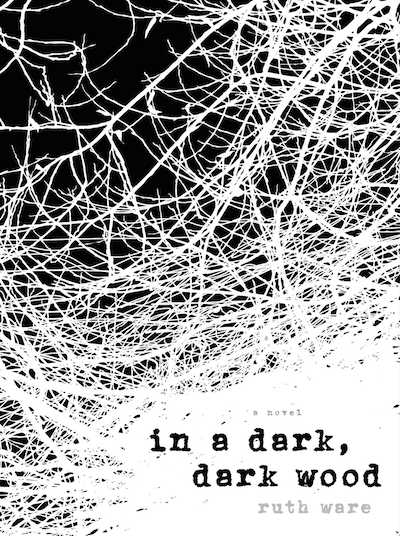
When The Bachelorette Party Goes Very, Very Wrong: Ruth Ware’s ‘In A Dark, Dark Wood’

in a dark dark wood

Scout Press is a new imprint from Gallery Books “dedicated to being on the lookout for modern storytellers.” They’ve roared onto the scene with two releases, Ruth Ware’s In A Dark, Dark Woods and (now Longlist National Book Award Nominee) Bill Clegg’s Did You Ever Have A Family. I received a promo e-mail about Scout Press before these two were released, and like a chump I passed them over. Once I heard the endless roaring buzz of praise, I picked up In A Dark, Dark Woods on audio, and listened everywhere, all the time, unable to stop.

Ware’s In A Dark, Dark Wood sounds like many things–don’t confuse it with Into The Woods, the Broadway play adapted into a feature film, or master of mystery Tana French’s novel In The Woods. Ever since the Brothers Grimm put the grim in our fairy tales, the woods have been a nightmarish place to lose yourself and tap into the pulse of a canopied underworld severed from sunlight and all things good. In A Dark, Dark Wood acts as an homage to so much that lives in the dark of our nightmares–ghosts, guns, unrequited loves, strangers prowling, phone lines cut, murders in the midst.

In this mystery, instead of wolves or headless horsemen, the woods brings horrors of a particularly modern variety. Reclusive author Leonora reluctantly agrees to attend a long lost school friend’s hen party (for us unaware Americans, that’s the British equivalent of a bachelorette party). The most majestic and notable part of this novel is the hen party’s setting, a glass house nestled amidst a muddy and isolated woods far out in the English countryside. Each attendee to the soiree feels like a performer, vulnerable and exposed in front of a vast expanse of trees. This is the type of isolated home found at the end of a muddy long drive, where cell reception blips from on bar to none, where the land line in the kitchen feels like a life line to the outside world.

The night turns strange quite quickly. Clare, the bride-to-be, has invited a ragtag bunch, with Leonora and her sarcastic sidekick Nina not necessarily adding to the party atmosphere. There’s new mother Melanie, who struggles to pull her eyes up from her phone, aghast at no reception. There’s flamboyant and coke-touting Tom, the hard partying token gay man at the celebration. And finally, there’s Flo. Flo worships Clare, dresses like Clare, and insists that Clare will have the best hen party ever. No matter what.

The isolated party in a strange glass house, fueled by alcohol and Flo’s intensity, quickly moves past social niceties and into the realm of something else. Leonora wakes up battered and brutalized in a hospital bed, police at her door. No longer in a glass house, no longer at a hen night. She takes us along in her struggle to remember what exactly turned a hen party into a much darker, more dangerous trip into the woods.

Ware’s building of suspense is magnificent here, especially in the first half of the novel. Unfortunately, amnesia plays a critical plot point near the end, which always tries my patience as a mystery lover. The writing here is so good though, that I’m willing to overlook this. I do hope Ware steers clear of such devices in her next book. The setting and characters build an unbearable, but irresistible paranoia, that makes In A Dark, Dark Wood an ideal mystery, a quick one to flip through then finish.

In A Dark, Dark Wood on Amazon.com/Powell’s.com/Indiebound.org
Further Reading:

‘Scream’ Meets Agatha Christie In ‘A Dark, Dark Wood’ (npr.org)

Author Interview: Ruth Ware (auntagathas.com)

Finding thrills in ‘A Dark, Dark Wood’ (usatoday.com) – Finch’s USA Today review is much less tolerant of the amnesia device, and I don’t disagree with his points, I just still enjoyed the book.

In Elisabeth Egan’s ‘A Window Opens,’ Modern Day Mom Meets E-Pub Giant

a window oepns

In Elisabeth Egan’s debut novel, A Window Opens, Alice Pearse has it all–she’s a modern-day mom, juggling three kids and a part-time job as books editor for women’s magazine You. Her secure life is uprooted when her hubby Nicholas, a lawyer, comes home with news that he isn’t making partner and is leaving his firm (and his steady paycheck) to start his own office. Until Nicholas starts building a clientele and earning some cash, Alice’s part-time magazine job isn’t going to cut it.

Alice considers herself lucky to land a job at e-publishing giant Scroll. They have big plans to get readers into their stores, buying ebooks–think gummy candies, super-lush seating, and curated novel recommendations. It sounds like Alice’s dream. The reality, however, is something a little more maniacal. Scroll is a passive-aggressive mess of tech-speak and never-ending company-wide e-mails. The dream job begins to turn into a nightmare.

Author Elisabeth Egan, in real life, followed a career path similar to Pearse’s. According to the New York Times, Egan worked at Self before accepting a position at Amazon Publishing. She also has three children, like Alice, and there are other echoes of her life in the novel. Egan has taken the old adage “write what you know” very seriously, and the authenticity comes through in the story.

Although marketed as chick-lit, this isn’t an entirely light-hearted story of finding oneself. Egan’s observations about modern life and its expectations of women are so spot on, they are hilarious. Alice’s conversations with her children, all innocence and awkward questions, are charming comedic breaks. But Alice’s father struggles with cancer throughout the story, and in places I felt myself tearing up. A Window Opens is emotional, endearing, and satisfying. Bring your tissues, grab your e-reader, and ask yourself, “What would you do to have it all?”

A Window Opens on Amazon.com/Powell’s.com/Indiebound.org